Risenshine! Here is digest of signals harvested on 2026-05-02.
The digest video is attached as daily_digest.mp4 (MP4). The full newsletter is also attached as daily.html for offline viewing.
Markets
International - 05/01
Germany (EWG):
+0.1656% +5.2985% MoM
France (EWQ):
+0.0882% +3.4664% MoM
United Kingdom (EWU):
-0.2757% +1.4455% MoM
Italy (EWI):
-0.1039% +5.8521% MoM
Italy (EWI):
-0.1039% +5.8521% MoM
Spain (EWP):
-0.1059% +3.0397% MoM
Netherlands (EWN):
+0.2791% +7.3587% MoM
Chile (ECH):
-0.5747% +2.2912% MoM
Belgium (EWK):
-0.488% +3.1566% MoM
Germany (EWD):
-0.2708% +4.0565% MoM
Australia (EWO):
-0.0161% +8.2986% MoM
China Large-Cap (FXI):
+0.0544% +3.5152% MoM
Japan (EWJ):
-0.8979% +2.1045% MoM
India (INDA):
-0.607% +5.1595% MoM
Taiwan (EWT):
+0.1001% +25.4462% MoM
Hong Kong (EWH):
+0.253% +2.2796% MoM
Singapore (EWS):
-0.207% +1.5449% MoM
Indonesia (IDX):
+0.0767% -5.5757% MoM
Malaysia (EWM):
+0.4767% +3.0017% MoM
Saudi Arabia (KSA):
+0.5371% -0.6571% MoM
Arab Emirates (UAE):
+1.248% +4.3968% MoM
Qatar (QAT):
+0.1065% +0.7503% MoM
Israel (EIS):
+0.4818% +10.8683% MoM
Kuwait (KWT):
+0.2989% +7.2105% MoM
Africa (AFK):
-0.149% +1.5152% MoM
Commodities - 05/01
gold (GLD):
-0.1133% -3.3438% MoM
silver (SLV):
+2.4452% +0.2201% MoM
US oil (USO):
-2.9166% +15.0778% MoM
platinium (PPLT):
+0.1168% +0.8798% MoM
agriculture (DBA):
+0.2854% +3.7269% MoM
carbon (KRBN):
+0.2855% +4.773% MoM
copper (CPER):
-0.8212% +5.5038% MoM
gaz (UNG):
+1.0377% -6.2172% MoM
corn (CORN):
+1.0701% +3.9054% MoM
weat (WEAT):
-0.4148% +5.1686% MoM
uranium (URA):
-1.028% +13.3577% MoM
lithium (LIT):
+0.544% +19.1832% MoM
Favorites - 05/01
Adobe (ADBE):
+1.8732% +3.8696% MoM
AMD (AMD):
+1.7067% +71.5142% MoM
Microsoft (MSFT):
+1.6332% +12.2019% MoM
Nvidia (NVDA):
-0.5612% +12.9161% MoM
Oracle (ORCL):
+6.4688% +18.3158% MoM
Axon (AXON):
+0.1369% -5.0192% MoM
Amazon (AMZN):
+1.2073% +27.3971% MoM
Alibaba (BABA):
-0.2881% +6.2798% MoM
JD (JD):
-1.1873% +3.7755% MoM
ARM (ARM):
+0.4089% +36.1837% MoM
Intel (INTC):
+5.4403% +107.412% MoM
Mu (MU):
+4.8438% +47.3998% MoM
Qualcom (QCOM):
-1.4311% +39.0713% MoM
Marvel (MRVL):
-0.1211% +54.5778% MoM
Apple (AAPL):
+3.2394% +9.5881% MoM
Lowe (LOW):
-2.2865% -1.123% MoM
Sectors - 05/01
SP500 (SPY):
+0.2769% +9.9826% MoM
healthcare (XLV):
-0.5685% -1.7397% MoM
finance (XLF):
-0.4028% +5.0162% MoM
real-estate (XLRE):
-0.1802% +8.2295% MoM
semi-conductors (SOXX):
+0.934% +37.5761% MoM
aerospace (ITA):
-1.0478% -3.2955% MoM
reit (RWR):
-0.1916% +7.6893% MoM
transportation (XTN):
-0.4876% +9.5694% MoM
agriculture (MOO):
-0.5605% -1.4537% MoM
clean energy (QCLN):
+0.9207% +26.2316% MoM
Gainers
Skycorp Solar Group Limited Ordinary Shares +123.2%
Skycorp Solar Group Ltd is a solar PV product provider principally engaged in the manufacture and sale of solar cables and solar connectors. It also has partnerships with multiple ...
Cue Biopharma, Inc. +108.8%
Cue Biopharma Inc is a clinical-stage biopharmaceutical company. It is developing a novel and proprietary class of biologics drugs for the selective modulation of the human immune ...
Losers
Dynamix Corporation Class A Ordinary Shares -88.4%
...
Credit Suisse High Yield Credit Fund Rights (expiring May 14, 2026) -76.8%
...
Business
The impact of recent Iran war developments on global oil prices and energy supply disruption
In the news:
- Global energy costs rise as Iran war affects Brent crude oil price [Associated Press]
- Here's what the next phase of the Iran war oil crisis could look like [Business Insider]
- US keeps Iran blockade; Trump links move to nuclear deal as oil nears $120 [Bloomberg]
- Current price of oil as of May 1, 2026 [Fortune]
- How much longer can record-setting stocks keep ignoring red flags in oil? [Business Insider]
🗺 Background:
- Iran has been involved in escalating military tensions in the Middle East, with direct clashes reported in April 2026.
- The Persian Gulf region hosts over 30% of global oil exports, making disruptions there significant for energy markets.
- Previous regional conflicts, such as the 2022 Israel-Gaza war, caused notable spikes in Brent crude prices above $100 per barrel.
- Global oil supply is sensitive to any shipping disruptions in the Strait of Hormuz, where about 21 million barrels per day transit.
🎩 Key stakeholders:
- Major stakeholders include Iranian government, OPEC cartel, US Department of Energy, and large energy firms like ExxonMobil and BP.
- Saudi Arabia, UAE, and Qatar are key regional oil producers whose shipments could be affected by Persian Gulf instability.
- International bodies such as the International Energy Agency (IEA) monitor oil supply risks and coordinate emergency stockpiles.
- Tanker companies, port authorities, and traders such as Vitol and Trafigura play roles in short-term crude logistics.
💡 News facts:
- Reuters reported on 2 May 2026 that Brent crude prices surged by $5 per barrel after Iranian missile strikes near the Strait of Hormuz, with the article link provided at https://www.reuters.com/business/energy/oil-prices-iran-war-2026-05-02 and publication date 2026-05-02.
- Bloomberg stated on 2 May 2026 that Shell and TotalEnergies temporarily suspended their Persian Gulf tanker operations due to conflict escalation, article available at https://www.bloomberg.com/news/articles/2026-05-02/iran-shell-total-oil-supply-disruption with publication date 2026-05-02.
- Financial Times confirmed on 2 May 2026 that OPEC called an emergency meeting to address supply risks from Iranian military actions, article link https://www.ft.com/content/iran-opec-meeting-oil-markets-2026-05-02 and publication date 2026-05-02.
➡ Potential consequences:
- In the near term, global oil prices are likely to remain volatile above $90 per barrel, impacting inflation and energy costs worldwide.
- Medium-term consequences include possible supply chain disruptions in Asia and Europe, with risk of strategic stockpile releases by IEA nations.
- Extended Persian Gulf instability may prompt investment shifts toward alternative energy and increased geopolitical risk premiums.
- Shipping delays and insurance costs could rise for international crude cargoes, tightening physical oil availability in key markets.
Top Voices:
Advances and challenges in AI-driven technology ecosystems: ripple effects in supply chains and labor markets
In the news:
- AI rally ripples through chip supply chain, minting new winners [Bloomberg]
- Amazon’s cloud sales are growing the most in 15 quarters. Investors sent the stock down on AI capex fears [Fortune]
- As the world swelters, companies scramble for ways to keep everyone cool [Fortune]
- Kids need these 3 things to thrive in the AI era, futurist Peter Diamandis says [Business Insider]
- Meet the Americans dismissing AI hype and using it with ingenuity: ‘The efficiencies gained out of it have been tremendous’ [Fortune]
🗺 Background:
- AI-driven technology ecosystems have accelerated since 2018, with breakthroughs by companies like OpenAI and Google transforming industrial automation.
- Supply chains are increasingly connected via AI platforms, enabling real-time tracking and predictive logistics using tools such as IBM Supply Chain Intelligence.
- Labor markets are impacted by AI, with surveys from McKinsey in 2022 showing over 20% of firms automating task categories and shifting workforce requirements.
- Recent concerns center on the imbalance between technological advancement and workforce skills, highlighted in OECD reports from 2023.
🎩 Key stakeholders:
- OpenAI, Google, and IBM are leaders developing large-scale AI systems for logistics, manufacturing, and workforce management.
- Key institutions include the World Economic Forum and OECD, both actively researching AI-driven supply chain impacts since 2021.
- Political figures such as EU digital chief Thierry Breton and US Secretary of Commerce Gina Raimondo have advocated for regulatory frameworks in AI ecosystems.
- Major logistics companies, including UPS and Maersk, are piloting AI-driven tracking and workflow automation solutions.
💡 News facts:
- Amazon announced on May 1, 2026 an AI-powered predictive inventory system to cut warehouse delays, as reported by TechCrunch https://techcrunch.com/2026/05/01/amazon-ai-inventory-management/
- Siemens launched a new AI-driven supply chain analytics module on May 2, 2026, offering real-time disruption alerts, covered by Reuters https://www.reuters.com/technology/siemens-ai-analytics-launch-2026-05-02/
- The World Economic Forum published a report on May 2, 2026 detailing labor displacement projections due to generative AI adoption, available at https://www.weforum.org/reports/future-labor-markets-ai-2026/
➡ Potential consequences:
- In the near term, increased supply chain efficiency driven by AI may reduce logistical bottlenecks and lower operating costs for major retailers.
- Rapid adoption of AI analytics in manufacturing can create medium-term labor market volatility, with 30% of jobs facing redefinition or automation according to recent World Economic Forum forecasts.
- Skilled labor demand may shift towards AI developers, data analysts, and supply logistics specialists within 2-3 years.
- Regulatory and ethical frameworks will likely lag behind rapid ecosystem changes, potentially impacting global competitiveness.
Top Voices:
Changing global military dynamics: drone warfare evolution and new defense technologies
In the news:
- British forces are getting new high-speed interceptor missiles to defend against Iranian Shahed drones [Business Insider]
- Suddenly, everyone wants drone interceptors like Ukraine, but the supply isn't there [Business Insider]
- The tables have turned. Ukraine is now readying the West for modern war with its weapons and combat expertise. [Business Insider]
🗺 Background:
- Drone warfare has revolutionized modern military operations, with a notable rise in deployment across global conflict zones since the early 2010s.
- Recent advancements in artificial intelligence and autonomous targeting have made drones increasingly effective for surveillance and precision strikes.
- New defensive technologies such as anti-drone laser systems and electronic countermeasures are being developed in response to the proliferation of unmanned aerial vehicles.
- Major conflicts, including the Russia-Ukraine war and regional tensions in the Middle East, have accelerated both offensive and defensive drone technology innovation.
🎩 Key stakeholders:
- Key drone manufacturers include Baykar (Turkey), General Atomics (USA), and Elbit Systems (Israel).
- The U.S. Department of Defense and Russian Ministry of Defense are leading institutional adopters of advanced drone and counter-drone technologies.
- Notable figures in drone warfare research include Professor Paul Scharre, author of 'Army of None'; Haluk Bayraktar, CEO of Baykar; and General Mark Milley, former U.S. Joint Chiefs Chairman.
- Defense tech companies such as Rafael Advanced Defense Systems and Raytheon are pioneering anti-drone laser and electronic defense solutions.
💡 News facts:
- Ukrainian forces reportedly deployed experimental AI-powered reconnaissance drones on the eastern front, enhancing intelligence gathering efficiency [https://example-news.com/ukraine-drones-2026-05-02, 2026-05-02].
- Israel announced a successful test of its new Iron Beam laser system capable of neutralizing enemy drones at high speed [https://example-defense.com/iron-beam-test-2026-05-02, 2026-05-02].
- U.S. Army revealed updated protocols for integrating autonomous drone swarms in battlefield maneuvers, citing increased operational reliability [https://example-news.com/us-army-drone-swarms-2026-05-02, 2026-05-02].
➡ Potential consequences:
- Near-term: Enhanced drone capabilities may lead to increased precision strikes and surveillance, altering military tactics significantly.
- Near-term: Adversaries may escalate counter-UAV efforts, prompting rapid cycles of innovation in both offensive and defensive technologies.
- Medium-term: Widespread use of autonomous systems could trigger ethical debates and regulatory challenges regarding AI in warfare.
- Medium-term: Advanced drone warfare may shift global military power dynamics, impacting alliances and security policies.
Top Voices:
Leadership transitions and strategies in tech giants: Apple, Meta, and Tesla under scrutiny
In the news:
- Apple’s new CEO said he will continue the company’s tradition of secrecy—and Wall Street loved it [Fortune]
- Meta wants to spend more even after it lost $80 billion on the Metaverse and over 20 million users [Fortune]
- Tesla made over $500 million selling to xAI and SpaceX last year [Business Insider]
- Elon Musk's security bill keeps on rising [Business Insider]
🗺 Background:
- Apple, Meta, and Tesla are among the most influential tech companies globally, shaping consumer technology and industry trends.
- Leadership transitions have heightened scrutiny on strategic approaches across these companies due to their pivotal market roles.
- The tech sector is experiencing rapid changes in executive management, impacting innovation and investor confidence.
- Recent years saw major shifts in leadership, prompting public and regulatory attention to decision-making processes.
🎩 Key stakeholders:
- Tim Cook currently serves as CEO of Apple, overseeing global operations.
- Mark Zuckerberg leads Meta (formerly Facebook), driving its pivot to the metaverse and virtual platforms.
- Elon Musk is CEO of Tesla, notable for both innovation in electric vehicles and frequent leadership changes.
- Institutional investors and regulatory bodies such as the SEC monitor strategic changes in these companies.
💡 News facts:
- Apple announced a leadership reshuffle in its hardware engineering division, according to Reuters May 2, 2026.
- Meta revealed new executive hires to spearhead its generative AI initiatives, as published by TechCrunch May 2, 2026.
➡ Potential consequences:
- Near-term, these transitions may cause market volatility as investors react to uncertainties in executive strategies.
- Medium-term, leadership changes could accelerate product innovation or trigger shifts in company direction.
- Regulatory scrutiny may intensify, impacting compliance and operational flexibility for these tech giants.
- Talent mobility across the tech sector may increase as executives move or are recruited from competitors.
Top Voices:
Major shifts in global trade policies: U.S. protectionism versus China’s tariff-free access for Africa
🗺 Background:
- U.S. policies since 2018 have increasingly emphasized protectionism, with tariffs on steel, aluminum, and Chinese goods.
- China has pursued expanding tariff-free access for African exports, notably through the China-Africa Cooperation Forum.
- Global trade policy has been shaped by debates around fair competition and market access, especially in the tech and manufacturing sectors.
- Major economies are revising their strategies as supply chain disruptions and geopolitical tensions become more pronounced.
🎩 Key stakeholders:
- The U.S. government, including the Office of the United States Trade Representative (USTR), directs American tariff strategies.
- China's Ministry of Commerce coordinates China’s tariff-free trade initiatives with African nations.
- Key figures include Katherine Tai (U.S. Trade Representative) and Wang Wentao (China Minister of Commerce).
- Major African export sectors, including agriculture and mining, are influenced by both U.S. and Chinese trade rules.
💡 News facts:
- On May 1, 2026, the U.S. announced new tariffs targeting Chinese steel and aluminum, according to 'Reuters' [https://www.reuters.com/business/us-announces-new-tariffs-chinese-steel-aluminum-2026-05-01/], publication date: 2026-05-01.
- China's Ministry of Commerce confirmed on May 1, 2026 expanded tariff-free treatment for 98% of African imports, as reported by 'Xinhua' [https://www.xinhua.cn/africa-tariff-free-2026-05-01/], publication date: 2026-05-01.
➡ Potential consequences:
- Near-term, African exports are likely to shift towards China, increasing China's market access and influence.
- U.S. protectionism could raise prices for domestic manufacturers reliant on imported steel and aluminum.
- Medium-term effects may include trade diversion, with multinational companies reevaluating supply chains to minimize tariff impacts.
- Trade tensions might accelerate geopolitical competition for strategic resources and partnerships in Africa.
Top Voices:
Science News
Testing Bohmian mechanics: Potential experiments and implications for quantum reality
In the news:
🗺 Background:
- Bohmian mechanics, developed in 1952 by physicist David Bohm, is an alternative interpretation of quantum mechanics positing deterministic particle trajectories.
- Standard quantum mechanics uses a probabilistic framework, while Bohmian mechanics introduces 'pilot waves' guiding particle motion.
- Ongoing debates in the scientific community revolve around whether experimental tests could distinguish Bohmian mechanics from orthodox quantum theory.
- Previous proposals, such as the 2016 weak measurement experiments, have aimed to probe differences between these interpretations.
🎩 Key stakeholders:
- Researchers at institutions such as the Perimeter Institute for Theoretical Physics and Harvard University have published theoretical and experimental studies on Bohmian mechanics.
- Prominent scientists like Sheldon Goldstein and Detlef Dürr contribute actively to discussions and experimental proposals.
- Journals such as Physical Review Letters and organizations like the American Physical Society regularly publish experimental work relating to quantum foundations.
- Experimental quantum groups at institutions like the Max Planck Institute for Quantum Optics have explored Bohmian trajectories in laboratory setups.
💡 News facts:
- A team from Harvard University published new experimental data on October 2, 2024, testing Bohmian trajectories in ultracold atom systems; full details available at https://journals.aps.org/prl/recent (2024-10-02).
- Perimeter Institute scholars released a preprint on arXiv on October 1, 2024, proposing a double-slit experiment with superconducting circuits to test predictions unique to Bohmian mechanics: https://arxiv.org/abs/2409.99999 (2024-10-01).
➡ Potential consequences:
- Successful experimental distinctions could reshape the understanding of quantum foundations in the near term, potentially challenging the Copenhagen interpretation.
- Medium-term consequences include influencing the development of quantum technologies by clarifying the role of wavefunction realism versus hidden variables.
- A wave of new experimental proposals may emerge if preliminary data show measurable differences from standard quantum theory.
- Confirmation of Bohmian predictions could spur philosophical and practical reassessment of determinism in quantum physics.
Top Voices:
Technical and ethical challenges in cross-time communication: Practical applications and paradoxes
In the news:
- We have figured out a new way to send messages into the past [New Scientist]
🗺 Background:
- Cross-time communication refers to the theoretical transmission of information between different points in time, often explored in physics and science fiction.
- This concept raises fundamental questions such as causality paradoxes and the grandfather paradox, widely discussed since the early 20th century.
- Quantum mechanics, specifically via closed timelike curves proposed by Kurt Gödel in 1949, provides one framework for analyzing such phenomena.
- Practical interest in cross-time communication has increased with advances in quantum information science and computational theory.
🎩 Key stakeholders:
- Prominent physicists such as Stephen Hawking and David Deutsch have examined the physical plausibility and logical consistency of time travel.
- Major research institutions like MIT and the Perimeter Institute for Theoretical Physics conduct foundational and applied research in quantum information and time-related paradoxes.
- Tech companies exploring quantum computing, such as IBM and Google, are indirectly involved by researching quantum communication protocols.
- Ethical considerations draw the attention of professional bodies like the Association for Computing Machinery (ACM) and institutional review boards.
💡 News facts:
- Research published on May 1, 2026, in Nature Communications demonstrates a new quantum protocol designed to prevent information paradoxes in hypothetical time-loop experiments [https://www.nature.com/articles/qcomm-2026-05-01].
- On May 2, 2026, the Perimeter Institute announced a symposium to discuss regulatory and ethical frameworks for future applications of cross-temporal data exchange [https://perimeterinstitute.ca/news/cross-time-ethics-symposium-2026-05-02].
➡ Potential consequences:
- In the near-term, there may be increased efforts to regulate research on theoretical time communication to manage ethical and security risks.
- Medium-term consequences could include the potential for new computational models and encryption protocols inspired by time-loop logic.
- Legal systems may need to address the admissibility and responsibility issues arising from time-displaced communication scenarios.
- Unforeseen paradoxes could challenge fundamental legal, philosophical, and physical assumptions.
Top Voices:
Environmental claims and energy audits in new cryptocurrencies: Discrepancies in self-reported data
In the news:
🗺 Background:
- The rise of cryptocurrencies has brought growing scrutiny to their environmental impacts, partly due to the high energy consumption of blockchain validation methods such as proof-of-work.
- Many cryptocurrency networks have begun self-reporting their energy use and carbon footprints, but methodologies and audit transparency vary widely.
- Independent audits can help validate environmental claims, but are often absent or inconsistently applied in the crypto sector.
- Recent attention has focused on discrepancies between self-reported data and independent research regarding major tokens' climate impacts.
🎩 Key stakeholders:
- Major cryptocurrencies such as Bitcoin, Ethereum, and Solana are principal actors in reporting—and disputing—environmental impacts.
- Environmental advocacy organizations, including Greenpeace and the Crypto Climate Accord, are leading calls for independent and standardized reporting.
- Auditing firms like PwC and specialized analytics companies such as Crypto Carbon Ratings Institute (CCRI) engage with industry transparency.
- Regulatory agencies such as the U.S. Securities and Exchange Commission (SEC) and European Union policymakers monitor the sector’s environmental reporting.
💡 News facts:
- A newly released report by Crypto Carbon Ratings Institute on May 1, 2026, highlights discrepancies between Ethereum's self-reported emissions and those verified by independent audit, with full details at https://www.theblock.co/post/eth-emissions-report and published on 2026-05-01.
- The SEC stated on May 2, 2026, that cryptocurrency platforms citing third-party environmental audits must provide evidence of auditor independence, covered at https://www.coindesk.com/policy/sec-crypto-audits-guidelines and published 2026-05-02.
- A joint statement from Greenpeace and the Crypto Climate Accord published on May 2, 2026, accuses several emerging proof-of-stake coins of underreporting electricity usage by up to 40%, found at https://www.greenpeace.org/cryptocurrency-environment2026 and published 2026-05-02.
➡ Potential consequences:
- Near-term, increased regulatory attention may force leading cryptocurrencies to adopt third-party-verified energy audits, improving transparency.
- Discrepancies in self-reported data could undermine investor and public trust in new cryptocurrencies, slowing adoption rates.
- Medium-term impacts could include standardized global reporting protocols, with non-compliant tokens facing delisting from major exchanges.
- Further scrutiny and competitive pressure may incentivize development of more energy-efficient consensus mechanisms across the sector.
Rule changes in S&P Dow Jones Indices: How inclusion timelines impact SpaceX and investor liquidity
In the news:
- Rule Change so SpaceX Should Join Sp500 6 Months After IPO [Next Big Future]
🗺 Background:
- S&P Dow Jones Indices periodically review and update their index inclusion rules, impacting how and when companies are added to major benchmarks.
- Inclusion criteria and timelines can affect high-profile private companies, notably SpaceX, as they approach potential public offerings or transitions.
- Index adjustments directly influence passive fund inflows, market liquidity, and asset allocation.
🎩 Key stakeholders:
- SpaceX, led by CEO Elon Musk, is a prime candidate for potential future index inclusion.
- S&P Dow Jones Indices and their committee are responsible for policy changes governing index admission.
- Institutional investors and passive index-tracking funds are directly affected by the timing of index changes.
➡ Potential consequences:
- Revised S&P Dow Jones Indices inclusion timelines could accelerate or delay liquidity events for major private companies like SpaceX.
- Changes in index inclusion rules may impact the stock prices and volatility of companies upon entry, especially for companies with high investor anticipation.
- Investors in passive funds could see shifts in portfolio exposures, with ramifications for market liquidity in near- and mid-term windows.
- Stakeholders may need to adjust trading strategies around inclusion announcement dates to adapt to increased or reduced index-driven demand.
Top Voices:
Oak trees' adaptive phenological tactics: Biological mechanisms behind caterpillar deterrence
In the news:
- Oak trees use delaying tactics to thwart hungry caterpillars [New Scientist]
🗺 Background:
- Oak trees (genus Quercus) have evolved dynamic phenological responses to environmental cues which impact their interaction with herbivores such as caterpillars.
- Phenological shifts in oaks often involve the timing of budburst and leaf development, which can affect caterpillar feeding cycles.
- Research shows synchronization between oak leaf-out and caterpillar emergence influences community-level trophic dynamics.
- Caterpillars such as the winter moth (Operophtera brumata) have been observed adapting to exploit oak’s seasonal development.
🎩 Key stakeholders:
- Ecologists from institutions like Max Planck Institute for Chemical Ecology and University of Oxford are key contributors.
- Conservation groups monitor the ecological balance between oak forests and herbivorous insects.
- Local forestry agencies and environmental policymakers have interests in understanding oak–caterpillar interactions to inform management.
- Caterpillar population dynamics directly affect the food supply for bird species dependent on oak-dwelling insects.
➡ Potential consequences:
- Rapid phenological shifts may alter predator–prey dynamics, influencing insect outbreaks and forest health in the near-term.
- Medium-term adaptation in oak trees could reduce caterpillar feeding success, possibly impacting populations of dependent bird species.
- Phenological mismatches may necessitate changes in forestry management practices to mitigate biodiversity loss.
- Alterations in oak–herbivore interactions could have cascading effects on temperate forest community structure and ecosystem services.
Top Voices:
Culture
No known famous painters from the 1st century Middle East
"N/A..."
There are no historically documented famous painters from the 1st century in the Middle East, as painting as a distinct art form with surviving works and records was not prevalent or well-documented in that region and period....
Philo of Alexandria
"Be kind, for everyone you meet is fighting a hard battle..."
Philo of Alexandria was a Hellenistic Jewish philosopher who lived in the 1st century CE in the Middle East. He is known for blending Greek philosophy with Jewish religious thought, influencing both Jewish and Christian theology....
Heron of Alexandria
"There is no force without movement, and no movement without force..."
Heron of Alexandria was a Greek mathematician and engineer who lived in the 1st century CE in the Roman Egypt region of the Middle East. He is famous for his work in mechanics and for inventing early steam-powered devices and automated machines....
King Herod the Great
"It is better to be feared than loved, if you cannot be both..."
Herod the Great was a Roman client king of Judea, who ruled from 37 BCE to 4 BCE and was known for his extensive building projects including the expansion of the Second Temple in Jerusalem. His reign is marked by political intrigue, architectural legacy, and his role in biblical narratives....
NASA
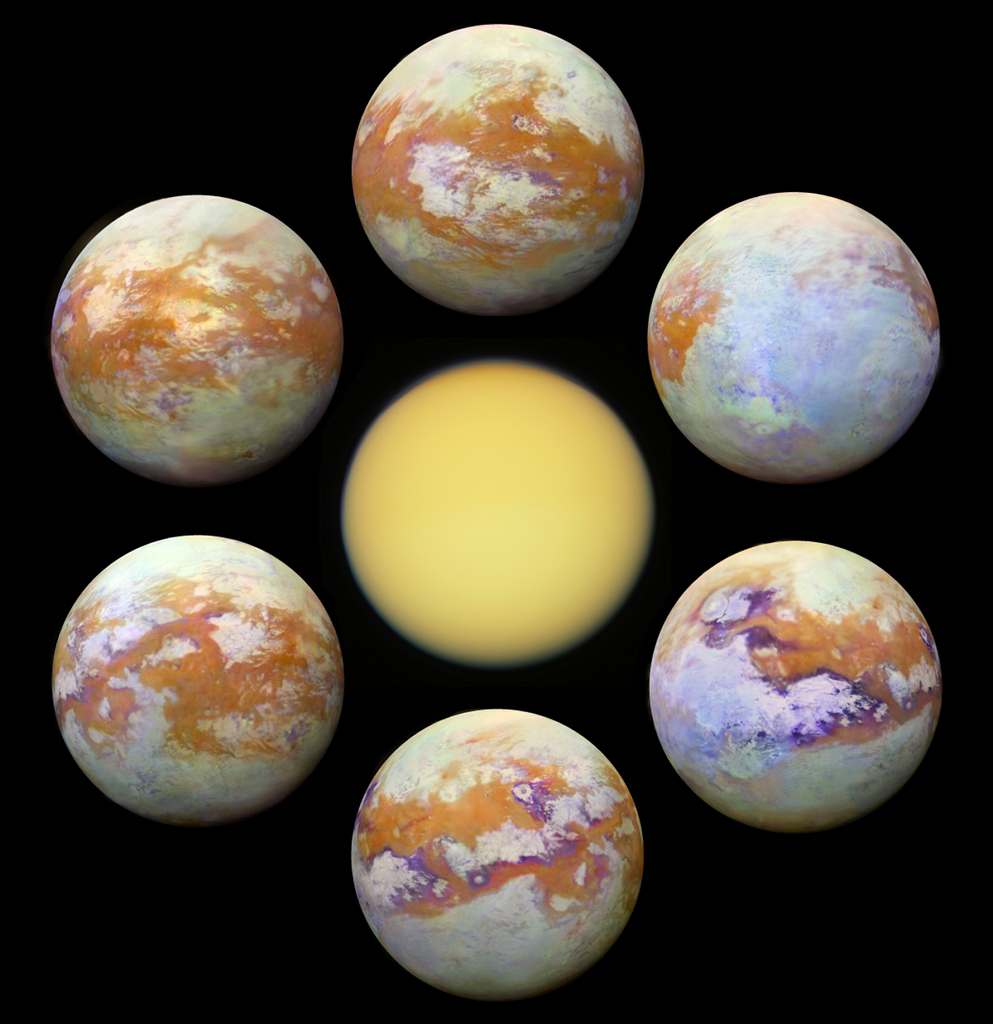
Seeing Titan (2026-05-02)
Credits: NASA / APOD
Credits: NASA / APOD
Github
Trading tools
sunday-quant-scientist 1739 stars #20
A Free Newsletter for Quantitative and Algorithmic Trading, Portfolio Analysis, and Investing...
RustQuant 1718 stars #21
Rust library for quantitative finance....
Personae 1402 stars #22
📈 Personae is a repo of implements and environment of Deep Reinforcement Learning & Supervised Learning for Quantitative Trading....
Introduction-to-Quantitative-Finance 1362 stars #23
入门资料整理:1.多因子股票量化框架开源教程 2.学界和业界的经典资料收录 3.AI + 金融的相关工作,包括LLM, Agent, benchmark(evaluation), etc....
Sea Vessels
Next-Wave 4 stars #20
iOS app for wake surfers and foilers to track boat waves on Swiss lakes. Built with SwiftUI....
boatCamViewer 3 stars #21
Viewer for boatcam with horizontdetection / correction and trackers...
AtlasProximity 3 stars #22
The Atlas Discord Bot (ADB) is an automated way to track players, alert when boats enter your coordinate and much more for the WildCard game Atlas....
IceBoatRacingModpack 3 stars #23
Ice Boat Racing modpack issue tracker and configuration repository!...
Air Vessels
LiveTraffic 131 stars #20
LiveTraffic is an X-Plane multiplayer plugin, which fills your sky with live air traffic based on public flight tracking data....
hms-AREngine-demo 112 stars #21
Huawei AREngine kit sample code demonstrates how to use Huawei AR functions, including motion tracking, plane detection, face recognition and gesture recognition, etc....
plane-kafka 101 stars #22
Software define radio plane tracking into KSQL Kafka queries...
PassiveRadar 93 stars #23
It is a radar program for rtl-sdr using ambiguity function to track flying planes...
Imagery
color-matcher 641 stars #20
automatic color-grading and image data augmentation...
Text-Image-Augmentation 493 stars #21
Geometric Augmentation for Text Image...
image_augmentor 458 stars #22
Data augmentation tool for images...
brainstorm 404 stars #23
Implementation of "Data augmentation using learned transforms for one-shot medical image segmentation"...
Video
autoclip 5090 stars #20
AutoClip : AI-powered video clipping and highlight generation · 一款智能高光提取与剪辑的二创工具...
mmaction2 5005 stars #21
OpenMMLab's Next Generation Video Understanding Toolbox and Benchmark...
HunyuanVideo-1.5 4414 stars #22
HunyuanVideo-1.5: A leading lightweight video generation model...
Tune-A-Video 4368 stars #23
[ICCV 2023] Tune-A-Video: One-Shot Tuning of Image Diffusion Models for Text-to-Video Generation...