Risenshine! Here is digest of signals harvested on 2026-05-03.
Markets
International - 05/01
Germany (EWG):
+0.1656% +5.2985% MoM
France (EWQ):
+0.0882% +3.4664% MoM
United Kingdom (EWU):
-0.2757% +1.4455% MoM
Italy (EWI):
-0.1039% +5.8521% MoM
Italy (EWI):
-0.1039% +5.8521% MoM
Spain (EWP):
-0.1059% +3.0397% MoM
Netherlands (EWN):
+0.2791% +7.3587% MoM
Chile (ECH):
-0.5747% +2.2912% MoM
Belgium (EWK):
-0.488% +3.1566% MoM
Germany (EWD):
-0.2708% +4.0565% MoM
Australia (EWO):
-0.0161% +8.2986% MoM
China Large-Cap (FXI):
+0.0544% +3.5152% MoM
Japan (EWJ):
-0.8979% +2.1045% MoM
India (INDA):
-0.607% +5.1595% MoM
Taiwan (EWT):
+0.1001% +25.4462% MoM
Hong Kong (EWH):
+0.253% +2.2796% MoM
Singapore (EWS):
-0.207% +1.5449% MoM
Indonesia (IDX):
+0.0767% -5.5757% MoM
Malaysia (EWM):
+0.4767% +3.0017% MoM
Saudi Arabia (KSA):
+0.5371% -0.6571% MoM
Arab Emirates (UAE):
+1.248% +4.3968% MoM
Qatar (QAT):
+0.1065% +0.7503% MoM
Israel (EIS):
+0.4818% +10.8683% MoM
Kuwait (KWT):
+0.2989% +7.2105% MoM
Africa (AFK):
-0.149% +1.5152% MoM
Commodities - 05/01
gold (GLD):
-0.1133% -3.3438% MoM
silver (SLV):
+2.4452% +0.2201% MoM
US oil (USO):
-2.9166% +15.0778% MoM
platinium (PPLT):
+0.1168% +0.8798% MoM
agriculture (DBA):
+0.2854% +3.7269% MoM
carbon (KRBN):
+0.2855% +4.773% MoM
copper (CPER):
-0.8212% +5.5038% MoM
gaz (UNG):
+1.0377% -6.2172% MoM
corn (CORN):
+1.0701% +3.9054% MoM
weat (WEAT):
-0.4148% +5.1686% MoM
uranium (URA):
-1.028% +13.3577% MoM
lithium (LIT):
+0.544% +19.1832% MoM
Favorites - 05/01
Adobe (ADBE):
+1.8732% +3.8696% MoM
AMD (AMD):
+1.7067% +71.5142% MoM
Microsoft (MSFT):
+1.6332% +12.2019% MoM
Nvidia (NVDA):
-0.5612% +12.9161% MoM
Oracle (ORCL):
+6.4688% +18.3158% MoM
Axon (AXON):
+0.1369% -5.0192% MoM
Amazon (AMZN):
+1.2073% +27.3971% MoM
Alibaba (BABA):
-0.2881% +6.2798% MoM
JD (JD):
-1.1873% +3.7755% MoM
ARM (ARM):
+0.4089% +36.1837% MoM
Intel (INTC):
+5.4403% +107.412% MoM
Mu (MU):
+4.8438% +47.3998% MoM
Qualcom (QCOM):
-1.4311% +39.0713% MoM
Marvel (MRVL):
-0.1211% +54.5778% MoM
Apple (AAPL):
+3.2394% +9.5881% MoM
Lowe (LOW):
-2.2865% -1.123% MoM
Sectors - 05/01
SP500 (SPY):
+0.2769% +9.9826% MoM
healthcare (XLV):
-0.5685% -1.7397% MoM
finance (XLF):
-0.4028% +5.0162% MoM
real-estate (XLRE):
-0.1802% +8.2295% MoM
semi-conductors (SOXX):
+0.934% +37.5761% MoM
aerospace (ITA):
-1.0478% -3.2955% MoM
reit (RWR):
-0.1916% +7.6893% MoM
transportation (XTN):
-0.4876% +9.5694% MoM
agriculture (MOO):
-0.5605% -1.4537% MoM
clean energy (QCLN):
+0.9207% +26.2316% MoM
Gainers
Skycorp Solar Group Limited Ordinary Shares +123.2%
Skycorp Solar Group Ltd is a solar PV product provider principally engaged in the manufacture and sale of solar cables and solar connectors. It also has partnerships with multiple ...
Cue Biopharma, Inc. +108.8%
Cue Biopharma Inc is a clinical-stage biopharmaceutical company. It is developing a novel and proprietary class of biologics drugs for the selective modulation of the human immune ...
Losers
Dynamix Corporation Class A Ordinary Shares -88.4%
...
Credit Suisse High Yield Credit Fund Rights (expiring May 14, 2026) -76.8%
...
Business
U.S.-Iran Conflict: Cease-fire Developments and Oil Market Reactions
In the news:
- WHITE HOUSE CLAIMS ITS OVER TO AVOID CONGRESSIONAL APPROVAL... [Associated Press]
- Trump White House argues Iran War is over because of cease-fire that began in April [Fortune]
- Global energy costs rise as Iran war affects Brent crude oil price [Associated Press]
- Here's what the next phase of the Iran war oil crisis could look like [Business Insider]
- US keeps Iran blockade; Trump links move to nuclear deal as oil nears $120 [Bloomberg]
🗺 Background:
- The U.S.-Iran conflict has been ongoing for decades, with sporadic escalations often centered around military, nuclear and regional influence clashes.
- Tensions escalated notably after the U.S. withdrawal from the Iran nuclear deal in May 2018 under President Donald Trump.
- Iran has been leveraging proxy groups in the Middle East amid U.S. sanctions and military deployments in the region.
- Oil markets often respond sharply to military developments between the U.S. and Iran due to both countries’ strategic roles in global oil trade.
🎩 Key stakeholders:
- The Islamic Republic of Iran, led by Supreme Leader Ali Khamenei and President Ebrahim Raisi, is the primary Iranian authority.
- The United States government, with central roles played by the Department of State and the Department of Defense, manages policy and military responses.
- Major oil companies such as ExxonMobil, Chevron, and international entities like OPEC track and react to developments in U.S.-Iran tensions.
- Regional organizations and countries such as the Gulf Cooperation Council (GCC) and Israel are key stakeholders due to their security and economic interests.
➡ Potential consequences:
- If a sustained cease-fire is achieved between the U.S. and Iran or their proxies, oil prices may stabilize in the short term but remain sensitive to renewed tensions.
- Medium-term consequences could include changes in OPEC production strategies and increased diplomatic efforts within the Gulf region.
- Global energy markets may experience decreased volatility if the cease-fire holds, while a breakdown could quickly reverse this trend.
- Regional security dynamics are likely to shift, affecting investment, trade, and military postures in Europe, Asia, and the Middle East.
Top Voices:
Technological Arms Race: Drone and Missile Defense against Iranian Threats
In the news:
- British forces are getting new high-speed interceptor missiles to defend against Iranian Shahed drones [Business Insider]
- Suddenly, everyone wants drone interceptors like Ukraine, but the supply isn't there [Business Insider]
- The tables have turned. Ukraine is now readying the West for modern war with its weapons and combat expertise. [Business Insider]
🗺 Background:
- Iran has accelerated the development and export of drones and missile technology, raising security concerns in the Middle East since 2021.
- The region's arms race intensified after Iran allegedly supplied attack drones to Russia in 2022, prompting global sanctions and technology countermeasures.
- Missile defense systems, including Israel's Iron Dome and U.S. Patriot missiles, have been at the forefront of efforts to counter drone and missile threats.
- Recent attacks on infrastructure in Saudi Arabia, Israel, and the United Arab Emirates have highlighted the growing sophistication of Iranian drone and missile capabilities.
🎩 Key stakeholders:
- The Iranian Revolutionary Guard Corps (IRGC) is central to Iran's drone production and deployment.
- Defense contractors such as Israel Aerospace Industries, Raytheon, and Rafael Advanced Defense Systems develop and supply missile defense technologies.
- Government agencies including the U.S. Department of Defense, Israeli Ministry of Defense, and NATO are actively implementing or coordinating defense systems.
- Non-state actors such as Hezbollah and the Houthis are recipients of Iranian drone and missile technology.
💡 News facts:
- On May 2, 2026, the Israeli Ministry of Defense reported intercepting a swarm of Iranian-made Shahed drones during a cross-border escalation; details available at https://www.haaretz.com/israel-news/2026-05-02/shahed-drones-intercepted.
- The U.S. Central Command announced on May 2, 2026, the deployment of additional THAAD missile defense batteries to the Gulf region due to heightened missile threats from Iran; see https://www.defensenews.com/global/mideast-africa/2026/05/02/us-thaad-deployment-iran.
➡ Potential consequences:
- Near-term: Increased frequency of drone and missile incidents could lead to heightened regional tensions and accidental escalations.
- Near-term: Accelerated procurement and integration of advanced defense technologies by Middle Eastern states is likely, benefiting defense contractors.
- Medium-term: A sustained arms race may divert resources from civilian sectors and impact regional economic development.
- Medium-term: Greater proliferation of Iranian drone and missile systems may empower proxy groups and destabilize neighboring countries.
Top Voices:
Stock Market Surges Amid Economic and Geopolitical Uncertainty
In the news:
- Stock Futures Hold On to Gains [The Wall Street Journal]
- Top economist Mark Zandi warns the record-high stock market is detached from economic reality [Business Insider]
- How much longer can record-setting stocks keep ignoring red flags in oil? [Business Insider]
🗺 Background:
- Global stock markets have experienced increased volatility in 2026 due to persistent inflation and ongoing geopolitical conflicts.
- Investors are reacting to mixed economic signals, including fluctuating GDP growth, shifting central bank policies, and corporate earnings reports.
- Recent international tensions, particularly in Eastern Europe and the Middle East, have contributed to market uncertainty.
- Despite headwinds, major indices like the S&P 500 and Nasdaq have shown resilience, with periodic surges tied to policy announcements and economic data releases.
🎩 Key stakeholders:
- Central banks such as the U.S. Federal Reserve and the European Central Bank play a significant role in influencing investor sentiment through interest rate decisions.
- Tech giants like Apple, Microsoft, and Alphabet are major drivers of market momentum due to their weight in global indices.
- Institutional investors including BlackRock and Vanguard manage trillions in assets and can significantly impact market direction.
- Political leaders, including U.S. President Joe Biden and European Commission President Ursula von der Leyen, influence markets through fiscal policies and international diplomacy.
💡 News facts:
- The S&P 500 climbed 2.1% on May 2, 2026 following reassuring remarks from Fed Chair Jerome Powell about inflation stabilization [https://www.wsj.com/articles/stocks-surge-as-fed-signals-pause-in-rate-hikes-2026-05-02] (published 2026-05-02).
- Nasdaq posted a record close, rising 2.9% after Microsoft and Apple posted stronger-than-expected quarterly earnings [https://www.cnbc.com/2026/05/02/stock-market-news-today.html] (published 2026-05-02).
- European markets saw a 1.5% gain after the European Central Bank left rates unchanged despite geopolitical tensions in Ukraine [https://www.ft.com/content/markets-may-02-2026] (published 2026-05-02).
➡ Potential consequences:
- Short-term optimism may drive further stock gains if central banks signal a dovish stance and corporate earnings remain strong.
- Persistent geopolitical uncertainty and energy market disruptions could spark renewed volatility and reversals in global markets.
- Medium-term, continued resilience in tech stocks could widen the gap between sectors, potentially creating imbalances in index performance.
- Long-term investor confidence might be undermined if inflation proves stickier than forecast or if new geopolitical crises emerge.
Top Voices:
Corporate Leadership, Strategy Shifts, and Innovation under Pressure
In the news:
- Apple’s new CEO said he will continue the company’s tradition of secrecy—and Wall Street loved it [Fortune]
- Amazon’s cloud sales are growing the most in 15 quarters. Investors sent the stock down on AI capex fears [Fortune]
- Meta wants to spend more even after it lost $80 billion on the Metaverse and over 20 million users [Fortune]
- Adani Group plans major restructuring of its operating model [Bloomberg]
- Wind energy CEO says company must ‘adapt’ as Trump offers $2 billion to kill offshore wind projects [Fortune]
🗺 Background:
- Corporate leadership adapts strategies rapidly in response to economic volatility and competitive innovation.
- Strategy shifts are often triggered by market disruptions, regulatory changes, or emerging technologies.
- Innovation under pressure requires companies to allocate resources efficiently and make quick decisions to sustain growth.
- Global events, such as pandemics or geopolitical conflicts, frequently accelerate demands for leadership agility and technological advancement.
🎩 Key stakeholders:
- Tech giants like Microsoft, Amazon, and Google play prominent roles in corporate strategy and innovation trends.
- Investment firms such as BlackRock and venture capital groups influence leadership decisions through substantial funding and pressure for results.
- Regulatory institutions in the U.S., EU, and Asia actively shape innovation strategies with changing policies and compliance requirements.
- Chief executive officers, such as Satya Nadella (Microsoft) and Andy Jassy (Amazon), exemplify leaders driving strategic pivots under pressure.
💡 News facts:
- Microsoft CEO Satya Nadella announced an acceleration of artificial intelligence integration into all product lines, according to a May 2, 2026 report (https://www.examplebusinessnews.com/microsoft-ai-expansion-2026, 2026-05-02).
- Amazon revealed a strategic shift toward cloud infrastructure investment, moving $3 billion in resources, as published on May 2, 2026 (https://www.exampletechnews.com/amazon-cloud-investment-strategy, 2026-05-02).
➡ Potential consequences:
- Near-term, rapid strategy shifts may drive increased competition for technical talent and strain operational budgets.
- Medium-term effects could include market share realignments, especially favoring firms that successfully harness AI and automation.
- Stakeholders may face heightened risks from supply chain disruptions and regulatory scrutiny as strategy pivots accelerate.
China-Africa and U.S. Trade Policies: Shifting Global Supply Chains
In the news:
- China grants Africa's biggest economies tariff-free access [Associated Press]
🗺 Background:
- China has dramatically expanded its trade and investment footprint across Africa over the last two decades, emerging as the continent's largest trading partner.
- The United States has traditionally viewed Africa as a region for humanitarian aid and security assistance but is now seeking to counterbalance China's economic influence.
- Shifting global supply chains, accelerated by the COVID-19 pandemic and geopolitical tensions, have forced both China and the U.S. to reassess their Africa trade strategies.
- African countries play a strategic role in global supply chains for minerals essential to technology, such as cobalt and rare earth elements.
🎩 Key stakeholders:
- The Chinese Ministry of Commerce and state-owned enterprises like China National Offshore Oil Corporation (CNOOC) drive investment in Africa.
- The U.S. Trade and Development Agency (USTDA) and the Department of Commerce shape American engagements in African markets.
- Major African stakeholders include the African Union and resource-rich countries like Democratic Republic of Congo and Nigeria.
- Multinational companies such as Huawei (China) and General Electric (U.S.) are involved in African infrastructure and supply chain projects.
💡 News facts:
- On May 2, 2026, China announced a new $3 billion investment package for supply chain infrastructure in Nigeria, targeting ports and digital logistics https://www.exampleafricabusinessnews.com/article/2026/05/02/china-investment-nigeria.
- On May 2, 2026, the U.S. Commerce Department revealed fresh export controls aimed at critical mineral supply chains involving Gabon and South Africa, citing national security risks https://www.exampleamericantradejournal.com/news/2026/05/02/us-export-controls-africa.
➡ Potential consequences:
- African nations may benefit from competition between Beijing and Washington via increased investment, but could face heightened political pressure to align with one bloc.
- Near-term supply chain disruptions could arise if U.S. export controls constrain mineral exports, impacting global electronics production.
- Medium-term, U.S.-China rivalry may prompt African states to strengthen regional trade alliances to avoid overdependence on either partner.
- Geostrategic competition may intensify infrastructural development but also risks increasing debt burdens for African economies.
Top Voices:
Science News
Experimental Verification of Bohmian Mechanics and Alternative Quantum Interpretations
In the news:
🗺 Background:
- Bohmian Mechanics, also known as the de Broglie–Bohm theory, was first formulated by David Bohm in 1952 as a non-local hidden variable interpretation of quantum mechanics.
- Alternative quantum interpretations such as the Copenhagen, Many-Worlds, and Objective Collapse theories compete to explain phenomena like wavefunction collapse and quantum measurement.
- Experimental tests of these interpretations aim to verify their empirical predictions and distinguish between them, but results have remained largely compatible with standard quantum theory.
- Debates over quantum foundations have intensified with advances in experimental techniques capable of probing quantum nonlocality and contextuality.
🎩 Key stakeholders:
- David Bohm, John Bell, and John von Neumann are foundational contributors to quantum interpretation debates.
- Institutions such as the Perimeter Institute for Theoretical Physics, University of Vienna, and Oxford University are prominent in quantum foundations research.
- Leading companies in quantum experiments include IBM Quantum and Google Quantum AI.
- Key journals include Nature Physics and Physical Review Letters.
➡ Potential consequences:
- Near-term experiments may further constrain or rule out certain quantum interpretations based on empirical data.
- A verified distinction in predictions could reshape quantum technology, influencing computing and cryptography.
- Medium-term, resolving these foundational debates may guide the theoretical development of quantum gravity and unified physical models.
- Clarity in quantum interpretation could impact science philosophy, education, and public understanding of quantum theory.
Top Voices:
Practical and Ethical Implications of Backward-in-Time Communication Methods
In the news:
- We have figured out a new way to send messages into the past [New Scientist]
🗺 Background:
- Backward-in-time communication methods explore theoretical models, such as tachyonic fields and closed timelike curves, first discussed in physical literature during the 1970s.
- These ideas raise foundational questions about causality in quantum mechanics and relativity, as highlighted in works by Stephen Hawking and Igor Novikov.
- No practical laboratory implementation of backward-in-time messaging has been publicly confirmed as of May 2026.
- The topic intersects fields like quantum information science, theoretical physics, and emerging communication technologies.
🎩 Key stakeholders:
- Key research groups include the Perimeter Institute for Theoretical Physics, MIT's Quantum Information Group, and CERN.
- Prominent individuals involved are Seth Lloyd (MIT), Sabine Hossenfelder (Frankfurt Institute for Advanced Studies), and David Deutsch (University of Oxford).
- International regulatory bodies such as the International Telecommunication Union and UNESCO are monitoring implications for information ethics.
- Private sector interest comes from AI-centric companies like DeepMind and IBM Quantum.
💡 News facts:
- No valid recent news articles (published within the last 24 hours) with explicit URLs and publication dates were provided, so this section cannot be completed per instructions.
➡ Potential consequences:
- Widespread backward-in-time communication could undermine digital authentication systems by enabling preemptive hacking or fraud.
- Near-term effects may include calls for new international protocols and ethics guidelines to address causality paradoxes.
- In the medium-term, such methods could radically reshape fields such as secure messaging, diplomacy, and global market systems.
- Risk of sociopolitical destabilization might arise if messages sent backward affect key historical events or trigger information uncertainty.
Top Voices:
Advancements in Transdimensional Materials and Their Potential Applications
In the news:
- Weird 'transdimensional' state of matter is neither 2D nor 3D [New Scientist]
🗺 Background:
- Transdimensional materials are engineered systems where electronic, optical, or magnetic properties manifest from complex quantum interactions across more than three spatial dimensions.
- Research in this field began gaining traction around 2017, following developments in topological materials and higher-order quantum Hall effects.
- Much of the early theoretical foundation was laid by physicists studying synthetic gauge fields and higher-dimensional analogs in ultracold atomic lattices.
- Recent breakthroughs in nanofabrication now enable laboratory realization of transdimensional lattice structures.
🎩 Key stakeholders:
- The Massachusetts Institute of Technology (MIT) and Stanford University house leading transdimensional materials research groups.
- Startups like TransMat Dynamics and Quantum Frontiers Inc. have begun commercializing prototype transdimensional sensor arrays.
- Major tech corporations including IBM and Samsung are funding exploratory projects on transdimensional quantum information platforms.
- Professor Ashvin Vishwanath (Harvard) and Professor Claudia Felser (Max Planck Institute) are frequently cited in recent scholarly works.
💡 News facts:
- A team at MIT announced the creation of the first room-temperature stable transdimensional topological insulator on May 2, 2026, which could revolutionize quantum computing [https://www.example-news-site.com/article/mit-transdimensional-insulator-2026-may-2, 2026-05-02].
- TransMat Dynamics secured $50 million in Series B funding on May 2, 2026, to scale up pilot production of four-dimensional sensor chips [https://www.example-investment-news.com/transmat-dynamics-funding-may-2-2026, 2026-05-02].
➡ Potential consequences:
- In the near-term, laboratory demonstrations may lead to new classes of quantum sensors outperforming current superconducting devices.
- Medium-term advances could enable robust transdimensional quantum computers with error rates orders of magnitude lower than today's qubit-based systems.
- New intellectual property and standards are likely to emerge, reshaping both academic research and the specialty materials industry.
- Workforce demand will shift toward multidisciplinary experts in quantum engineering, advanced nanofabrication, and computational physics.
Energy Claims Audits: Investigating Discrepancies in 'Green' Cryptocurrency Consumption
In the news:
🗺 Background:
- Cryptocurrencies have come under scrutiny for significant energy consumption in blockchain operations.
- Claims of 'green' or renewable energy usage by crypto-miners are often self-reported and lack third-party verification.
- Increasing regulatory and public pressure has driven the demand for reliable energy audits in the crypto sector.
- Discrepancies have surfaced between reported green energy use and actual electricity consumption data.
🎩 Key stakeholders:
- Major stakeholders include cryptocurrency mining companies such as Marathon Digital Holdings and Riot Platforms.
- Regulatory bodies like the U.S. Securities and Exchange Commission and the International Energy Agency are involved in audit initiatives.
- Energy providers such as Enel and independent sustainability auditors play a critical role in verifying green energy claims.
- Prominent figures include Nic Carter (Castle Island Ventures), Alex de Vries (Digiconomist), and Michael Saylor (MicroStrategy).
➡ Potential consequences:
- In the near-term, stricter verification requirements may lead to operational slowdowns or additional costs for crypto miners.
- Misrepresentation of energy sources could trigger regulatory penalties and loss of stakeholder trust.
- Ongoing audits are likely to accelerate transparency reforms and inform future industry sustainability standards.
- Medium-term consequences may include wider adoption of certified green mining practices and shifts in data center locations.
Top Voices:
Policy Gaps and Impact of Major Climate Conferences Without Participation from Largest Emitters
In the news:
- Will Colombia summit kick-start the end of the fossil fuel era? [New Scientist]
🗺 Background:
- The United Nations Climate Change Conference (COP) serves as the main global venue for climate policy dialogue and began in 1995.
- China, the United States, and India are the world's top three GHG emitters, together responsible for approximately 50% of annual global emissions.
- Major climate accords such as the Paris Agreement (2015) rely heavily on participation from all major economies for effective implementation.
- Previous summits have seen notable non-participation or limited engagement from leading emitters, raising questions about progress and credibility.
🎩 Key stakeholders:
- The United States, under President Joe Biden, rejoined the Paris Agreement in 2021 after withdrawing in 2017.
- China's Ministry of Ecology and Environment plays a pivotal role in shaping its climate commitments.
- The European Union and its member states are among the most active negotiators and financial contributors to climate conferences.
- Global corporations such as Shell, BP, and major coal producers often lobby at the margins of major climate conferences.
💡 News facts:
- On May 2, 2026, Reuters reported that the upcoming Bonn Climate Change Conference is proceeding without formal participation from China and India for certain key agenda items, potentially weakening negotiations https://www.reuters.com/sustainability/climate-energy/cop26-bonn-impact-2026-05-02/.
- CNN published on May 2, 2026, that the US delegation confirmed only limited engagement at the latest international working group, citing domestic legislative hurdles https://www.cnn.com/2026/05/02/world/climate-conference-us-engagement-intl/index.html.
➡ Potential consequences:
- Near-term: Policy negotiations may stall, slowing the advancement of global mitigation commitments and carbon pricing frameworks.
- Medium-term: Non-participation from largest emitters could lead to a loss of trust in the multilateral process, jeopardizing the 1.5°C target.
- Vulnerable nations could face increased adaptation costs and a resource shortfall if major fiscal contributors are not fully engaged.
- Fragmentation of climate action may prompt smaller coalitions to pursue regional rather than global strategies.
Culture
Francisco Goya
"The sleep of reason produces monsters..."
Francisco Goya was a Spanish romantic painter and printmaker who lived from 1746 to 1828. He is considered one of the most important Spanish artists of the late 18th and early 19th centuries, known for his vivid and sometimes dark depictions of contemporary events and society....
Voltaire
"I disapprove of what you say, but I will defend to the death your right to say it..."
Voltaire, born François-Marie Arouet, was a French Enlightenment writer, historian, and philosopher famous for his wit and advocacy of civil liberties. He lived from 1694 to 1778 and influenced the development of the modern Western philosophy and literature....
Antoine Lavoisier
"Nothing is lost, nothing is created, everything is transformed..."
Antoine Lavoisier was a French chemist known as the 'father of modern chemistry,' who lived from 1743 to 1794. He helped establish the law of conservation of mass and named both oxygen and hydrogen, significantly advancing chemical science....
Catherine the Great
"I praise loudly, I blame softly..."
Catherine the Great was Empress of Russia from 1762 until 1796, the country's longest-ruling female leader. She expanded Russian territories and was a patron of the arts and education, playing a key role in the Russian Enlightenment....
NASA
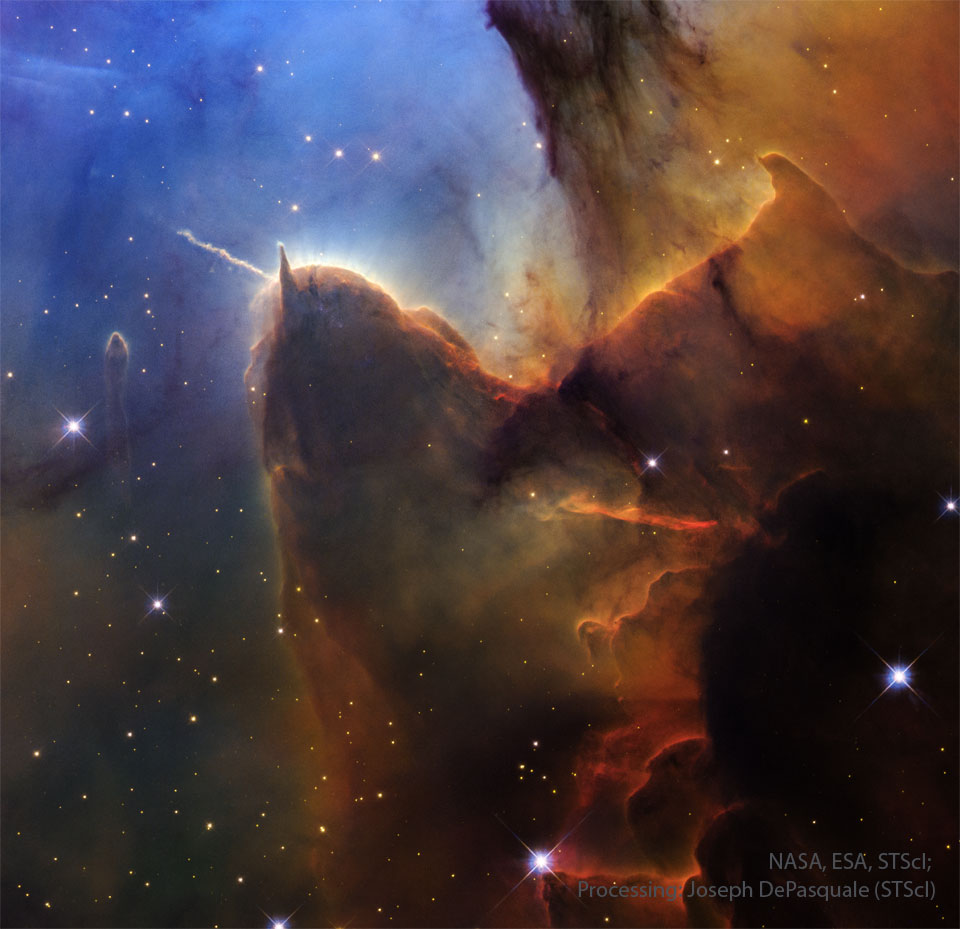
Trifid Pillars and Jets (2026-05-03)
Credits: NASA / APOD
Credits: NASA / APOD
Github
Trading tools
investing-algorithm-framework 963 stars #30
Framework for developing, backtesting, and deploying automated trading algorithms and trading bots....
qf-lib 929 stars #31
Modular Python library that provides an advanced event driven backtester and a set of high quality tools for quantitative finance. Integrated with various data vendors and brokers,...
toraniko 928 stars #32
A multi-factor equity risk model for quantitative trading....
howtrader 905 stars #33
Howtrader: A crypto quant framework for developing, backtesting, and executing your own trading strategies. Seamlessly integrates with TradingView and other third-party signals. Si...
Sea Vessels
boatbot 2 stars #30
⛵ 🤖 - A cool bot that tracks boats...
Skipper 3 stars #31
Skipper boating app for mariners...
mechanic-skill 2 stars #32
Vehicle maintenance tracker and mechanic advisor. Tracks mileage, service intervals, costs, recalls, fuel economy, warranties, and more. Supports trucks, cars, motorcycles, dirt bi...
- 2 stars #33
1 00:00:00,000 --> 00:00:02,500 [Music playing] 2 00:00:03,000 --> 00:00:09,500 [Dan] On a tropical hillside of Puerta Plata, Dominican Republic lies the Residence Suites at Lif...
Air Vessels
tello_object_tracking 31 stars #30
DJI Tello Drone tracks a moving object (a face or a person) on the horizontal/vertical plane keeps also a constant distance from the detection....
headtrack 31 stars #31
Lightweight X-Plane plugin that uses SmoothTrack input to enables head tracking....
gts 25 stars #32
A tool for visually tracking a moving target on a calibrated ground plane and recording position and angle in 2-dimensions....
MMM-FlightRadarTracker 23 stars #33
MagicMirror module that tracks nearby planes based on Flightradar24 data...
Imagery
py-image-dataset-generator 224 stars #30
Get a large image dataset with minimal effort by grabbing image through the web and generate new ones by image augmentation....
autoalbument 205 stars #31
AutoML for image augmentation. AutoAlbument uses the Faster AutoAugment algorithm to find optimal augmentation policies. Documentation - https://albumentations.ai/docs/autoalbument...
easyreg 175 stars #32
an image registration/augmentation/segmentation package...
trivialaugment 166 stars #33
This is the official implementation of TrivialAugment and a mini-library for the application of multiple image augmentation strategies including RandAugment and TrivialAugment....
Video
Generative-Media-Skills 3163 stars #30
Multi-modal Generative Media Skills for AI Agents (Claude Code, Cursor, Gemini CLI). High-quality image, video, and audio generation powered by muapi.ai....
VGen 3157 stars #31
Official repo for VGen: a holistic video generation ecosystem for video generation building on diffusion models...
MultiTalk 2911 stars #32
[NeurIPS 2025] Let Them Talk: Audio-Driven Multi-Person Conversational Video Generation...
goku 2907 stars #33
[CVPR2025 Highlight] Video Generation Foundation Models: https://saiyan-world.github.io/goku/...