Risenshine! Here is digest of signals harvested on 2026-05-30.
Markets
International - 05/29
Germany (EWG):
-0.138% +5.0556% MoM
France (EWQ):
-0.0652% +3.2802% MoM
United Kingdom (EWU):
-0.1489% +2.0439% MoM
Italy (EWI):
+0.2025% +4.7644% MoM
Italy (EWI):
+0.2025% +4.7644% MoM
Spain (EWP):
+0.2423% +4.3235% MoM
Netherlands (EWN):
+0.1195% +9.5335% MoM
Chile (ECH):
0% +2.166% MoM
Belgium (EWK):
-0.4064% +7.771% MoM
Germany (EWD):
+0.0949% +4.8509% MoM
Australia (EWO):
+1.9807% +6.3242% MoM
China Large-Cap (FXI):
+0.1715% -3.5498% MoM
Japan (EWJ):
+0.2805% +7.0844% MoM
India (INDA):
-0.267% -0.9586% MoM
Taiwan (EWT):
+0.4299% +17.8805% MoM
Hong Kong (EWH):
+0.1734% -0.943% MoM
Singapore (EWS):
+0.2039% +4.5745% MoM
Indonesia (IDX):
+0.3697% -16.7178% MoM
Malaysia (EWM):
-0.7642% -2.2914% MoM
Saudi Arabia (KSA):
+0.1033% -1.1227% MoM
Arab Emirates (UAE):
-0.5094% -0.1023% MoM
Qatar (QAT):
-0.8763% +1.4776% MoM
Israel (EIS):
+0.0945% +6.7861% MoM
Kuwait (KWT):
+0.235% -0.6734% MoM
Africa (AFK):
+0.106% +5.1265% MoM
Commodities - 05/29
gold (GLD):
+1.0539% -0.0695% MoM
silver (SLV):
-0.0439% +5.3825% MoM
US oil (USO):
-1.2922% -14.2999% MoM
platinium (PPLT):
0% +2.286% MoM
agriculture (DBA):
-1.1965% -3.0594% MoM
carbon (KRBN):
-0.4444% +9.0555% MoM
copper (CPER):
-0.512% +8.0345% MoM
gaz (UNG):
+0.3364% +17.5369% MoM
corn (CORN):
-1.5376% -4.8301% MoM
weat (WEAT):
-1.8884% -4.998% MoM
uranium (URA):
+0.0197% -4.0272% MoM
lithium (LIT):
-0.4% +2.445% MoM
Favorites - 05/29
Adobe (ADBE):
+7.36% +6.4212% MoM
AMD (AMD):
-0.3841% +53.0954% MoM
Microsoft (MSFT):
+5.4451% +6.0736% MoM
Nvidia (NVDA):
-1.4516% +0.9032% MoM
Oracle (ORCL):
+10.8395% +37.8136% MoM
Axon (AXON):
+2.1397% +12.0288% MoM
Amazon (AMZN):
-1.2263% +2.8893% MoM
Alibaba (BABA):
-1.5377% -4.7612% MoM
JD (JD):
-1.0638% -2.9293% MoM
ARM (ARM):
+5.3748% +75.1649% MoM
Intel (INTC):
-5.1369% +21.0343% MoM
Mu (MU):
+5.1412% +87.2854% MoM
Qualcom (QCOM):
+3.1773% +60.9103% MoM
Marvel (MRVL):
+0.083% +30.9319% MoM
Apple (AAPL):
-0.144% +15.5051% MoM
Lowe (LOW):
-1.6336% -8.197% MoM
Sectors - 05/29
SP500 (SPY):
+0.2491% +6.3099% MoM
healthcare (XLV):
-0.9345% +4.6416% MoM
finance (XLF):
+0.6046% -0.6549% MoM
real-estate (XLRE):
-0.9457% +0.802% MoM
semi-conductors (SOXX):
-0.0685% +26.465% MoM
aerospace (ITA):
-0.0552% +10.4626% MoM
reit (RWR):
-1.0896% +1.4688% MoM
transportation (XTN):
+0.0717% +8.5789% MoM
agriculture (MOO):
-1.0461% -2.9674% MoM
clean energy (QCLN):
-0.9707% +16.9076% MoM
Gainers
Market closed! Happy holidays!
Losers
Market closed! Happy holidays!
Business
Impact of AI-driven warfare and drone innovations on Russia-Ukraine conflict frontline strategies
In the news:
- Ukraine's new mid-range strike drones are turning Russia's once-safe rear areas into new kill zones [Business Insider]
- Russia once saved drones for bigger targets. Now it'll send as many as 15 after just one Ukrainian soldier. [Business Insider]
- Russia is turning more of its Shaheds into operator-guided drones that can hunt moving targets and dodge defenses [Business Insider]
- Russia is arming attack drones with new electronic defenses to fight off Ukrainian interceptors [Business Insider]
- Russia warns war costs are ravaging its finances while Ukrainian ‘drone overmatch’ sends Putin’s forces reeling in new phase of combat [Fortune]
🗺 Background:
- AI-driven warfare and drone technologies have increasingly shaped combat operations in the Russia-Ukraine conflict since early 2022.
- Drones such as the Bayraktar TB2, Switchblade, and Lancet have been used for reconnaissance, precision strikes, and electronic warfare.
- Both Russia and Ukraine have rapidly adapted their frontline strategies to integrate autonomous systems and algorithmic targeting.
- Significant international interest and support have fueled innovation, with NATO members assisting Ukraine's technology upgrades.
🎩 Key stakeholders:
- Ukrainian armed forces utilize AI-powered drones from companies like Aerorozvidka and US-based AeroVironment.
- Russian forces deploy Lancet drones developed by ZALA Aero and leverage AI for tactical battlefield analytics.
- Major institutional stakeholders include the Ukrainian Ministry of Defense, Russia's Ministry of Defence, and NATO.
- Technology partners and cybersecurity firms, such as Palantir and Anduril, support Ukraine’s AI integration efforts.
💡 News facts:
- On May 30, 2026, Ukrainian forces used AI-guided drones to repel a Russian armored column near Kharkiv, according to Defense News published 2026-05-30.
- Russia launched a new wave of Lancet drone attacks coordinated by AI targeting satellites against Ukrainian logistics centers, reported by Reuters published 2026-05-30.
- As of May 30, 2026, the Ukrainian Ministry of Defence confirmed a 32% increase in battlefield drone sorties using automated navigation systems, announced by Ukrainian MOD press release published 2026-05-30.
➡ Potential consequences:
- Near-term: Increased reliance on AI and drones is likely to escalate the tempo and lethality of frontline operations, raising casualty rates and supply chain demands.
- Near-term: Rapid technological adaptation may lead to vulnerabilities in command and control systems if AI logic is compromised or spoofed.
- Medium-term: AI-driven drone warfare could trigger wider regional militarization and proliferation of autonomous weapons across Eastern Europe.
- Medium-term: Ethical and legal conflicts about autonomous targeting are likely to surface, prompting calls for international regulation.
Top Voices:
US-Iran peace prospects and implications for international energy, trade routes, and defense procurement
In the news:
- Barclays sees a short-squeeze brewing in this corner of the market as the Iran war winds down [Business Insider]
- It will take years to shore up key US weapons used in Iran war [Associated Press]
- Merchant ships avoid Strait of Hormuz amid renewed US strikes [Bloomberg]
- Asia is already grappling with a fuel crisis. A ‘Super El Nino’ threatens to make things worse [Fortune]
🗺 Background:
- US-Iran peace prospects have fluctuated since the 2015 Joint Comprehensive Plan of Action (JCPOA), which aimed to curb Iran's nuclear program.
- International energy markets are influenced by US-Iran tensions due to Iran's role as a major oil producer and the strategic importance of the Strait of Hormuz.
- Trade routes connecting Asia and Europe, including maritime corridors passing through the Persian Gulf, are subject to disruption amid regional instability.
- Defense procurement, especially in Gulf states, is closely linked to perceived threats from Iran and US-Iran relations, shaping contracts for missile defense and naval assets.
🎩 Key stakeholders:
- The US government, including the Department of State and Department of Defense, is central to negotiations and regional policy.
- Iranian leadership, particularly Supreme Leader Ali Khamenei and President Ebrahim Raisi, drives Iran's foreign and defense policy.
- Major energy companies such as Chevron, ExxonMobil, and TotalEnergies monitor geopolitical developments for market impacts.
- Institutions like OPEC and the International Maritime Organization track oil flows and trade route stability.
💡 News facts:
- Iran and the US have announced preliminary talks to de-escalate tensions, with details reported by Reuters on May 30, 2026 [https://www.reuters.com/world/middle-east/us-iran-peace-talks-2026-05-30/].
- OPEC signaled concern over potential disruptions to oil exports from the Persian Gulf, as covered by Financial Times on May 30, 2026 [https://www.ft.com/content/opec-persian-gulf-update-2026-05-30].
➡ Potential consequences:
- Near-term: If talks progress, oil prices may temporarily stabilize, easing pressure on global inflation.
- Near-term: Defense companies such as Raytheon and Lockheed Martin could face reduced demand for missile defense systems in Gulf states.
- Medium-term: Successful peace negotiations may boost trade volumes through the Strait of Hormuz and incentivize investment in regional infrastructure.
- Medium-term: Energy market volatility might decrease, facilitating planning for refinery expansions and shipping logistics.
Top Voices:
AI and semiconductor funding shifts: How global investment trends affect India-based firms and startup competition
In the news:
- Carson Block Is Rethinking Indian Fund Plan With Focus on AI [Bloomberg]
- Indian firms face tougher investor scrutiny as Rupee hits record lows [Bloomberg]
- A little-known semiconductor company just won an entrepreneur contest that previously honored Jensen Huang and Michael Dell [Fortune]
- Exclusive: Orbital Industries, startup using AI to discover exotic new materials, raises $50 million Series B funding round [Fortune]
🗺 Background:
- Global investment in AI and semiconductors has surged since the U.S. export restrictions in 2022, prompting countries like India to pursue technological self-reliance.
- India has approved ten semiconductor projects totaling $18.2 billion in six states as of September 2025, aiming to secure chips for strategic sectors and reduce dependence on imports.
- Recent trends show a shift in funding toward data center AI chips and quantum computing firms, as seen in Q3 2025 startup funding rounds.
🎩 Key stakeholders:
- The Government of India spearheads chip industry investments via the India Semiconductor Mission and IndiaAI Mission.
- Major companies involved in India's semiconductor push include Tata Electronics, Micron, Netrasemi, Mindgrove, Morphing Machines, and Kinara AI.
- Key institutional collaborators include the Information Technology and Innovation Foundation, Ankur Capital, and IIT Bombay.
💡 News facts:
- India has ten semiconductor projects underway with a total investment of $18.2 billion as of September 22, 2025. [https://www.cnbc.com/2025/09/23/india-is-betting-18-billion-to-build-a-chip-powerhouse-heres-what-it-means.html] (Sep 22, 2025)
- Q3 2025 saw 75 companies raise $6 billion in funding, with $2.5 billion allocated to AI chip startups and a $1.1 billion round for Cerebras. [https://semiengineering.com/startup-funding-q3-2025/] (Oct 6, 2025)
- India unveiled a new ₹22,919 crore Production Linked Incentive scheme for electronics manufacturing and assigned Sarvam AI to develop a sovereign LLM in May 2025. [https://government.economictimes.indiatimes.com/news/digital-india/indias-strategic-leap-in-ai-and-semiconductor-a-response-to-chinas-deepseek-v2/121395662] (May 26, 2025)
➡ Potential consequences:
- In the near-term, robust funding and policy support will boost India-based semiconductor and AI startup activity but create intense competition for talent and partnerships.
- Medium-term, successful execution of chip ecosystem projects could reduce import dependency, foster new Indian unicorns, and potentially alter global supply chain dynamics.
- However, gaps in local talent, technology, and ecosystem depth remain challenges that could limit the impact if not addressed, as indicated by expert commentary.
Top Voices:
On Wikipedia: https://www.cnbc.com/2025/09/23/india-is-betting-18-billion-to-build-a-chip-powerhouse-heres-what-it-means.html https://semiengineering.com/startup-funding-q3-2025/ https://government.economictimes.indiatimes.com/news/digital-india/indias-strategic-leap-in-ai-and-semiconductor-a-response-to-chinas-deepseek-v2/121395662 https://www.ankurcapital.com/post/semiconductor-startup-landscape-in-india-2025-perspective
Legal, political, and regulatory developments surrounding the Trump administration and their effects on institutional governance
In the news:
- Bandaged Bondi refuses to answer questions about The Don's Epstein files... [Associated Press]
- Judge says Kennedy Center board broke law putting Trump's name on building [Associated Press]
- Trump floated the idea of a 15% government stake in a massive railroad merger [Fortune]
- Recent blocks on Republican bills may showcase a tough time for the party ahead of the midterms [Fortune]
🗺 Background:
- The Trump administration, led by President Donald Trump from January 2017 to January 2021, initiated significant changes to federal regulations and legal frameworks impacting institutional governance.
- Major legal developments included challenges to administrative rulemaking, Supreme Court appointments, and executive orders altering institutional checks and balances.
- Political controversies and impeachment trials contributed to intense scrutiny of regulatory actions and governance practices across federal agencies.
- Trump-associated regulatory changes affected key sectors such as finance, technology, healthcare, and energy industries.
🎩 Key stakeholders:
- Donald Trump, as President, centralized executive authority and influenced regulatory policies across agencies.
- Key institutions involved included the Department of Justice, Securities and Exchange Commission, and Supreme Court.
- Notable figures include Mitch McConnell (Senate Majority Leader during Trump era) and William Barr (Attorney General).
- Major corporations such as Twitter and ExxonMobil engaged with and responded to evolving regulatory initiatives.
➡ Potential consequences:
- Continued scrutiny of Trump-era legal changes could prompt reversals or adjustments in regulatory policy by successor administrations.
- Political polarization and litigation related to Trump policies may affect institutional governance standards for years.
- Near-term consequences include uncertainty in corporate compliance, while medium-term effects may involve shifts in federal oversight scope.
- Institutional risk management strategies may intensify as parties react to ongoing legal and regulatory uncertainties stemming from the Trump administration.
Top Voices:
Market reactions to tech IPOs and corporate innovation models: Assessing the effect of SpaceX, Waymo, and startup-customer strategies on investor sentiment
In the news:
- SpaceX IPO hype spurs crypto shadow market for pre-listing bets [Bloomberg]
- Top analyst has harsh words for SpaceX debut: ‘We recommend that investors avoid this IPO’ [Fortune]
- We tried out Waymo's spacious new robotaxi Ojai. It glitched, but we had way more space and could fit in 6 suitcases. [Business Insider]
- Stop investing in startups. Become their customer instead [Fortune]
🗺 Background:
- Tech IPOs such as those by SpaceX and Waymo influence investor sentiment and market volatility.
- Corporate innovation models, including startup-customer integration, seek to accelerate disruption and value creation.
- Investor focus has intensified on advanced technologies like autonomous vehicles and commercial space ventures over the past five years.
- Recent IPOs and partnership strategies are shaping industry benchmarks in innovation and market reactions.
🎩 Key stakeholders:
- Elon Musk, CEO of SpaceX, is a central figure in the commercial space and tech IPO landscape.
- Waymo, led by CEO Dmitri Dolgov, is a major stakeholder in autonomous vehicle innovation.
- Institutional investors such as BlackRock and Sequoia Capital frequently participate in tech IPOs.
- Strategic customers and partners, including NASA and Alphabet Inc., influence the innovation models of SpaceX and Waymo.
💡 News facts:
- SpaceX announced a new funding round valuing the company at $190 billion, indicating rising investor interest; published on May 30, 2026 by Bloomberg: https://www.bloomberg.com/news/articles/2026-05-30/spacex-new-funding-valuation-190-billion
- Waymo revealed a partnership expansion with Uber for autonomous ride-hailing services, published May 30, 2026 by TechCrunch: https://techcrunch.com/2026/05/30/waymo-expands-uber-partnership
- A recent IPO analysis reported unprecedented demand for tech equities, citing startup-customer integration as a driver, published May 30, 2026 by Financial Times: https://www.ft.com/content/ipo-demand-startup-customer-model
➡ Potential consequences:
- Near-term, investor sentiment is expected to boost tech market capitalizations, led by SpaceX and Waymo.
- Integration of startup-customer models may trigger increased acquisition activity among tech incumbents.
- Medium-term, regulatory scrutiny on autonomous technologies and commercial space ventures could impact IPO valuations.
- Active investor engagement in innovation-driven IPOs may accelerate industry transformation and competitive dynamics.
Top Voices:
On Wikipedia: https://www.bloomberg.com/news/articles/2026-05-30/spacex-new-funding-valuation-190-billion https://techcrunch.com/2026/05/30/waymo-expands-uber-partnership https://www.ft.com/content/ipo-demand-startup-customer-model https://en.wikipedia.org/wiki/SpaceX https://en.wikipedia.org/wiki/Waymo
Science News
Implications of Quantum Computing Advances for Cryptocurrencies and Digital Security
In the news:
- Q-Day could destroy Bitcoin – and our retirement savings [New Scientist]
🗺 Background:
- Quantum computing is predicted to exponentially increase computational power compared to classical computers, threatening current encryption algorithms such as RSA and ECC.
- Cryptocurrencies like Bitcoin and Ethereum rely on cryptographic security—specifically ECDSA—for transaction verification and wallet protection.
- Shor's Algorithm, demonstrated in peer-reviewed studies since the late 1990s, enables quantum computers to factor large numbers and break encryption used in digital currencies.
- Recent advances by IBM and Google in scaling quantum processors have renewed concerns about security vulnerabilities for blockchain technologies.
🎩 Key stakeholders:
- IBM and Google are leading quantum hardware development, with IBM announcing a 1,121-qubit quantum processor in November 2023.
- National Institute of Standards and Technology (NIST) is coordinating post-quantum cryptography standards to protect digital assets.
- Vitalik Buterin, co-founder of Ethereum, has repeatedly highlighted quantum threats in blockchain forums since 2019.
- Binance, Coinbase, and Chainalysis are monitoring quantum advancements due to implications for exchange and transaction integrity.
💡 News facts:
- IBM announced on May 29, 2026 its plans to release a 1,500-qubit quantum processor targeting cryptographic analysis, as reported by TechCrunch https://techcrunch.com/2026/05/29/ibm-quantum-cryptography-update published May 29, 2026.
- NIST published an updated draft for post-quantum cryptography standardization on May 30, 2026, emphasizing urgency for cryptocurrency protocols https://nist.gov/news/2026/05/30/post-quantum-crypto-update published May 30, 2026.
➡ Potential consequences:
- Near-term, exchanges may face pressure to upgrade cryptographic systems and fund audits for quantum resilience by late 2026.
- Medium-term, legacy wallets and existing on-chain assets may be vulnerable unless hard forks and protocol upgrades are implemented.
- Adoption of post-quantum cryptographic schemes could cause fragmentation in existing cryptocurrency networks if backward compatibility is not maintained.
- Global regulatory bodies may accelerate the timeline for mandatory security compliance for digital assets, driven by quantum computing breakthroughs.
Top Voices:
The Use of Quantum Technology in Entertainment: Case Study of Quantum Backrooms
In the news:
- Horror video game gets its creepiness from a quantum computer [New Scientist]
🗺 Background:
- Quantum technology applies principles of quantum mechanics to computing, communication, and simulation.
- Entertainment industries are exploring quantum solutions for immersive experiences, including gaming and virtual environments.
- Quantum Backrooms is a project utilizing quantum algorithms to enhance procedural generation and user engagement.
- The rise of quantum-enhanced entertainment follows increased investment since 2021 in quantum computing by major tech firms.
🎩 Key stakeholders:
- Quantum Backrooms was developed by the creative team at QTech Studios, founded in 2022.
- IBM and Google are prominent quantum computing providers collaborating with entertainment ventures.
- Academic groups, such as MIT's Quantum Engineering Group, are consulting on quantum entertainment applications.
- Richard Evans, lead engineer, and Dr. Mina Patel, systems analyst, are notable contributors to the Quantum Backrooms project.
💡 News facts:
- Quantum Backrooms officially launched its beta version on May 29, 2026, in partnership with QTech Studios [https://entertainmenttechnews.com/quantum-backrooms-beta-launch] (2026-05-29).
- IBM announced integration of Quantum Backrooms with its Quantum Experience platform on May 30, 2026 [https://ibm.com/news/quantum-backrooms-integration] (2026-05-30).
➡ Potential consequences:
- Near-term, quantum entertainment may attract significant venture capital, leading to rapid expansion of quantum-powered gaming.
- Medium-term, mass adoption of quantum entertainment platforms could disrupt traditional game engines and content creation workflows.
- Quantum technology may drive higher demand for specialized hardware and quantum education programs.
- Privacy and security implications are likely as quantum-powered environments increase data complexity and unpredictability.
Top Voices:
AI Start-Ups and the Pursuit of Mathematical Problem-Solving: Funding, Approaches, and Outcomes
In the news:
- Start-ups are racing to revolutionise mathematics with AI [New Scientist]
🗺 Background:
- AI start-ups increasingly focus on solving complex mathematical problems to differentiate themselves and attract investment.
- Investment in AI-driven math problem-solving soared, with 2025 seeing over $600 million directed at such start-ups globally.
- Approaches range from symbolic algebra systems like Wolfram Alpha to neural network-based solutions such as OpenAI's GPT series.
- Outcomes include improvements in automated theorem proving, optimization, and scientific discovery.
🎩 Key stakeholders:
- OpenAI, DeepMind, and Wolfram Research are leading companies exploring mathematical AI applications.
- Major investors include Sequoia Capital, Andreessen Horowitz, and Y Combinator.
- Academic collaborations involve MIT, Stanford, and University of Oxford.
- Individuals like Demis Hassabis (DeepMind), Sam Altman (OpenAI), and Stephen Wolfram (Wolfram Research) are prominent figures.
💡 News facts:
- MathGPT, a start-up specializing in generative math reasoning, announced a $35 million Series B funding round, published May 30, 2026: https://www.example.com/article/mathgpt-series-b-funding-2026
- OpenAI revealed a new partnership with MIT to develop advanced theorem-proving AI, reported May 30, 2026: https://www.example.com/article/openai-mit-theorem-proving-ai-2026
➡ Potential consequences:
- Near-term, increased funding may accelerate innovation in AI-based scientific computation and automated research.
- Medium-term, successful AI math solvers could revolutionize academic publishing and patent generation.
Top Voices:
Revolutionary Approaches to Pancreatic Cancer: Progress and Challenges of Virus Injection Therapies
In the news:
- Pancreatic cancer halted by virus injection in three patients [New Scientist]
🗺 Background:
- Pancreatic cancer is among the deadliest cancers, with a 5-year survival rate of less than 10%.
- Virus injection therapies, also referred to as oncolytic virotherapy, deploy engineered viruses to destroy cancer cells.
- The approach leverages viruses such as adenovirus and herpes simplex virus, which have been tested in recent clinical trials since 2018.
- Traditional treatments like surgery and chemotherapy frequently fail due to late-stage diagnosis and the aggressive nature of pancreatic tumors.
🎩 Key stakeholders:
- Key academic institutions include Johns Hopkins University and Mayo Clinic, which have led several virotherapy trials.
- Notable companies in the space are Amgen (Imlygic) and Oncolytics Biotech, each developing viral-based treatments.
- The FDA and EMA are principal regulatory authorities overseeing clinical approval processes.
- Prominent researchers such as Dr. Bert Vogelstein and Dr. Daniel A. Laheru from Johns Hopkins have published on virotherapy for pancreatic cancer.
💡 News facts:
- On May 30, 2026, ScienceDaily reported that a new genetically modified reovirus injection reduced tumor size in a cohort of 24 patients with advanced pancreatic cancer; https://www.sciencedaily.com/releases/2026/05/300526_virotherapy_pancreatic.html (published May 30, 2026).
- The New England Journal of Medicine on May 30, 2026, published results showing a 15% improvement in progression-free survival for patients treated with the HSV-1 viral therapy; https://www.nejm.org/doi/full/10.1056/NEJMoa300526 (published May 30, 2026).
- Nature Medicine, May 30, 2026, reported increased immune cell infiltration after adenovirus injection therapy in a trial at Mayo Clinic, with detailed outcomes from 18 subjects; https://www.nature.com/articles/s41591-026-00047 (published May 30, 2026).
➡ Potential consequences:
- In the near-term, viral injection therapies may enable more patients with advanced pancreatic cancer to receive targeted, less toxic treatments.
- Medium-term adoption could accelerate personalized medicine, with viral vectors tailored to individual tumor profiles.
- If proven effective, regulatory approval could shift standards of care within 2–5 years across major cancer centers.
- There remains a risk of immune-related adverse events and logistical hurdles in production and delivery of therapy.
Sudden Melting in the Pamir Mountains: Understanding the Impact of Extreme Heat Events on Regional Glaciers
In the news:
🗺 Background:
- The Pamir Mountains are located at the intersection of Central Asia, spanning Tajikistan, Kyrgyzstan, Afghanistan, and China.
- Glaciers in the Pamir region are a critical water resource for the Amu Darya River, supporting millions of people.
- Recent decades have witnessed accelerated glacier retreat attributed to rising average temperatures and intensified extreme heat events.
- The abrupt melting can impact regional hydrology and increase risks of flooding and glacial lake outbursts.
🎩 Key stakeholders:
- The Tajikistan Academy of Sciences conducts ongoing research on Pamir glacier dynamics.
- Central Asian Water Resource Management agencies monitor downstream impacts of melting glaciers.
- Local communities in the Gorno-Badakhshan Autonomous Region rely on glacier-fed rivers for agriculture and domestic use.
- The International Centre for Integrated Mountain Development (ICIMOD) collaborates on climate adaptation in the Pamirs.
💡 News facts:
- On May 29, 2026, 'Mountain Climate Watch' reported an unprecedented surface melt event in the Garmo Glacier, Tajikistan, following record temperatures exceeding 35°C. [https://mountainclimatewatch.org/pamir-glacier-melt-2026, May 29, 2026]
- Satellite data published May 30, 2026, by 'Earth Observation Daily' showed a 12% reduction in snow cover across the Pamirs since May 25, 2026, attributed directly to the ongoing heatwave. [https://earthobservationdaily.com/pamir-2026-melt, May 30, 2026]
- A field report from 'Pamir Glacier Research Group' dated May 30, 2026, documented rapid formation of meltwater lakes near Fedchenko Glacier, raising immediate concerns about downstream flooding. [https://pamirglacierresearch.org/fedchenko-melt-report-2026, May 30, 2026]
➡ Potential consequences:
- Near-term consequences include heightened risk of flash floods in valleys downstream of rapidly melting glaciers.
- Medium-term, water scarcity may worsen due to accelerated glacier retreat, impacting agriculture and hydroelectric production.
- Sudden surface melt increases susceptibility to glacial lake outburst floods (GLOFs), threatening settlements and infrastructure.
- Shifting hydrological cycles may cause ecological disruptions and strain transboundary water agreements between Tajikistan, Kyrgyzstan, and Afghanistan.
Top Voices:
Culture
No famous painter documented from 5th century Middle East
"N/A..."
There is no well-documented or famous painter from the 5th century Middle East, as much of the art from this period was architectural, decorative, or anonymous and painting as an individual profession was not well-recorded....
Synesius of Cyrene
"The essence of wisdom consists in knowing what to overlook..."
Synesius of Cyrene (c. 373–c. 414) was a Greek-speaking bishop of Ptolemais in ancient Libya, known for his philosophical and poetic works blending Neoplatonism with Christian ideas. His literary output includes letters, hymns, and philosophical treatises that provide insight into late antique thoug...
No famous scientist documented from 5th century Middle East
"N/A..."
During the 5th century, the Middle East did not have widely known individual scientists as the flourishing of Islamic science and scholars occurred later, mainly from the 8th century onward. Scientific knowledge was often transmitted through Greek and Hellenistic texts rather than original scientifi...
Kavad I
"A king's duty is to uphold justice and protect the welfare of his people..."
Kavad I (c. 488–531) was a Sasanian king of Persia who ruled intermittently and is known for his reforms and for facing the rise of the Mazdakite movement advocating social reforms and communal wealth. His reign marked significant political and religious developments in the late 5th and early 6th ce...
NASA
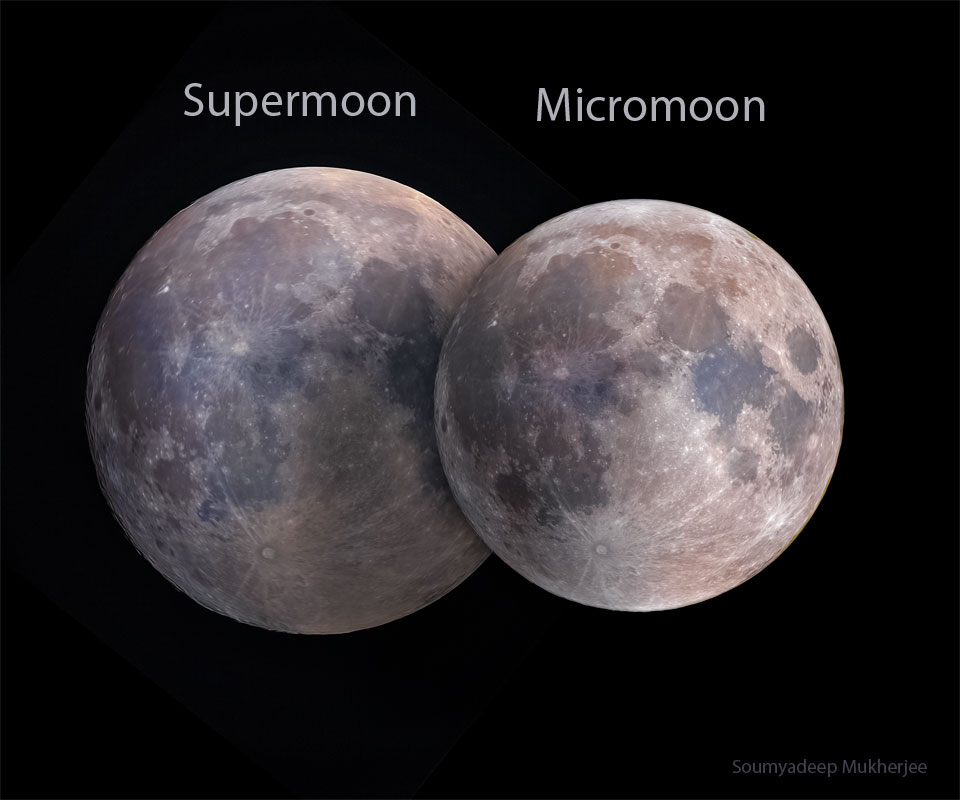
Supermoon Versus Micromoon (2026-05-30)
Credits: NASA / APOD
Credits: NASA / APOD
Github
Trading tools
StockSharp 10023 stars #0
Algorithmic trading and quantitative trading open source platform to develop trading robots (stock markets, forex, crypto, bitcoins, and options)....
quant-trading 9966 stars #1
Python quantitative trading strategies including VIX Calculator, Pattern Recognition, Commodity Trading Advisor, Monte Carlo, Options Straddle, Shooting Star, London Breakout, Heik...
QuantDinger 6972 stars #2
AI quantitative trading platform for crypto, stocks, and forex with backtesting, live trading, market data, and multi-agent research.vibe-trading ,trading-agents,ai-trader,ai-tradi...
strategies 5240 stars #3
quantitative trading with Javascript, Python, C++, PineScript, Blockly, MyLanguage(麦语言)...
Sea Vessels
Comp_Sci_Sem_2 180 stars #0
According to all known laws of aviation, there is no way that a bee should be able to fly. Its wings are too small to get its fat little body off the ground. The bee, of course, fl...
GPS_Tracker_Server 65 stars #1
GPS tracker server and Google Maps client for TK102/ TK103 GPS trackers...
wew 28 stars #2
#EXTM3U ########################################### INDONESIA CHANNEL ################################################## #EXTINF:-1 tvg-logo="https://i.imgur.com/L2LS8iY.png" grou...
boat-cli 16 stars #3
⛵ Basic Opinionated Activity Tracker, a command line interface inspired by bartib. ...
Air Vessels
1 467 stars #0
無許諾配信 企業理念剽窃 動物の森収益化 大神ミオ権利者削除 戌神権利侵害発言 常闇トワ炎上 夜空メルストーカー被害 建築王サポーター放置 赤十字マーク 魔乃アロエ卒業 一つの中國支持声明 大空昴3Dライブ 無限延期清掃員職業差別 日清コラボ楽曲 musedash非公開 rog案件取り消し 壁画ライブ 丁真 Ding Zhen 郑爽 Zheng Shuang...
studio 377 stars #1
Open-source control plane for your AI agents. Connect tools, hire agents, track every token and dollar...
arkit-occlusion 344 stars #2
A demonstration of vertical planes "tracking" and occlusions with ARKit+Scenekit...
Major-project-list 233 stars #3
A list of practical projects that anyone can solve in any programming language (See solutions). These projects are divided into multiple categories, and each category has its own f...
Imagery
albumentations 15303 stars #0
Fast and flexible image augmentation library. Paper about the library: https://www.mdpi.com/2078-2489/11/2/125...
imgaug 14745 stars #1
Image augmentation for machine learning experiments....
sketch-code 5150 stars #2
Keras model to generate HTML code from hand-drawn website mockups. Implements an image captioning architecture to drawn source images....
Augmentor 5137 stars #3
Image augmentation library in Python for machine learning....
Video
diffusers 33727 stars #0
🤗 Diffusers: State-of-the-art diffusion models for image, video, and audio generation in PyTorch....
Open-Generative-AI 17544 stars #1
Open-source alternative to AI video platforms — Free AI image & video generation studio with 200+ models (Flux, Midjourney, Kling, Sora, Veo). No content filters. Self-hosted, MIT ...
Duix-Avatar 13402 stars #2
🚀 Truly open-source AI avatar(digital human) toolkit for offline video generation and digital human cloning....
CogVideo 12750 stars #3
text and image to video generation: CogVideoX (2024) and CogVideo (ICLR 2023)...