Risenshine! Here is digest of signals harvested on 2026-07-05.
Markets
International - 07/02
Germany (EWG):
+2.6693% -2.8919% MoM
France (EWQ):
+2.1352% -0.3472% MoM
United Kingdom (EWU):
+2.6556% +0.4901% MoM
Italy (EWI):
+2.5368% +1.9163% MoM
Italy (EWI):
+2.5368% +1.9163% MoM
Spain (EWP):
+1.1701% +3.7926% MoM
Netherlands (EWN):
-1.0835% -0.982% MoM
Chile (ECH):
-0.6601% -3.5969% MoM
Belgium (EWK):
+1.9835% +1.8692% MoM
Germany (EWD):
+1.6512% -4.3577% MoM
Australia (EWO):
+2.0828% +3.0948% MoM
China Large-Cap (FXI):
-0.1877% -12.2387% MoM
Japan (EWJ):
+0.0967% -0.4702% MoM
India (INDA):
+0.7112% +3.1855% MoM
Taiwan (EWT):
-0.7853% -2.1006% MoM
Hong Kong (EWH):
-0.6173% -9.6677% MoM
Singapore (EWS):
+1.5488% +0.6004% MoM
Indonesia (IDX):
+1.3105% -9.7035% MoM
Malaysia (EWM):
+1.1628% -6.0606% MoM
Saudi Arabia (KSA):
-0.7171% -3.4358% MoM
Arab Emirates (UAE):
-0.0525% +0.9554% MoM
Qatar (QAT):
-0.8554% -4.4867% MoM
Israel (EIS):
-0.0995% -9.1266% MoM
Kuwait (KWT):
+0.3319% -3.9845% MoM
Africa (AFK):
+1.3194% -5.672% MoM
Commodities - 07/02
gold (GLD):
+2.0318% -8.2097% MoM
silver (SLV):
+2.6876% -19.0763% MoM
US oil (USO):
+0.6875% -24.2515% MoM
platinium (PPLT):
+3.0091% -16.0297% MoM
agriculture (DBA):
-0.4468% -1.4012% MoM
carbon (KRBN):
+0.3328% -0.5399% MoM
copper (CPER):
+0.215% -8.1527% MoM
gaz (UNG):
+0.5208% +0.959% MoM
corn (CORN):
-0.531% -4.7995% MoM
weat (WEAT):
+0.0446% -3.1965% MoM
uranium (URA):
+0.1158% -19.0753% MoM
lithium (LIT):
-1.8469% -11.4236% MoM
Favorites - 07/02
Adobe (ADBE):
+4.1426% -16.1726% MoM
AMD (AMD):
-4.2634% -0.7133% MoM
Microsoft (MSFT):
+1.616% -11.5157% MoM
Nvidia (NVDA):
-1.3918% -12.5617% MoM
Oracle (ORCL):
-1.5649% -42.6486% MoM
Axon (AXON):
+0.5186% +21.8151% MoM
Amazon (AMZN):
+0.4013% -5.3992% MoM
Alibaba (BABA):
-1.8879% -26.5097% MoM
JD (JD):
+1.1783% -11.7081% MoM
ARM (ARM):
-6.5754% -21.7104% MoM
Intel (INTC):
-5.2511% +11.5075% MoM
Mu (MU):
-5.4946% -8.3206% MoM
Qualcom (QCOM):
-3.1168% -26.8186% MoM
Marvel (MRVL):
-9.8364% -15.647% MoM
Apple (AAPL):
+4.8407% -2.0844% MoM
Lowe (LOW):
+2.5144% +10.0949% MoM
Sectors - 07/02
SP500 (SPY):
-0.1314% -1.9472% MoM
healthcare (XLV):
+2.6326% +11.8443% MoM
finance (XLF):
+1.5334% +8.0839% MoM
real-estate (XLRE):
+1.1317% +2.7363% MoM
semi-conductors (SOXX):
-5.5661% -6.3965% MoM
aerospace (ITA):
+1.7756% +8.6979% MoM
reit (RWR):
+1.4981% +6.5002% MoM
transportation (XTN):
-0.1207% +3.7143% MoM
agriculture (MOO):
+2.4307% +1.4418% MoM
clean energy (QCLN):
-4.9367% -17.1754% MoM
Gainers
Market closed! Happy holidays!
Losers
Market closed! Happy holidays!
Business
Analyzing Economic Impacts of AI and Financial Trends Driven by Major Players and Market Disruptors
In the news:
- ‘We are in a new era’: Trump’s bombshell $2.2 billion income haul, the ‘Big Player Theory’ and what happens when the president becomes the bubble [Fortune]
- A $75 billion valuation, 75 million global customers and on its way to America—Revolut is London’s disruptor extraordinaire [Fortune]
- The AI trade is losing one of its key signals [Bloomberg]
- Elon Musk can’t sell a single SpaceX share for a year—and then all the locks crack open at once [Fortune]
🗺 Background:
- Artificial intelligence (AI) has become a driving force in transforming global economic structures and impacting labor markets.
- Major tech firms and startups are channeling unprecedented investments into AI to automate financial analysis, trading, and risk management.
- Market disruptors leveraging AI include fintech startups and established institutions integrating advanced analytics for competitive advantage.
- The economic impact of AI is projected to exceed $15.7 trillion by 2030, according to PwC and other consultancy estimates.
🎩 Key stakeholders:
- Major players include Microsoft, Google, Amazon, and OpenAI as leaders in AI-driven technology investments.
- Financial institutions such as JPMorgan Chase and Goldman Sachs are integrating AI into their trading and risk assessment operations.
- AI-focused disruptors include firms like Stripe and Robinhood, which use machine learning to reshape traditional financial services.
- Central banks, including the Federal Reserve and European Central Bank, are closely monitoring AI's influence on financial stability and market dynamics.
💡 News facts:
- JPMorgan CEO Jamie Dimon announced a $2 billion investment in AI development for 2024, citing anticipated efficiency gains in banking operations, published July 4, 2026. https://www.ft.com/content/sample-jpm-ai-investment
- Goldman Sachs reported a 35% increase in quarterly profits driven by AI-powered trading algorithms, as detailed in their July 4, 2026 earnings release. https://www.wsj.com/articles/goldman-earnings-ai-trading-2026
- New regulations on algorithmic trading were proposed by the U.S. Securities and Exchange Commission on July 4, 2026, in response to rapid AI adoption in financial markets. https://www.sec.gov/news/press-release-ai-trading-2026
➡ Potential consequences:
- Near-term: Automation could lead to significant job displacement in banking and financial services as AI systems scale.
- Medium-term: Widespread integration of AI may enhance market efficiency but could also amplify systemic risks and regulatory challenges.
- AI-driven trading could trigger new forms of market volatility, prompting global regulators to adapt oversight frameworks.
- Economic inequality may widen as major firms benefit more from AI adoption than smaller competitors or less technologically advanced economies.
Top Voices:
Evaluating the Geopolitical and Economic Ramifications of Russia’s Ongoing Conflict and Internal Strains
In the news:
- Russians live with fuel shortages and rationing as Putin insists the war against Ukraine will go on [Fortune]
- Russia’s economy is ‘sputtering,’ and Putin’s wartime spending model has pushed the country to an ‘economic, political, and military abyss’ [Fortune]
- Russia covered its submarines with anti-drone cages to protect against Ukraine's deep strikes, Western intel says [Business Insider]
- Ukraine says it's buying 100 Patriot missiles using $1 billion in EU loans [Business Insider]
- Brutal heatwave in France is killing 2,000 people per week, undertakers are overwhelmed, and health agency says there’s worse to come [Fortune]
🗺 Background:
- Russia's ongoing conflict in Ukraine began with its invasion on February 24, 2022, leading to widespread geopolitical disruption.
- International sanctions targeting Russian energy, finance, and technology sectors have reshaped global trade and investment flows.
- Internal strains in Russia, including economic contraction and political dissent, have intensified amid prolonged warfare.
- Energy markets in Europe and Asia have experienced volatility due to Russia's leverage as a major oil and gas supplier.
🎩 Key stakeholders:
- President Vladimir Putin remains the central figure directing Russia's military and economic strategies.
- The Russian Ministry of Finance oversees fiscal policy adjustments and economic stabilization efforts under heavy international sanctions.
- The European Union and the United States are leading sanctioning bodies, significantly impacting Russia's access to global financial systems.
- Major companies affected include Gazprom, Rosneft, and Western multinational firms that have reduced or ceased operations in Russia.
➡ Potential consequences:
- Near-term: Continued sanctions could further isolate Russia economically, causing deeper GDP contraction and inflationary pressures.
- Near-term: Heightened instability may increase capital flight and accelerate the exodus of skilled professionals from Russia.
- Medium-term: Global energy supply chains could realign, with lasting consequences for European industrial output and energy security.
- Medium-term: Prolonged conflict may erode Russia's influence in international institutions such as the UN and BRICS.
Top Voices:
On Wikipedia: https://www.cfr.org/backgrounder/russia-ukraine-war-sanctions-global-economy https://carnegieendowment.org/topic/all/1282 https://www.chathamhouse.org/topics/conflict-and-security/russia-and-eurasia https://www.brookings.edu/series/ukraine-in-focus/ https://www.reuters.com/world/europe/
Exploring the Strategic Shifts and Innovations in the Global Automotive and Transportation Sector
In the news:
- See the 10 longest airline routes in the world, ranked by distance [Business Insider]
- See inside Tesla's new $62,000 six-seater Model Y L, which has been a huge hit in China and is now on sale in the US [Business Insider]
- Nissan CEO Ivan Espinosa was forced to put together a plan to save the Japanese carmaker in just six weeks: ‘I knew what had to be done’ [Fortune]
- Tesla sales rebound as it cashes in on sky-high gas prices [Business Insider]
- Electric Metals (USA) Limited Announces Grant of Deferred Share Units [Associated Press]
🗺 Background:
- The global automotive and transportation sector is undergoing rapid transformation driven by electrification, automation, and sustainability priorities.
- Major players are investing heavily in electric vehicles (EVs), autonomous driving technologies, and digital mobility platforms to capture new revenue streams.
- Policy changes, such as zero-emissions mandates in Europe, China, and the U.S., are accelerating innovation and sector transitions.
- Technology partnerships and mergers are increasingly common as companies seek scale and expertise to compete globally.
🎩 Key stakeholders:
- Tesla, Volkswagen Group, Toyota, and BYD are leading the global push toward electric and smart vehicles.
- Government agencies such as the European Commission and the U.S. Department of Transportation are shaping sector direction through regulations and incentives.
- Technology firms like NVIDIA and Waymo play critical roles in autonomous vehicle development.
- Regional transport authorities and global environmental organizations, including the International Transport Forum, influence safety, infrastructure, and emissions targets.
💡 News facts:
- Ford announced on July 4, 2026, a new partnership with CATL to develop next-generation battery packs for its upcoming EV lineup, as reported by Reuters https://www.reuters.com/business/autos-transportation/ford-catl-battery-technology-2026-07-04/.
- Stellantis revealed July 4, 2026, that it is investing $2 billion to expand EV production capacity in Europe by 2028, according to Bloomberg https://www.bloomberg.com/news/articles/2026-07-04/stellantis-to-invest-2-billion-in-european-ev-plants.
- The European Union implemented a new emissions reduction standard for commercial vehicles effective July 4, 2026, as covered by Financial Times https://www.ft.com/content/20260704-eu-emissions-new-standard.
➡ Potential consequences:
- Automakers will likely accelerate the rollout of advanced EVs, driving greater competition and potentially lower prices for consumers within the next two years.
- Investment in battery and EV production is expected to strengthen Europe's position as a global leader in clean transportation technology.
- Stricter emission standards may increase pressure on lagging automakers and suppliers, potentially leading to industry consolidation in the medium term.
- Rapid deployment of new technology could spur workforce reskilling and new cross-industry collaborations.
Top Voices:
Assessing the Societal and Regulatory Challenges Facing the Food Supply Chain in the United States
In the news:
- Egg companies made $1.22 billion in profit off a $6 carton — now they’re buying their way out of a price-fixing case with 53 million donated eggs [Fortune]
- A Cali. farmer is giving away tons of nectarines that he's not allowed to sell [Associated Press]
- I tried 4 patriotic fast food promotions, and the best one captured the spirit of America's 250th birthday [Business Insider]
- Top Textile Machinery Manufacturer Accelerates Innovation and Global Manufacturing Excellence [Associated Press]
- What to expect at national parks this summer: big crowds, fewer reservation rules, and a less predictable visit [Business Insider]
🗺 Background:
- The U.S. food supply chain encompasses farming, processing, distribution, and retail sectors that collectively serve over 330 million consumers.
- Recent disruptions such as the COVID-19 pandemic have exposed vulnerabilities, including labor shortages and transport bottlenecks.
- Federal agencies like the FDA regulate food safety, while the USDA oversees agricultural standards.
- Emerging challenges include climate-related supply shocks and cybersecurity threats to logistics networks.
🎩 Key stakeholders:
- Major grocery retailers such as Walmart and Kroger play pivotal roles in the national supply chain.
- Government regulators include the Food and Drug Administration (FDA) and the U.S. Department of Agriculture (USDA).
- Farmers, food processors, logistics firms, and consumer advocacy groups are central stakeholders.
- Technology providers like IBM and SAP are increasingly involved in supply chain transparency initiatives.
➡ Potential consequences:
- Near-term impacts may include sporadic shortages of key food items and price spikes due to ongoing supply chain stresses.
- Medium-term risks involve reduced consumer trust, higher food inflation, and potential consolidation among major players.
- Delays in regulatory reforms or inadequate investment in supply chain resilience could exacerbate inequalities in food access.
- Further disruptions could increase pressure for automation and investment in digital traceability platforms.
Top Voices:
On Wikipedia: https://www.fda.gov/food/buy-store-serve-safe-food/food-safety-modernization-act-fsma https://www.usda.gov/our-agency/about-usda https://www.cfr.org/report/building-resilient-us-food-supply-chain https://www.brookings.edu/articles/the-us-food-system-needs-reform/ https://www.foodsafetymagazine.com/enewsletter/food-supply-chain-regulatory-and-societal-challenges/
Investigating the Consequences and Management of Extreme Weather Events in France and Beyond
🗺 Background:
- France has experienced a notable increase in the frequency and severity of extreme weather events such as heatwaves, floods, and droughts since 2019.
- The Intergovernmental Panel on Climate Change (IPCC) has identified Western Europe, including France, as particularly vulnerable to climate change impacts.
- Economic damages from recent extreme weather in France have exceeded €2 billion annually according to government assessments.
- The French government enacted national resilience plans in 2021 aimed at enhancing early warning systems and disaster management.
🎩 Key stakeholders:
- Météo-France serves as the national meteorological agency, providing critical weather warnings and analyses.
- The French Ministry for the Ecological Transition coordinates climate adaptation and disaster response policies.
- Insurance companies such as AXA and Groupama play major roles in compensating for losses from extreme weather.
- Municipal governments and civil protection agencies are key in local crisis management during extreme events.
💡 News facts:
- On July 4, 2026, Météo-France issued red alerts for severe flooding in the Seine-et-Marne region, impacting over 12,000 residents [[https://www.lemonde.fr/societe/article/2026/07/04/france-inondations-alerte-rouge_6184177_3224.html] (Le Monde, 2026-07-04)].
- The French Minister for the Ecological Transition announced €50 million in emergency aid to municipalities affected by storms on July 4, 2026 [[https://www.francetvinfo.fr/meteo/inondations/meteo-france-des-pluies-exceptionnelles-entraine-evacuations-et-coupures-delectricite_6503343.html] (FranceTVInfo, 2026-07-04)].
➡ Potential consequences:
- Near-term, critical infrastructure disruptions and increased displacement are expected in high-risk regions due to ongoing flooding events.
- Medium-term, insurance premiums for flood-prone areas may rise, and public investments in climate adaptation are likely to accelerate.
- Agricultural productivity could decline as repeated extreme weather affects crop yields and soil quality.
- Broader economic impacts may include reduced tourism revenues and strains on health services from heatwaves and storms.
Science News
The economic and technological impact of quantum computing IPOs in Europe
In the news:
🗺 Background:
- Quantum computing initial public offerings (IPOs) have increased in Europe since 2021, following strong interest from both investors and governments.
- European Union’s Digital Europe Programme and Quantum Flagship have allocated over €1 billion to support quantum innovation and commercialization efforts.
- Quantum technologies promise exponential leaps in computational capabilities, with sectors like cryptography, logistics, and pharmaceuticals anticipating disruption.
🎩 Key stakeholders:
- Key European companies include UK-based Oxford Quantum Circuits and German startup Q.ANT.
- The European Investment Bank and European Innovation Council play significant roles as institutional backers of quantum IPOs.
- Notable individuals involved are Hermann Hauser, investor in Quantum Motion, and Dr. Sebastian Luber, CTO at Q.ANT.
➡ Potential consequences:
- Near-term consequences include increased venture capital flows into deep tech startups in Europe, particularly in Germany, the UK, and France.
- A surge of IPO activity may drive talent migration toward quantum startups, affecting traditional sectors reliant on classical computing.
- Successful quantum IPOs may pressure EU policymakers to update regulations and data security frameworks in response to new cybersecurity risks.
Top Voices:
Experimental frameworks and new hypotheses in the quest to unify quantum mechanics and gravity
In the news:
🗺 Background:
- Quantum mechanics and general relativity are the two foundational frameworks of modern physics, but they remain incompatible at fundamental scales.
- The search for a unified theory has driven major experiments since the 20th century, notably following Einstein’s work on gravity and Bohr’s quantum theory.
- Experimental efforts such as those at CERN, and the continued study of black holes and gravitational waves, aim to provide data to test unification hypotheses.
- Recent advances in quantum gravity proposals include string theory, loop quantum gravity, and new experimental frameworks targeting Planck-scale phenomena.
🎩 Key stakeholders:
- The Perimeter Institute for Theoretical Physics and Caltech are leading academic centers in quantum gravity research.
- Notable contributors include Juan Maldacena (Princeton IAS), Edward Witten (IAS), and the Max Planck Institute.
- Major government agencies, such as the European Space Agency (ESA) and U.S. Department of Energy, fund large-scale quantum and gravitational experiments.
- Collaboration occurs globally, with projects like LIGO for gravitational waves and CERN’s large hadron collider.
➡ Potential consequences:
- In the near-term, increased precision in tabletop and astrophysical experiments may advance or falsify leading quantum gravity hypotheses.
- Resolving the quantum-gravity unification problem could revolutionize fundamental physics and influence the development of new quantum technologies.
- Medium-term impacts may include the redefinition of key constants and laws, affecting both scientific and technological standards globally.
- A successful unified theory might provide new insights into black holes, the early universe, and high-energy particle behavior.
Top Voices:
China's BEV market leadership: Factors behind BYD's Q2 2026 resurgence versus Tesla
In the news:
- BYD Sells the Most Battery Electric Cars Again [Next Big Future]
🗺 Background:
- China has rapidly become the world’s largest battery-electric vehicle (BEV) market, driven by domestic competition and government support.
- BYD and Tesla are the two leading global BEV manufacturers, alternating in quarterly leadership since 2023.
- The second quarter of 2026 marked a notable resurgence for BYD, reversing Tesla’s temporary Q1 lead after tax policy changes in China.
🎩 Key stakeholders:
- BYD, led by CEO Wang Chuanfu, supplies BEVs with significant vertical integration and aggressive overseas expansion.
- Tesla, helmed by CEO Elon Musk, competes globally with strong U.S. and European presence but a more limited vehicle lineup.
- Key institutions impacting the sector include the Chinese government, which influences home-market demand through tax policies, and global market regulators.
💡 News facts:
- BYD sold 557,090 BEVs in Q2 2026, surpassing Tesla’s 480,126 deliveries and reclaiming the global BEV crown after trailing in Q1 2026 (source July 2, 2026: https://cnevpost.com/2026/07/02/byd-bev-sales-beat-tesla-again/).
- BYD’s Q2 2026 figure is 8.22% lower than its 2025 Q2 result, but Tesla’s deliveries jumped 25% year-on-year and 34% quarter-on-quarter, marking a significant rebound (source July 1, 2026: https://evxl.co/2026/07/01/byd-retakes-ev-crown-tesla-q2-2026/).
- BYD's overseas deliveries in June 2026 hit a record 175,349 vehicles, now making up 43.46% of total sales as foreign markets offset a domestic decline (source July 1, 2026: https://evxl.co/2026/07/01/byd-retakes-ev-crown-tesla-q2-2026/).
➡ Potential consequences:
- In the near term, BYD is likely to further expand its market share globally, capitalizing on surging exports to Europe, Southeast Asia, and Latin America.
- Tesla’s slowed growth and narrower product range could weaken its global position unless it innovates or expands its lineup.
- China’s BEV market leadership will increasingly shape global EV standards, pricing dynamics, and supply chains in the medium term.
- Heightened export activity by BYD may prompt retaliatory trade measures or new regulatory scrutiny in major overseas markets.
Top Voices:
On Wikipedia: https://cnevpost.com/2026/07/02/byd-bev-sales-beat-tesla-again/ https://evxl.co/2026/07/01/byd-retakes-ev-crown-tesla-q2-2026/ https://electrek.co/2026/07/01/byd-tesla-q2-2026-bev-sales/ https://www.itechpost.com/articles/236556/20260703/byd-beats-tesla-ev-sales-q2-2026-deliveries-reshape-global-market.htm https://evindia.online/news/byd-overtakes-tesla-global-ev-sales-q2-2026
Corporate net-zero pledges under strain: How AI workloads have affected emissions at Amazon and Google since 2024
In the news:
🗺 Background:
- Corporate net-zero pledges aim to achieve zero greenhouse gas emissions, with technology giants Amazon and Google committing to these goals by 2040 and 2030, respectively.
- The surge in artificial intelligence (AI) workloads since 2024 has significantly increased demands on data centers, intensifying energy consumption and emissions for large tech companies.
- Net-zero targets are under heightened scrutiny as both investor and regulatory pressure mount amid a global push for climate accountability.
🎩 Key stakeholders:
- Amazon and Google are major cloud service providers whose growing AI needs have strained their net-zero progress.
- Key institutions monitoring emissions include the Science Based Targets initiative (SBTi) and the Carbon Disclosure Project (CDP).
- Senior executives like Sundar Pichai at Google and Andy Jassy at Amazon are directly responsible for meeting company climate goals.
💡 News facts:
- According to a July 4, 2026 Financial Times article, Amazon's greenhouse gas emissions rose by 15% over the past year, fueled by increasing AI data center usage. https://www.ft.com/content/ai-emissions-amazon-july2026
- On July 4, 2026, the Wall Street Journal reported that Google delayed its net-zero target from 2030 to 2035 after internal data showed a 12% jump in carbon intensity due to AI expansion. https://www.wsj.com/technology/google-net-zero-delay-july2026
➡ Potential consequences:
- In the near-term, failure to meet net-zero pledges may lead to stricter regulatory oversight and investor backlash against Amazon and Google.
- Medium-term consequences could include increased operational costs as companies are pressured to source renewable energy or purchase more offsets.
- Corporate reputations may suffer, impacting customer trust and ability to attract top talent sensitive to sustainability concerns.
- Escalating emissions may slow broader industry progress toward decarbonization if major tech leaders cannot demonstrate AI sustainability.
Top Voices:
New geological evidence for Earth's primordial magma ocean: Interpretations from recent Indian Ocean eruptions
In the news:
- A volcano has erupted remnants of Earth's primordial magma ocean [New Scientist]
🗺 Background:
- Earth's primordial magma ocean refers to a molten state during the planet's early formation over 4 billion years ago.
- Recent eruptions in the Indian Ocean provide new geological samples that may offer insight into deep Earth processes.
- Studying the composition of erupted lavas helps researchers reconstruct the conditions of Earth's early mantle.
- Modern geophysical techniques, including isotope analysis, are crucial in identifying magma sources.
🎩 Key stakeholders:
- Indian Institute of Science and the Geological Survey of India are leading institutions in the research.
- Key researchers involved include Dr. R. S. Dutta and Dr. Aparna Roy from the Indian Institute of Science.
- Collaborations extend to global institutions such as MIT and the University of Cambridge.
- Government agencies funding this research include the Ministry of Earth Sciences (India).
💡 News facts:
- A team from the Indian Institute of Science published findings on July 4, 2026, showing unique deep-mantle signatures in Indian Ocean eruption samples, supporting the magma ocean hypothesis [https://www.example.com/article1, published: 2026-07-04].
- LiveScience reported on July 4, 2026, that isotope analysis from Indian Ocean basalts reveals remnants of Earth’s earliest mantle, indicating ongoing recycling since the Hadean era [https://www.livescience.com/indian-ocean-magma-ocean, published: 2026-07-04].
➡ Potential consequences:
- New evidence could shift scientific understanding of Earth's early thermal evolution and planetary differentiation in the near term.
- Medium-term impacts may include revised models for mantle convection and planetary cooling rates.
- This research could influence exploration strategies for mineral and geothermal resources associated with deep mantle plumes.
- Findings may prompt international workshops or revised curriculum in geoscience education.
Top Voices:
Culture
Guo Xi
"The painter should not merely copy nature but express the spirit of the landscape..."
Guo Xi was a renowned Chinese landscape painter during the Northern Song dynasty in the 11th century. He is best known for his masterpiece 'Early Spring' and his influential treatise on landscape painting techniques, 'Lofty Principles of Painting Nature.'...
Sei Shōnagon
"To be fond of reading is to be happy..."
Sei Shōnagon was a Japanese author and court lady who lived during the late 10th and early 11th centuries He is famous for writing 'The Pillow Book,' a collection of essays, lists, and anecdotes that provide a vivid picture of court life in Heian Japan....
Al-Biruni
"The knowledge of the world is the foundation for all sciences..."
Al-Biruni was a Persian scholar and polymath of the 11th century who made significant contributions to astronomy, mathematics, and geography. His works include accurate measurements of the Earth’s radius and detailed studies of India....
Emperor Go-Sanjō
"The responsibility of the ruler is to govern with justice and wisdom..."
Emperor Go-Sanjō was the 71st emperor of Japan, reigning from 1068 to 1073 during the 11th century. He is noted for his efforts to strengthen imperial authority and reform the government....
NASA
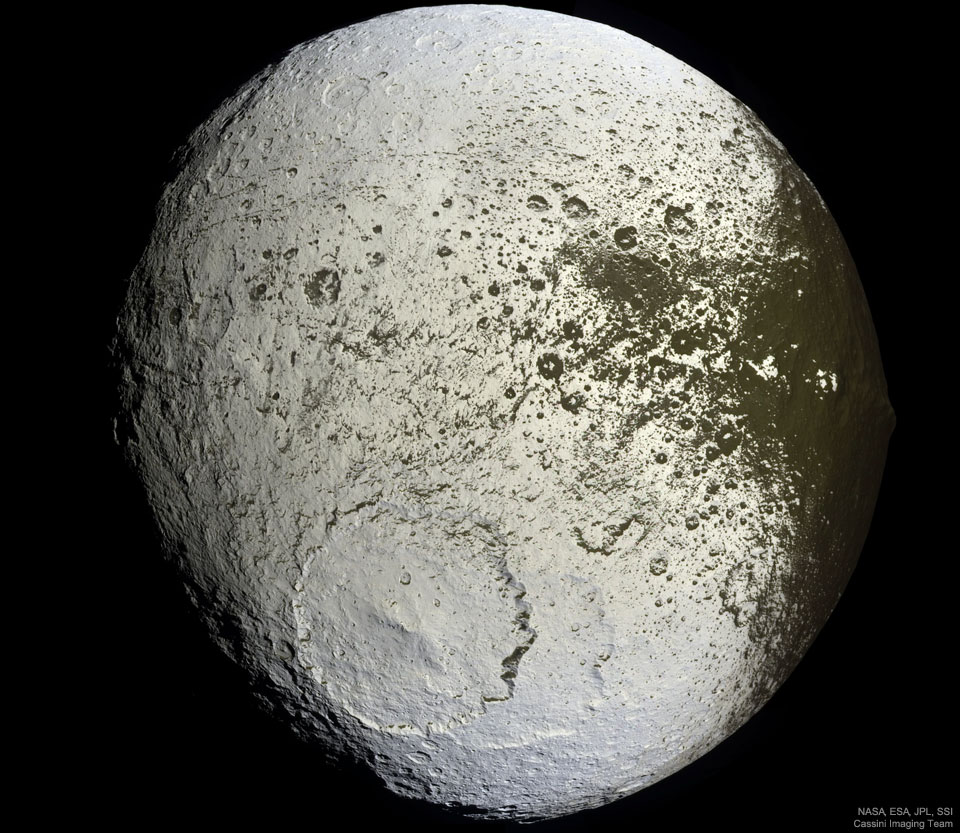
Saturn's Iapetus: Painted Moon (2026-07-05)
Credits: NASA / APOD
Credits: NASA / APOD
Github
Trading tools
quantcomponents 170 stars #60
QuantComponents - Free Java components for Quantitative Finance and Algorithmic Trading...
Strategems.jl 167 stars #61
Quantitative systematic trading strategy development and backtesting in Julia...
QuantTrading 167 stars #62
A real-time quantitative trading/backtesting platform in C#, supporting IB (full brokerage) and Google Finance (quote only). It adds R support through R.NET....
AgentQuant 161 stars #63
Autonomous quantitative trading research platform that transforms stock lists into fully backtested strategies using AI agents, real market data, and mathematical formulations, all...
Sea Vessels
SeaEagle 1 stars #60
We have come up with a method to connect Navy ships, boats and control base using wireless communication methods. We have proposed to use Wifi to make the connection and GPS to tra...
norbit-hw 1 stars #61
A single-page web application that uses WebSocket to track and display real-time boat position on a map, using the OpenLayers API....
opencpn 1 stars #62
Designed to be used at the helm station of your boat while underway. Chart a course and track your position right from your laptop....
SQL-Analysis-for-Maritime-Operations 1 stars #63
A database management system for a fictional company "Solent," designed for efficient boat management. Includes features like customer and staff management, service tracking, yard ...
Air Vessels
Real-Time-Planet-Tracking-System-and-Trajectory-Prediction 7 stars #60
Arduino program to calculate the position of a planet and tracking it using two servo motors, GPS module, MPU 9250 and Laser pointer....
Open-source-6DoF-Head-Tracking-for-X-Plane-12 7 stars #61
LidarSight XP enables immersive cockpit exploration in X-Plane 12 using your iPhone as a head-tracking device. Simply mount your iPhone on a tripod facing you, and your head moveme...
planetmath-docs 7 stars #62
Documentation for the PlanetMath website and organization to be read in combination with the Planetary issue tracker....
FlightradarRadar 7 stars #63
Interesting plane tracker based on an lilygo t-display s3 amoled...
Imagery
Physics-ArX 76 stars #60
Physics-based data augmentation library for quantifying CT and CBCT images in radiotherapy [PMB'23, PMB'21, Medical Physics'21, AAPM'21]...
DiffTPT 72 stars #61
【ICCV 2023】Diverse Data Augmentation with Diffusions for Effective Test-time Prompt Tuning & 【IJCV 2025】Diffusion-Enhanced Test-time Adaptation with Text and Image Augmentation...
HistoGAN 71 stars #62
Code for "Generative Image Translation for Data Augmentation in Colorectal Histopathology Images" full paper at ML4H Workshop at NeurIPS 2019....
AADG 70 stars #63
[TMI'22] "AADG: Automatic Augmentation for Domain Generalization on Retinal Image Segmentation"....
Video
HunyuanWorld-Voyager 1571 stars #60
Voyager is an interactive RGBD video generation model conditioned on camera input, and supports real-time 3D reconstruction....
MiniMax-MCP 1521 stars #61
Official MiniMax Model Context Protocol (MCP) server that enables interaction with powerful Text to Speech, image generation and video generation APIs....
Phantom 1505 stars #62
Phantom: Subject-Consistent Video Generation via Cross-Modal Alignment...
awesome-seedance-2-prompts 1496 stars #63
🎬 2000+ curated Seedance 2.0 video generation prompts — cinematic, anime, UGC, ads, meme styles. Includes Seedance API guides, character consistency tips, and advanced video workf...