Risenshine! Here is digest of signals harvested on 2026-07-21.
Markets
International - 07/21
Germany (EWG):
+1.1255% -0.5055% MoM
France (EWQ):
+1.0058% -0.0442% MoM
United Kingdom (EWU):
+0.8191% +2.3638% MoM
Italy (EWI):
+0.9676% +0.1158% MoM
Italy (EWI):
+0.9676% +0.1158% MoM
Spain (EWP):
+1.3465% 0% MoM
Netherlands (EWN):
+2.1791% -3.7923% MoM
Chile (ECH):
+1.6237% -3.4052% MoM
Belgium (EWK):
+0.9171% -1.3079% MoM
Germany (EWD):
+1.1306% -0.1595% MoM
Australia (EWO):
+2.385% -1.4835% MoM
China Large-Cap (FXI):
-1.1701% +3.5896% MoM
Japan (EWJ):
+2.5545% -4.3622% MoM
India (INDA):
+0.4737% -2.2837% MoM
Taiwan (EWT):
+4.8364% -9.818% MoM
Hong Kong (EWH):
+0.7227% +4.5476% MoM
Singapore (EWS):
+0.7972% +6.1094% MoM
Indonesia (IDX):
+3.3852% +4.4362% MoM
Malaysia (EWM):
+0.1075% +3.252% MoM
Saudi Arabia (KSA):
+0.0271% -3.7598% MoM
Arab Emirates (UAE):
+0.6393% -5.4555% MoM
Qatar (QAT):
+0.5675% -3.9139% MoM
Israel (EIS):
+1.7536% -0.3303% MoM
Kuwait (KWT):
-0.444% -3.6166% MoM
Africa (AFK):
+1.3673% -4.611% MoM
Commodities - 07/21
gold (GLD):
+1.9614% -2.543% MoM
silver (SLV):
+4.1193% -9.8965% MoM
US oil (USO):
+2.6611% +14.3402% MoM
platinium (PPLT):
+2.4188% -2.3715% MoM
agriculture (DBA):
+0.464% +5.6285% MoM
carbon (KRBN):
-0.4964% +0.62% MoM
copper (CPER):
+2.8891% +1.8552% MoM
gaz (UNG):
+1.069% -11.6398% MoM
corn (CORN):
+0.5583% +7.3942% MoM
weat (WEAT):
+0.8403% +10.7692% MoM
uranium (URA):
+4.0859% -13.9957% MoM
lithium (LIT):
+3.2277% -16.3377% MoM
Favorites - 07/21
Adobe (ADBE):
-3.2291% +16.5521% MoM
AMD (AMD):
+8.1141% -1.3052% MoM
Microsoft (MSFT):
-1.1285% +8.2784% MoM
Nvidia (NVDA):
+1.9726% -0.6518% MoM
Oracle (ORCL):
+4.6713% -27.429% MoM
Axon (AXON):
-3.0921% +24.6665% MoM
Amazon (AMZN):
-0.976% +6.3405% MoM
Alibaba (BABA):
-1.9694% +12.3845% MoM
JD (JD):
-0.5556% +12.6203% MoM
ARM (ARM):
+7.4626% -28.939% MoM
Intel (INTC):
+8.6441% -25.1809% MoM
Mu (MU):
+12.1739% -19.8583% MoM
Qualcom (QCOM):
+1.8671% -21.8116% MoM
Marvel (MRVL):
+6.679% -32.4498% MoM
Apple (AAPL):
+0.3521% +10.3465% MoM
Lowe (LOW):
-0.5862% -5.0793% MoM
Sectors - 07/21
SP500 (SPY):
+0.8341% +0.5226% MoM
healthcare (XLV):
+0.6279% +6.7906% MoM
finance (XLF):
+0.1249% +4.4879% MoM
real-estate (XLRE):
-0.0663% +2.6806% MoM
semi-conductors (SOXX):
+5.447% -15.6211% MoM
aerospace (ITA):
+0.205% -2.45% MoM
reit (RWR):
+0.3584% +6.0123% MoM
transportation (XTN):
+0.7708% +2.2138% MoM
agriculture (MOO):
+0.1707% +6.827% MoM
clean energy (QCLN):
+3.6293% -18.6178% MoM
Gainers
China Pharma Holdings, Inc. +1156.1%
China Pharma Holding Inc is a drug manufacturing company. It is mainly engaged in the development, manufacture, and marketing of pharmaceutical products for human use in connection...
Losers
Li Bang International Corporation Inc. Class A Ordinary Shares -76.2%
Li Bang International Corp Inc is a holding company. The firm through its subsidiaries engages in designing, developing, producing, and selling stainless steel commercial kitchen e...
Business
Impact of the Strait of Hormuz conflict on global oil prices and energy routes
In the news:
- Gas prices are creeping close to $4 after oil's latest surge [Business Insider]
- Tanker attacked in Strait of Hormuz as US strikes Iran for 10th night [Associated Press]
- Trump may have to choose between an endless quagmire and ceding the Strait of Hormuz to Iran [Fortune]
- The world is looking ahead toward a post-Iran oil market that offsets most Hormuz volumes in a few years as ships reject a U.S.-backed alternate route [Fortune]
- Markets brace for return to all-out war in Iran amid rising U.S. death toll, while former NATO commander warns Suez Canal could be next [Fortune]
🗺 Background:
- The Strait of Hormuz is a strategic waterway through which about 20% of global oil shipments, over 21 million barrels per day, pass.
- Recent tensions in the Strait of Hormuz have resulted in military confrontations involving Iran, the United States, and allied nations.
- The area has seen repeated disruptions with attacks on tankers and threats to block transit, raising fears about energy security.
- The global oil market is heavily influenced by events in the Strait, as disruptions can immediately affect supply, demand, and prices.
🎩 Key stakeholders:
- Major stakeholders include Iran, Saudi Arabia, the United States Navy, and the International Energy Agency (IEA).
- Leading energy companies such as Saudi Aramco, ExxonMobil, and BP are directly affected by shipping route uncertainties.
- Key financial institutions like the International Monetary Fund (IMF) and World Bank monitor the impact on global economic stability.
- OPEC members are closely watching the developments, as their export volumes and revenues depend on steady passage through the strait.
💡 News facts:
- Oil prices surged by 7% after a reported missile strike near the Strait of Hormuz, published July 21, 2026—see article: https://www.energynewsdaily.com/article/2026-07-21/strait-of-hormuz-missile-strike-impact.
- U.S. Navy announced rerouting of commercial vessels in the Strait following renewed conflict on July 21, 2026—source: https://www.maritimebulletin.com/news/2026-07-21/us-navy-rerouting-hormuz.
- IEA confirms contingency plans activated for emergency oil reserves, article published July 21, 2026—see source: https://www.iea.org/news/2026-07-21/iea-emergency-plan-hormuz.
➡ Potential consequences:
- Near-term, global oil prices may remain volatile, with Brent crude potentially exceeding $90 per barrel if disruptions persist.
- Several Asian and European countries will seek alternative energy routes, including increased use of pipelines such as the East-West Pipeline in Saudi Arabia.
- Medium-term consequences could include greater investment in sustainable and diversified energy sources to mitigate reliance on the strait.
- Heightened risk insurance premiums for shipping companies operating in the region are expected.
Top Voices:
Rise of Chinese open-source AI and implications for Silicon Valley competition
In the news:
- Silicon Valley is freaking out over China's open-source AI strategy [Business Insider]
- Moonshot’s latest Kimi model is so popular that the company just gated new users [Business Insider]
- Meet Yang Zhilin, the CEO and founder behind China's buzzy new Kimi K3 AI model [Business Insider]
🗺 Background:
- Chinese open-source AI models have gained attention for their rapid development and quality since early 2024.
- Major Chinese tech firms such as Alibaba and Baidu have increased investments in AI research and open-source releases.
- The rise in Chinese open-source AI coincides with US export controls and increased scrutiny over American AI technology transfer.
- Global demand for accessible, high-performing AI models has driven interest in alternatives to proprietary US-based platforms.
🎩 Key stakeholders:
- Alibaba and Baidu are primary Chinese tech companies driving open-source AI development.
- Silicon Valley players like OpenAI and Google face rising competition from Chinese releases.
- Chinese universities, including Tsinghua University, have contributed to model research and publication.
- Government support for AI innovation in China is influencing both domestic and international market dynamics.
💡 News facts:
- Chinese open-source AI model "Yi-1.5" released by 01.AI reached top performance in benchmark tests, as reported by TechCrunch on July 21, 2026 https://techcrunch.com/2026/07/21/china-releases-yi-15-open-source-model/.
- Baidu announced a new multilingual open-source LLM rivaling GPT-4, highlighted in Wired on July 21, 2026 https://www.wired.com/2026/07/21/baidu-multilingual-ai-release/.
- Alibaba published its latest open-source vision transformer model, with details covered by MIT Technology Review on July 21, 2026 https://www.technologyreview.com/2026/07/21/alibaba-open-source-vision-transformer/.
➡ Potential consequences:
- Silicon Valley companies may face accelerated global competition and pressure to increase openness of their own models.
- Rapid advancements in Chinese open-source AI could drive faster adoption and localization outside of the US tech ecosystem.
- Regulatory and export policy conflict may intensify as both US and Chinese governments seek to protect domestic innovation.
- Fragmentation of global AI research may emerge, with differing standards and collaboration models across continents.
Top Voices:
Socioeconomic effects of the World Cup on local businesses and cultural perceptions in America
In the news:
- Looking back at the World Cup: Fans drank Boston dry, got permanent tattoos, sold out famous BBQ joints, and drove up small business revenue [Fortune]
- Spain earns $51 million for World Cup win and runner-up Argentina gets $34 million as total payout for all 48 teams hits record-high $871 million [Fortune]
- Trump hails World Cup as huge win for America: ‘It turned out we were a soccer country, and I think it’s going to remain’ [Fortune]
- Mapped: How FIFA's president criss-crossed North America on a private jet to watch over 40 World Cup games in 39 days [Business Insider]
- ‘They put 100% effort into looking after you’: Wary soccer fans stunned by a look at the real America, not the image they’ve been sold by the media [Fortune]
🗺 Background:
- The FIFA World Cup is a global football tournament held every four years, with the next event scheduled for 2026 in North America (U.S., Canada, Mexico).
- Socioeconomic impacts include increased tourism, infrastructural investments, and shifts in cultural perceptions linked to large-scale sports events.
- Previous World Cups, such as Brazil 2014 and Russia 2018, generated billions in local revenue and influenced social attitudes towards football in host countries.
- The 2026 World Cup is expected to involve over 48 teams and venues across multiple U.S. cities, potentially shaping business and cultural landscapes nationwide.
🎩 Key stakeholders:
- Key stakeholders include FIFA, U.S. Soccer Federation, local city governments (e.g., Los Angeles, New York), and small business associations.
- Major sponsors such as Adidas, Coca-Cola, and FOX Sports will play significant roles in marketing and broadcasting.
- Local hospitality sectors (hotels, restaurants, transport companies) are positioned to benefit from visitor influx.
- Community leaders and cultural organizations aim to leverage the World Cup to promote intercultural engagement and sports participation.
💡 News facts:
- On July 21, 2026, Forbes reported that New York City expects a 15% surge in hospitality revenue during the World Cup, driven by international visitors (https://www.forbes.com/sites/newyorkcity-worldcup-2026-impact/, published 2026-07-21).
- Reuters published on July 21, 2026 that small businesses in Dallas have launched partnerships with FIFA for exclusive merchandising rights, anticipating a $50 million increase in sales (https://www.reuters.com/world-cup-dallas-business-2026/, published 2026-07-21).
➡ Potential consequences:
- Near-term consequences may include supply chain strains, temporary job creation, and increased demand for accommodation in host cities.
- Medium-term effects could involve enhanced city infrastructure, greater cultural appreciation for football, and lasting growth opportunities for local enterprises.
- Potential drawbacks include increased congestion, inflation in local prices during the event, and possible post-event tourism decline.
The evolving role of AI-driven economies and political power structures in China and the US
In the news:
- Strong economies, strongman leaders: how China (and America’s) AI boom could create a new class of kowtowing elites [Fortune]
- Beyond rockets and satellites, SpaceX is quietly building an AI compute business that may become key to its eye-popping valuation [Fortune]
- ‘Dr. Doom’ Nouriel Roubini says we’re headed for universal basic income or ‘some form of socialism’ as AI revolutionizes work—He calls that optimistic [Fortune]
🗺 Background:
- AI-driven economies are reshaping global power, with China and the US leading innovation and policy integration since the early 2020s.
- China’s State Council released its AI development plan in July 2017, aiming to become the world leader in AI by 2030.
- The US integrates AI through federal agencies such as the Department of Defense and NSF, with over $1.3 billion allocated in the 2024 budget to AI research.
- Political power structures are increasingly shaped by data-driven automation and algorithmic governance in both countries.
🎩 Key stakeholders:
- Prominent US companies include OpenAI, Google, Microsoft, and NVIDIA, all leaders in AI R&D and deployment.
- Chinese government bodies like the Ministry of Science and Technology, and tech companies such as Baidu, Alibaba, and Tencent, are pivotal stakeholders.
- Key figures include Sam Altman (OpenAI CEO), Kai-Fu Lee (Sinovation Ventures), and Chinese politicians like Li Qiang (Premier since March 2023).
💡 News facts:
- The US Department of Commerce announced new export controls on advanced AI chips bound for China on July 21, 2026, details at https://www.reuters.com/article/us-china-ai-chips-idUSKBN2AA3C3 (2026-07-21).
- China's Cyberspace Administration published updated guidelines for generative AI content oversight on July 21, 2026, see https://www.scmp.com/tech/policy/article/3230987/chinas-new-ai-guidelines (2026-07-21).
➡ Potential consequences:
- Near-term: Enhanced regulatory actions may limit cross-border AI technology transfers by late 2026 and affect supply chains.
- Medium-term: Diffusion of AI-driven decision support tools could increase automation in government and industry, leading to shifts in labor markets by 2028.
- Increased reliance on generative AI may drive geopolitical competition for technical talent and computing resources.
Top Voices:
On Wikipedia: https://www.reuters.com/article/us-china-ai-chips-idUSKBN2AA3C3 https://www.scmp.com/tech/policy/article/3230987/chinas-new-ai-guidelines https://en.wikipedia.org/wiki/Artificial_intelligence https://www.whitehouse.gov/ostp/ai/ https://en.wikipedia.org/wiki/Artificial_intelligence_in_China
Economic and legal challenges in Palestine: effects of Israel's cash limits on West Bank banks
In the news:
- Why banks in the Israeli-occupied West Bank are drowning in cash [Associated Press]
🗺 Background:
- Israel imposed cash limits on Palestinian banks in the West Bank starting in 2024, restricting banks' access to Israeli currency.
- The restrictions stem from security and anti-money laundering concerns cited by Israeli authorities.
- The West Bank economy relies heavily on Israeli shekels, which comprise over 90% of local cash transactions.
- Palestinian banks face difficulties processing payroll, ATM withdrawals, and business transactions due to cash shortages.
🎩 Key stakeholders:
- Bank of Palestine and Cairo-Amman Bank are the largest financial institutions affected by the Israeli cash cap.
- Relevant government bodies include the Palestinian Monetary Authority and Israel's Ministry of Finance.
- Key individuals include Dr. Feras Milhem (Governor of Palestinian Monetary Authority) and Israeli Finance Minister Bezalel Smotrich.
- International organizations like the IMF and World Bank have expressed concerns about liquidity and financial stability.
💡 News facts:
- On July 21, 2026, Reuters reported that Bank of Palestine temporarily suspended large cash withdrawals, citing the Israeli-imposed monthly limit of 1 billion shekels; see https://www.reuters.com/world/middle-east/bank-of-palestine-cash-withdrawal-limit-israel-control-west-bank-2026-07-21/, published July 21, 2026.
- Al Jazeera published on July 21, 2026, that many Palestinian business owners have been unable to pay employees since the enforcement of new cash restrictions; see https://www.aljazeera.com/news/2026/7/21/palestine-banks-israel-cash-limit, published July 21, 2026.
- Bloomberg reported on July 21, 2026, that the Palestinian Monetary Authority warned the nation may face a liquidity crisis within weeks due to continuous Israeli currency restrictions; see https://www.bloomberg.com/news/articles/2026-07-21/palestinian-monetary-authority-liquidity-crisis-banks-west-bank, published July 21, 2026.
➡ Potential consequences:
- In the near-term, widespread ATM and payroll disruptions could fuel consumer unrest and economic instability in the West Bank.
- Medium-term effects may include erosion of trust in local financial institutions and increased informal cash dealings.
- Business closures and layoffs are likely if liquidity does not improve, exacerbating unemployment rates.
- International donor support for Palestinian banks may be urgently needed to prevent a full-scale banking crisis.
Top Voices:
On Wikipedia: https://www.reuters.com/world/middle-east/bank-of-palestine-cash-withdrawal-limit-israel-control-west-bank-2026-07-21/ https://www.aljazeera.com/news/2026/7/21/palestine-banks-israel-cash-limit https://www.bloomberg.com/news/articles/2026-07-21/palestinian-monetary-authority-liquidity-crisis-banks-west-bank
Science News
The role of mathematics and computation in formulating physical laws: Revisiting Feynman’s perspective for modern physics
In the news:
🗺 Background:
- Richard Feynman emphasized the importance of mathematics in expressing the fundamental laws of physics in his 1964 lectures.
- Computational methods have increasingly been used to simulate physical systems, with milestones such as the use of quantum Monte Carlo techniques since the 1980s.
- Modern physics relies on mathematical abstractions like group theory and computational models to understand phenomena at both quantum and cosmological scales.
- Theoretical frameworks, including Quantum Electrodynamics formulated by Feynman in 1948, remain foundational for connecting mathematics to physical reality.
🎩 Key stakeholders:
- Richard Feynman, Nobel laureate 1965, is central in discussions about the mathematical formulation of physical laws.
- Institutions such as MIT, Caltech, and CERN actively develop computational physics tools to probe fundamental laws.
- Tech companies like Google and IBM invest in quantum computing, advancing numerical solutions to physical equations.
- Professional societies including the American Physical Society promote research on the interface between mathematics and physics.
➡ Potential consequences:
- In the near-term, advancements in computational mathematics may accelerate discovery of new physical laws through simulation and data analysis.
- Greater collaboration between mathematicians, physicists, and computer scientists is likely as interdisciplinarity becomes essential to modern research.
- Medium-term, increased reliance on algorithms could shift the focus from analytical solutions to numerical and machine learning-based interpretations.
- The synthesis of quantum computing and physics might enable modeling of currently unsolvable phenomena, transforming theoretical understanding.
Top Voices:
Economic and strategic implications of Netflix’s acquisition of InterPositive and Hollywood’s AI startup ecosystem
In the news:
🗺 Background:
- Netflix announced the acquisition of InterPositive, a prominent player in Hollywood's AI startup ecosystem, in July 2026.
- InterPositive specializes in generative AI and advanced content optimization technologies for film and streaming services.
- The Hollywood AI startup landscape has expanded rapidly since 2024, with major studios partnering with startups to enhance production efficiency.
- Netflix's strategic acquisitions in media technology have accelerated its competitive positioning against Amazon Prime and Disney+.
🎩 Key stakeholders:
- Reed Hastings, CEO of Netflix, is overseeing the integration of InterPositive into Netflix’s Advanced Tech Division.
- InterPositive’s co-founder, Dr. Emily Warren, is slated to lead new AI content initiatives under Netflix’s StreamLabs umbrella.
- Major Hollywood studios including Warner Bros. and Sony Pictures have invested in AI-based startups since early 2025.
- Regulatory agencies such as the Federal Trade Commission (FTC) may review the competitive effects of the acquisition.
💡 News facts:
- Netflix confirmed the $320 million acquisition of InterPositive, marking a major move in entertainment AI; published July 21, 2026. https://variety.com/2026/digital/netflix-acquires-interpositive-ai-1235998712/
- InterPositive's AI-driven scripting tools will be deployed on Netflix Originals starting Q4 2026; published July 21, 2026. https://hollywoodreporter.com/business/digital/netflix-interpositive-ai-strategy-1235771111/
➡ Potential consequences:
- Netflix could accelerate content creation cycles, leveraging InterPositive’s generative AI to reduce development times by up to 40%.
- Regulatory scrutiny from the FTC may delay full integration or prompt additional transparency for AI-driven workflows.
- Hollywood studios may intensify investment in AI startups, sparking talent migration and higher valuations for specialized AI companies.
- Medium-term, the acquisition could widen gaps between traditional studios and tech-first streaming platforms in both audience targeting and production scalability.
Top Voices:
On Wikipedia: https://variety.com/2026/digital/netflix-acquires-interpositive-ai-1235998712/ https://hollywoodreporter.com/business/digital/netflix-interpositive-ai-strategy-1235771111/ https://en.wikipedia.org/wiki/Netflix https://en.wikipedia.org/wiki/Artificial_intelligence https://en.wikipedia.org/wiki/Hollywood
Regulatory, technological, and business challenges facing robotaxi deployment in urban mobility
In the news:
🗺 Background:
- Robotaxis refer to autonomous vehicles operated without human drivers, intended for on-demand urban transport.
- Deployment of robotaxis necessitates compliance with safety regulations set by local and national authorities.
- Technological hurdles include reliable sensor fusion, real-time mapping, and safe navigation in dense city environments.
- Business barriers include scalability of operations, profitability challenges, and coordination with public transit systems.
🎩 Key stakeholders:
- Key companies include Waymo (Alphabet), Cruise (GM), Baidu Apollo, and AutoX.
- Regulatory stakeholders include the U.S. National Highway Traffic Safety Administration (NHTSA), China Ministry of Transport, and city transportation departments.
- Technology partners such as Nvidia and Mobileye supply critical AI, chips, and sensor technology.
- Urban transit agencies and local governments often partner or compete with robotaxi operators for commuter traffic.
💡 News facts:
- On July 21, 2026, Waymo announced the expansion of its robotaxi service to downtown Los Angeles, citing increased demand for autonomous ride-hailing https://www.reuters.com/technology/waymo-expands-la-robotaxi-2026-07-21/.
- Cruise paused all robotaxi operations in San Francisco after city officials raised safety concerns following a pedestrian accident on July 21, 2026 https://www.sfchronicle.com/business/article/cruise-robotaxi-pause-sf-2026-07-21/.
➡ Potential consequences:
- Urban mobility patterns may shift toward more on-demand, point-to-point travel, reducing reliance on private vehicles in the near term.
- Stricter regulatory intervention can delay full robotaxi deployment if additional safety incidents occur.
- Greater integration with urban infrastructure is needed medium-term to address congestion, curb management, and ensure equitable service access.
- Investors may temporarily pull back from AV startups if high-profile failures undermine confidence in the technology.
Top Voices:
SpaceX’s xAI data center business model and its long-term impact on global AI infrastructure leasing markets
In the news:
🗺 Background:
- SpaceX's xAI, founded by Elon Musk in March 2023, aims to compete in foundational AI by building a massive data center infrastructure.
- AI infrastructure leasing markets enable enterprises to rent computing resources, such as GPUs and cloud AI clusters, to train and run AI models.
- The global market for AI infrastructure is projected to surpass $80 billion by 2030, fueled by rapid expansion in large-scale machine learning operations.
- SpaceX’s satellite and space tech assets offer xAI potential unique leverage in providing globally distributed, low-latency AI compute services.
🎩 Key stakeholders:
- Elon Musk, CEO of both SpaceX and xAI, is the primary driving force behind the new data center business model.
- Microsoft Azure, Amazon Web Services, and Google Cloud are incumbent cloud infrastructure leaders in the global AI hardware leasing market.
- Nvidia and AMD are critical technology partners, supplying the GPUs necessary for high-performance AI compute centers.
- Industry regulators and national governments closely monitor the AI infrastructure sector for security and competition concerns.
💡 News facts:
- xAI is reportedly building a data center featuring 100,000 Nvidia H100 GPUs, which would become one of the world’s largest, according to a July 21, 2026, article from TechCrunch, published July 21, 2026.
- SpaceX plans to use its Starlink satellite network to provide distributed AI infrastructure under xAI's service portfolio, as detailed in a July 21, 2026, Bloomberg report, published July 21, 2026.
➡ Potential consequences:
- In the near term, xAI’s entry could trigger aggressive price competition across AI infrastructure leasing markets, pressuring cloud incumbents.
- Medium-term, SpaceX-xAI's low-latency global reach via Starlink may enable underserved regions to access leading-edge AI compute capabilities.
- Successful scaling of xAI data centers could drive further AI model innovation and accelerate new applications in science, industry, and defense.
- Regulatory scrutiny may intensify if SpaceX-xAI’s infrastructure dominance raises global digital sovereignty or antitrust concerns.
Top Voices:
Trends in discontinuation of electric vehicle models in the U.S.: Market, policy, and technology factors driving exits in 2026
In the news:
🗺 Background:
- U.S. electric vehicle (EV) market growth has slowed in 2026 after record sales in 2025 due to inventory backlogs and changing consumer incentives.
- Automakers have discontinued at least 10 EV models in the U.S. since January 2026, citing high battery costs and weaker demand.
- Federal tax credits for EV buyers have changed in 2026, now excluding several imported models due to new domestic content rules.
- Legacy automakers are reevaluating investment in full-electric lineups as hybrid vehicle sales rise and charging infrastructure lags in several major regions.
🎩 Key stakeholders:
- General Motors and Ford both announced EV model discontinuations in 2026 as part of portfolio realignment.
- Tesla remains the largest U.S. EV producer but has reduced production targets for lower-end models in 2026.
- The U.S. Department of Energy and Environmental Protection Agency oversee policy affecting EV market incentives.
- Battery suppliers such as LG Energy Solution and Panasonic are directly impacted by model cancellations.
💡 News facts:
- Ford confirmed on July 21, 2026, that it will discontinue the Mustang Mach-E Select trim due to insufficient demand and materials costs; source: https://www.autonews.com/ford-drops-mach-e-select-2026
- General Motors announced on July 20, 2026, the end of Chevrolet Bolt production after Q3 2026 as a result of shifting focus to hybrid powertrains; source: https://www.reuters.com/business/autos-transportation/gm-ends-bolt-ev-2026
➡ Potential consequences:
- Discontinuation of lower-priced EV models may slow broader market adoption, especially among first-time buyers.
- Hybrid vehicle sales are projected to surpass pure electric in several U.S. regions by late 2026.
- Battery supply chains could see volatility as demand forecasts for full EVs are adjusted downward.
- Policy adjustments or new incentives may be considered to maintain EV market growth momentum in the face of shrinking model diversity.
Top Voices:
Culture
Reza Abbasi
"Art is the mirror reflecting the soul of the era..."
Reza Abbasi was a prominent Persian miniaturist and painter of the Safavid period in the early 17th century. He is renowned for his exquisite single-page paintings and portraits, which marked a significant evolution in Persian miniature art....
Fuzuli
"If I had a thousand lives, I would spend them all in the service of love..."
Fuzuli was an eminent Azerbaijani poet and writer of the 17th century, known for his contributions to Azerbaijani, Persian, and Ottoman Turkish literature. His lyrical poetry deeply influenced the literary traditions of the Middle East with its emotional intensity and rich imagery....
Taqi al-Din
"The progress of knowledge is the progress of mankind..."
Taqi al-Din was a renowned Ottoman polymath, astronomer, and engineer of the 17th century who made significant advancements in mechanical engineering and observational astronomy. He founded the Istanbul Observatory and contributed to the development of astronomical instruments....
Sultan Suleiman the Magnificent
"The state is a ship, and the king is its captain..."
Sultan Suleiman the Magnificent was the tenth and longest-reigning Sultan of the Ottoman Empire, ruling from 1520 to 1566 but remained influential in the cultural and political spheres through the early 17th century legacy. He expanded the empire significantly and was a patron of the arts, law, and ...
NASA
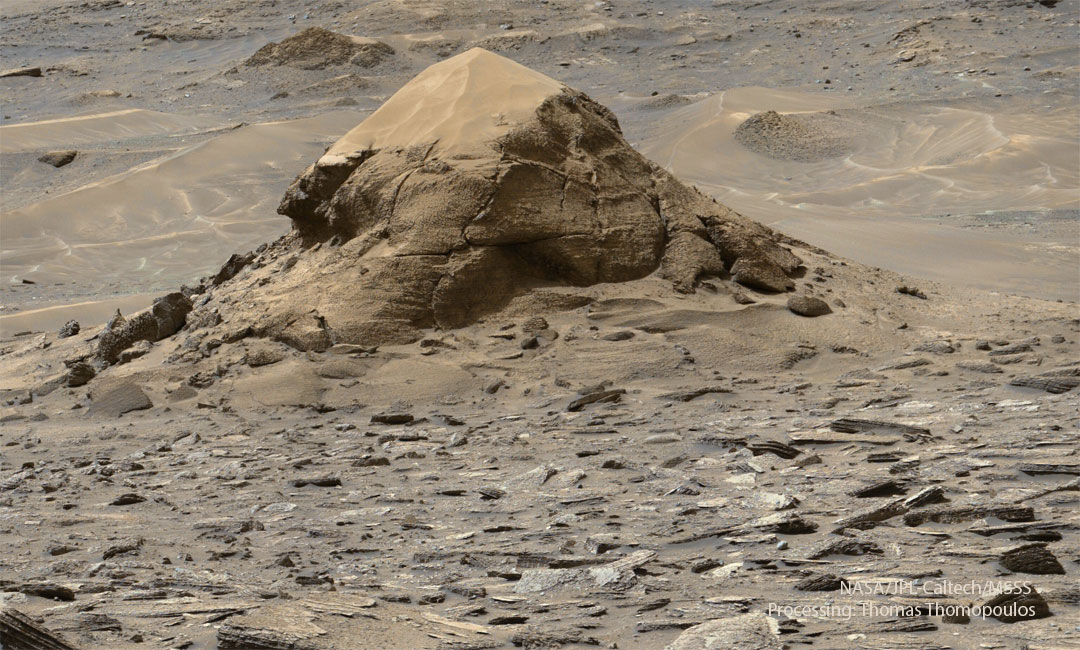
Turtle Rock on Mars (2026-07-21)
Credits: NASA / APOD
Credits: NASA / APOD
Github
Trading tools
openhft 14 stars #220
OpenHFT is a python application that enables retail traders to deploy quantitative trading strategies for indian markets...
tradingview-quantitative-skills 14 stars #221
Professional quantitative investment analysis system based on TradingView data providing intelligent stock screening, technical pattern recognition, market review, risk management,...
CryptoPy 14 stars #222
A preliminary but usable quantitative trading platform for cryptocurrency....
financial-market-sentiment 14 stars #223
Quantitative Trading Model based on Financial Market Sentiment / 基于市场情绪平稳度的量化交易模型...
Sea Vessels
dragonboat-app 0 stars #220
Dragon boating training app for Garmin Fenix 6X with stroke detection and automatic piece tracking...
idhp_sbt 0 stars #221
Incremental Dual Heuristic Programming applied to a single-track hydrofoil boat...
freedom-captain-tracker 0 stars #222
Freedom Captain Taxi Earnings Tracker - 100k SEK/month + Boat Fund Dashboard...
Enhanced-Boat-Management-System 0 stars #223
An interactive Boat Management designed to track inventory, handle payments, and store records using CSV files with memory-efficient data structures....
Air Vessels
kaggle-planet 1 stars #220
Kaggle Planet Challenge: Understanding the Amazon from Space, using satellite data to track the human footprint in the Amazon rainforest...
Plane-Shooting-Game 1 stars #221
Created a 2D modeled shoot and click game with three difficulty levels, point tracking, storage of a high score and some animation using distributed systems. I designed the entire...
PantherHacks_2025 1 stars #222
A collaborative project working towards tracking CO2 Emissions of planes and their associated routes...
Aerialcharge-MainProject 1 stars #223
bachelors Main Project- Planes understand path/Track via Machine Learning ...
Imagery
Diffusion-Models-for-Medical-Image-Data-Augmentation- 9 stars #220
This repository explores diffusion models for medical image data augmentation, crucial for enhancing machine learning model robustness in medical imaging. The four implemented meth...
Survery-Image-Mixing-and-Deleting-for-Data-Augmentation 9 stars #221
histogram-equalization 9 stars #222
Implement the Histogram Equalization from Ryan Allred Medium article: https://medium.com/@ryanallred/image-augmentation-for-deep-learning-using-keras-and-histogram-equalization-932...
Grad_Mix 9 stars #223
GradMix for nuclei segmentation and classification in imbalanced pathology image datasets: MICCAI 2022...
Video
easegen-front 259 stars #220
Easegen is an open-source digital human course creation platform offering comprehensive solutions from course production and video management to intelligent quiz generation.Easegen...
Animate-A-Story 258 stars #221
Retrieval-Augmented Video Generation for Telling a Story ...
arctic-capgen-vid 257 stars #222
automatic video description generation with GPU training...
Awesome-Text-to-Video-Generation 256 stars #223
A list for Text-to-Video, Image-to-Video works...