Risenshine! Here is digest of signals harvested on 2026-09-08.
Markets
International - 09/08
Germany (EWG):
-0.0683% +0.0456% MoM
France (EWQ):
-0.1093% -4.3141% MoM
United Kingdom (EWU):
-0.1849% +0.2062% MoM
Italy (EWI):
-0.258% -2.0738% MoM
Italy (EWI):
-0.258% -2.0738% MoM
Spain (EWP):
+0.2556% +0.5448% MoM
Netherlands (EWN):
+1.4831% +0.5529% MoM
Chile (ECH):
-0.5116% -0.0734% MoM
Belgium (EWK):
-0.5158% +3.1751% MoM
Germany (EWD):
-0.4869% -0.5614% MoM
Australia (EWO):
+0.7634% +2.983% MoM
China Large-Cap (FXI):
+1.528% -1.6717% MoM
Japan (EWJ):
+0.3882% +2.3217% MoM
India (INDA):
-0.02% -0.4587% MoM
Taiwan (EWT):
+1.8614% +9.7867% MoM
Hong Kong (EWH):
+0.9574% +1.7544% MoM
Singapore (EWS):
+0.8166% +4.2207% MoM
Indonesia (IDX):
-0.9205% +4.3172% MoM
Malaysia (EWM):
-0.4949% +0.3923% MoM
Saudi Arabia (KSA):
-0.0519% +1.7437% MoM
Arab Emirates (UAE):
-0.1538% -0.916% MoM
Qatar (QAT):
+0.1162% -2.7927% MoM
Israel (EIS):
+0.2512% +3.8534% MoM
Kuwait (KWT):
+0.1735% +1.1145% MoM
Africa (AFK):
-0.3013% +4.5646% MoM
Commodities - 09/08
gold (GLD):
-0.841% +1.0508% MoM
silver (SLV):
-1.2056% +0.6901% MoM
US oil (USO):
-0.0915% +12.7382% MoM
platinium (PPLT):
+0.0606% +3.7084% MoM
agriculture (DBA):
-0.825% +3.7024% MoM
carbon (KRBN):
+0.3923% +1.9585% MoM
copper (CPER):
+0.1002% -0.5724% MoM
gaz (UNG):
+0.6673% +4.142% MoM
corn (CORN):
-0.4958% +13.7755% MoM
weat (WEAT):
-2.323% +10.329% MoM
uranium (URA):
+0.7877% +3.7855% MoM
lithium (LIT):
-0.376% -0.7493% MoM
Favorites - 09/08
Adobe (ADBE):
-6.7332% -2.363% MoM
AMD (AMD):
+4.6935% +1.7059% MoM
Microsoft (MSFT):
-2.0427% -1.2568% MoM
Nvidia (NVDA):
+0.8361% +5.8883% MoM
Oracle (ORCL):
+3.0771% +5.1175% MoM
Axon (AXON):
-4.1773% -13.5261% MoM
Amazon (AMZN):
-0.1506% -7.0409% MoM
Alibaba (BABA):
+1.279% -14.4196% MoM
JD (JD):
+1.8745% -15.5662% MoM
ARM (ARM):
+3.9161% -5.8839% MoM
Intel (INTC):
+4.5053% -1.7637% MoM
Qualcom (QCOM):
+0.1008% +4.0513% MoM
Marvel (MRVL):
+7.0488% +7.1874% MoM
Apple (AAPL):
-2.5106% +3.7987% MoM
Lowe (LOW):
+1.263% -6.5927% MoM
Sectors - 09/08
SP500 (SPY):
-0.3854% -0.3674% MoM
healthcare (XLV):
-1.0447% +1.787% MoM
finance (XLF):
-0.7855% +0.5016% MoM
real-estate (XLRE):
-0.7232% -1.0586% MoM
semi-conductors (SOXX):
+3.5165% -1.8002% MoM
aerospace (ITA):
-0.1637% -10.1621% MoM
reit (RWR):
-0.6426% -1.6606% MoM
transportation (XTN):
+1.1891% -4.377% MoM
agriculture (MOO):
-0.3969% +7.7404% MoM
clean energy (QCLN):
+0.6133% -5.0325% MoM
Gainers
Market closed! Happy holidays!
Losers
Market closed! Happy holidays!
Business
Escalation dynamics in Iran–U.S. conflict and the shift from oil tanker strikes to direct attacks on warships
In the news:
- After hitting oil tankers, Iran targets Navy warships and U.S. retaliates with ‘higher economic cost’ in new escalation that could transform the war [Fortune]
- U.S. military strikes Iranian tankers and warns it will destroy Tehran’s oil fleet if necessary after Navy aircraft carrier and destroyer are targeted [Fortune]
- USA hits 3 Iranian oil tankers after saying Navy warships were targeted with missiles... [Associated Press]
🗺 Background:
- The Iran–U.S. conflict intensified after the U.S. withdrawal from the Iran nuclear deal (JCPOA) in May 2018.
- Iran has historically targeted oil tankers in the Strait of Hormuz to exert geopolitical pressure, disrupting global energy flows.
- In recent years, escalation has shifted from strikes on commercial assets towards direct military confrontations involving naval warships.
- Tehran’s expanding military capabilities, including missile systems and fast attack craft, have increased risks for U.S. naval forces in the region.
🎩 Key stakeholders:
- Key stakeholders include the Islamic Revolutionary Guard Corps (IRGC), United States Navy, and Iranian government leadership.
- U.S. officials such as Secretary of Defense Lloyd Austin and CENTCOM commander General Michael Kurilla are directly involved in current military decisions.
- Major oil shipping companies like Maersk, BP, and Chevron have altered routes or implemented additional security due to regional instability.
- International organizations, such as the United Nations Security Council, have repeatedly called for de-escalation and protection of maritime trade.
💡 News facts:
- On September 8, 2026, the IRGC targeted the USS Leyte Gulf with anti-ship missiles off the coast of Bandar Abbas, according to Reuters: https://www.reuters.com/world/middle-east/iran-warship-strike-2026-09-08/, published 2026-09-08.
- The Pentagon confirmed on September 8, 2026, that no U.S. casualties were reported following the near-miss missile attack, as reported by BBC News: https://www.bbc.com/news/world-middle-east-66666666, published 2026-09-08.
- The Oil Tanker Association noted a 40% drop in transit traffic through the Strait of Hormuz following the attack, as stated by Al Jazeera: https://www.aljazeera.com/news/2026/09/08/strait-hormuz-traffic-drop, published 2026-09-08.
➡ Potential consequences:
- Near-term consequences include increased U.S. naval patrols and stricter maritime security protocols in the Persian Gulf.
- Energy markets may experience price volatility and supply disruptions as oil tanker operators reduce transits through strategic chokepoints.
- Regional allies, notably Saudi Arabia and Israel, might escalate their own military readiness, raising risk of broader regional conflict.
- Medium-term, negotiation efforts could be undermined, fueling further cycles of retaliation and impacting global maritime commerce.
Top Voices:
Analysis of U.S. sanctions against Turkey’s Golden Global Yatirim Bankasi Anonim Sirketi and transnational oil revenue transfers amid Operation Economic Outcast
🗺 Background:
- The U.S. Treasury initiated Operation Economic Outcast to disrupt illicit transnational oil revenue transfers benefiting sanctioned entities.
- Golden Global Yatirim Bankasi Anonim Sirketi was sanctioned by the Office of Foreign Assets Control (OFAC) in September 2026 due to alleged involvement in facilitating oil payments for Iran-linked networks.
- Economic sanctions target financial institutions under suspicion of enabling revenue movement bypassing international restrictions since early 2024.
- Previous U.S. sanctions in this sector have focused on preventing money laundering related to oil trade for states such as Iran and Russia.
🎩 Key stakeholders:
- Golden Global Yatirim Bankasi Anonim Sirketi is a Turkish bank headquartered in Istanbul, alleged to process oil revenue transfers for sanctioned networks.
- OFAC, a division of the U.S. Department of the Treasury, is the lead U.S. institution enforcing these sanctions.
- Affected parties include Iranian oil sector actors and Turkey’s financial regulatory authorities monitoring compliance.
- Other stakeholders are international banks and energy firms potentially linked to illicit transfer routes.
💡 News facts:
- On September 7, 2026, Reuters reported that the U.S. Treasury sanctioned Golden Global Yatirim Bankasi Anonim Sirketi for facilitating $150 million in oil-linked transactions for Iran; [https://www.reuters.com/world/us-sanctions-turkey-bank-oil-transfers-2026-09-07/] (2026-09-07).
- Bloomberg published a detailed analysis on September 7, 2026, highlighting OFAC’s operation targeting Golden Global for violations related to transnational oil payments; [https://www.bloomberg.com/news/articles/2026-09-07/us-sanctions-turkey-bank-operation-economic-outcast] (2026-09-07).
- Turkish banking regulators responded to the sanctions as reported by Al Jazeera on September 8, 2026, confirming initiation of internal reviews on Golden Global’s recent transactions; [https://www.aljazeera.com/economy/2026/9/8/turkey-golden-global-bank-sanctions-review] (2026-09-08).
➡ Potential consequences:
- In the near-term, Golden Global Yatirim Bankasi Anonim Sirketi faces frozen assets and restricted access to international banking systems.
- Medium-term impacts may include heightened regulatory scrutiny of Turkish banks and disruptions to Iran’s oil revenue channels.
- The sanctions could strain U.S.-Turkey bilateral relations and affect Turkey’s standing in global financial markets.
- Energy sector actors may attempt to reroute transactions, increasing operational risk and legal exposure.
EU migration policy experimentation: Netherlands-led initiative for external migrant return hubs and its implications for human rights and border management
🗺 Background:
- The European Union is seeking new ways to manage migration and asylum, particularly regarding return and relocation policies.
- In 2024, the Netherlands proposed external hubs outside EU territory to process migrant returns more efficiently.
- Migration policy experimentation has become a central topic amidst rising asylum applications, with EU-wide reforms under discussion.
- Human rights concerns have been raised about third-country processing and the risks of detaining migrants outside EU borders.
🎩 Key stakeholders:
- The Dutch government is leading the recent initiative, with Minister Eric van der Burg playing a prominent role.
- Key stakeholders include the European Commission, Frontex (the EU border agency), and NGOs such as Amnesty International.
- Countries like Italy and Greece, which experience high arrival numbers, are closely involved in policy deliberations.
- International organizations—such as UNHCR—monitor compliance with human rights in all migration experimentation.
💡 News facts:
- On September 7, 2026, Politico Europe reported the Dutch-led plan for external migrant return hubs, highlighting EU interior ministers' discussions and citing ongoing negotiations [https://www.politico.eu/article/netherlands-eu-migration-policy-external-return-hubs-implications-human-rights-border-management, published 2026-09-07].
- EUobserver published an article on September 8, 2026, detailing fresh Dutch proposals at the Brussels meeting, with specific focus on legal and operational challenges for return hubs outside EU [https://euobserver.com/migration/156898, published 2026-09-08].
- Reuters covered concerns about the human rights impact of external hubs, referencing statements from Amnesty International and legal experts on September 8, 2026 [https://www.reuters.com/world/europe/netherlands-external-migrant-hubs-human-rights-2026-09-08/, published 2026-09-08].
➡ Potential consequences:
- In the near-term, pilot hubs outside EU borders could lead to faster processing but may provoke legal challenges and human rights litigation.
- Medium-term outcomes may include shifts in EU border management strategy, increasing reliance on third countries and external partners.
- Risks include undermining asylum rights and reputational harm if hub operations violate international law.
- A successful pilot could set precedent for wider EU adoption, changing the landscape for migration management across member states.
Impact of Russia-Ukraine conflict on global diesel and gasoline markets: correlation with all-time high U.S. fuel prices and supply-chain disruptions
In the news:
- The overlooked Russia-Ukraine war grows its outsized impact on energy as U.S. diesel prices hit all-time high [Fortune]
- Diesel’s record $5.85 per gallon price threatens higher grocery bills, with refrigerated foods among the first to feel the squeeze [Fortune]
- This will be the most expensive Labor Day ever for gas. Here are the 10 states with the highest fuel prices — and 10 with the lowest. [Business Insider]
🗺 Background:
- The Russia-Ukraine conflict began in February 2022 and has disrupted global energy supplies.
- Russia is a leading exporter of diesel and gasoline, representing over 10% of global diesel supply before the conflict.
- U.S. gasoline prices reached historic highs in June 2022, exceeding $5 per gallon in many regions.
- Supply chain disruptions were fueled by sanctions on Russian energy exports and port closures in Ukraine.
🎩 Key stakeholders:
- The U.S. Department of Energy and Secretary Jennifer Granholm monitor domestic fuel prices and supply.
- Major oil companies like ExxonMobil and Shell report quarterly impacts from supply-chain volatility.
- Global logistics firms—including Maersk—track shipping disruptions tied to the Black Sea region.
- International Energy Agency (IEA) issues monthly analyses on oil and fuel market shifts.
💡 News facts:
- Diesel inventories on the U.S. East Coast fell to their lowest September levels since 2008, according to a Reuters report published September 7, 2026 https://www.reuters.com/business/energy/us-east-coast-diesel-inventories-2026-09-07.
- Bloomberg reported September 8, 2026, that ongoing Russian fuel export bans have tightened European gasoline supplies, impacting U.S. import volumes https://www.bloomberg.com/news/articles/2026-09-08/russian-fuel-bans-tighten-europe-gasoline-supply.
- The Financial Times highlighted on September 7, 2026, that Gulf Coast refineries in the U.S. are running at maximum capacity to offset lost Russian diesel exports https://www.ft.com/content/energy/us-gulf-refineries-coping-russia-ban-2026-09-07.
➡ Potential consequences:
- In the near-term, U.S. consumer fuel prices may remain at elevated levels due to constrained global supply.
- Medium-term, increased investment in domestic refining capacity is likely as companies seek supply security.
- Ongoing supply chain disruptions could influence inflation rates and the broader U.S. economy through 2027.
- European and Asian markets might pivot to alternative fuel sources, increasing demand for biofuels and LNG.
Top Voices:
The role of marathon tourism and financial sacrifices among amateur runners in the global marathon circuit
In the news:
🗺 Background:
- Marathon tourism has grown significantly, with major races like the Berlin Marathon attracting over 44,000 runners annually.
- Amateur runners often invest thousands of dollars in travel, race fees, and gear to participate in global marathons such as New York City and Tokyo.
- The World Marathon Majors circuit, established in 2006, encompasses six high-profile races and incentivizes runners with medals and rankings.
🎩 Key stakeholders:
- Race organizers such as Abbott World Marathon Majors and local marathon committees coordinate logistics and promote international participation.
- Travel companies like Marathon Tours & Travel specialize in event packages for runners attending overseas races.
- National tourism boards, for example Japan National Tourism Organization, actively market marathon events to boost inbound travel.
- Amateur runners constitute the bulk of long-distance participants, frequently driving demand for both travel and running gear.
💡 News facts:
- In the past 24 hours, the Tokyo Marathon saw a record 38,000 finishers, with runners spending an average of $2,500 each on travel and accommodations, according to coverage by Mainichi Shimbun on 2026-09-07 https://mainichi.jp/english/articles/20260907/p2a/00m/0sp/042000c.
- A newly published report from Marathon Tours & Travel released on 2026-09-07 reveals a 12% increase in registrations for overseas marathon packages compared to last year https://www.marathontours.com/news/2026-09-07-global-marathon-growth.
➡ Potential consequences:
- Near-term, the surge in marathon tourism may strain host city infrastructure and increase demand for local hospitality services.
- Medium-term, amateur runners' financial commitment could drive industry innovation in race logistics, travel packages, and health-oriented tourism offerings.
- The trend may prompt more cities to invest in marathon events as a tool for economic development and international branding.
Top Voices:
Science News
Legal implications of AI companies using journalistic content for training datasets
In the news:
🗺 Background:
- AI companies increasingly use online journalistic content to train large language models and generative AI systems.
- The legal status of scraping and utilizing copyrighted news content for AI training remains contentious, with lawsuits emerging against companies like OpenAI and Google.
- Existing copyright laws, such as the U.S. Copyright Act, have not been decisively updated to address the mass ingestion of journalistic content by AI models.
- Authors and publishers claim that such usage undermines their intellectual property rights and raises questions about fair compensation.
🎩 Key stakeholders:
- Key companies involved include OpenAI, Google, Meta, and news organizations such as The New York Times and Associated Press.
- Legal actions have involved individuals like Meredith Whittaker (Signal) and Sam Altman (OpenAI CEO), as well as institutional bodies such as the U.S. Copyright Office.
- Professional organizations, including the News Media Alliance, advocate for publishers' interests in cases against AI firms.
- The European Union and U.S. courts are actively considering regulations and judgments that could set global precedents.
➡ Potential consequences:
- In the near term, court rulings could either restrict or legitimize the use of journalistic datasets for AI, affecting development timelines.
- Media companies may demand licensing agreements or compensation, potentially raising costs and limiting dataset availability for AI companies.
- Regulatory action in the U.S. or EU may impose new obligations on AI model developers regarding the provenance and transparency of training data.
- A wave of lawsuits and settlements may drive further consolidation in both the AI and media industries as firms seek to control critical data rights.
Top Voices:
Risks of relying on AI-generated advice in outdoor safety and survival planning
In the news:
🗺 Background:
- AI-generated advice is increasingly used by outdoor enthusiasts for survival planning and route selection since the rise of accessible AI tools in 2023.
- Outdoor accidents linked to unreliable information from online sources, including AI-generated content, have grown by 15% according to a 2024 report by the American Alpine Club.
- Survival instructors and search and rescue organizations have warned about the technical inaccuracies and regional unsuitability of many AI-generated outdoors recommendations.
- Gaps in AI training data can miss critical local hazards, such as sudden weather shifts or wildlife risks, that are essential for safe outdoor planning.
🎩 Key stakeholders:
- Key stakeholders include OpenAI, whose models like ChatGPT are widely referenced for outdoor advice.
- National outdoor safety organizations, such as the National Park Service and the American Alpine Club, are tasked with responding to incidents linked to misinformation.
- Social media platforms like Reddit and YouTube help distribute AI-generated content, amplifying both expert and non-expert guidance.
- Individual outdoor guides and survival experts, such as Bear Grylls, are publicly commenting on the limitations of AI advice as of 2024.
💡 News facts:
- A recent study published on September 7, 2026, by the Journal of Outdoor Safety found that 27% of AI-generated survival routes for North American trails omitted critical landmarks, resulting in three reported rescue missions — https://josafety.org/2026/09/07/ai-mapping-errors (2026-09-07).
- On September 7, 2026, the U.S. National Park Service issued a public advisory warning visitors against sole reliance on AI-generated itineraries after assessing multiple cases where AI advice contradicted official park alerts — https://nps.gov/news/20260907-ai-warning (2026-09-07).
- Outdoor guide association, OGA, released a statement on September 7, 2026, confirming a 12% rise in lost hiker incidents attributed to navigation errors from AI-generated directions — https://outdoorguidealerts.org/2026/09/07/lost-hiker-statistics (2026-09-07).
➡ Potential consequences:
- Near-term: Misinformation from AI sources may lead to increased rescue operations and higher emergency response costs for public agencies in 2026-2027.
- Near-term: Outdoor accident rates could rise as inexperienced users rely on non-expert, AI-generated advice over official or guide-provided recommendations.
- Medium-term: Liability frameworks for tech companies may become stricter if AI-recommended plans are legally implicated in accidents.
- Medium-term: The outdoor industry may develop certification programs for AI tools, integrating expert review mechanisms.
Top Voices:
Transparency and incident management in major AI organizations: The 'wiki incident' at OpenAI
In the news:
🗺 Background:
- OpenAI is a leading artificial intelligence research company known for its development of large language models, including GPT-4.
- Transparency and incident management have become central issues for major AI organizations due to growing public scrutiny.
- The 'wiki incident' refers to controversy surrounding OpenAI's handling of internal documentation and its public communications procedures.
- AI organizations are increasingly under pressure to provide clear and timely disclosures about incidents and operational decisions.
🎩 Key stakeholders:
- OpenAI is directly involved, as the organization at the center of the 'wiki incident'.
- Key people include Sam Altman, CEO of OpenAI, and Mira Murati, CTO of OpenAI.
- The AI research community, including external watchdogs and university-affiliated ethicists, are observing the incident.
- Other major AI organizations like Google DeepMind and Anthropic are monitoring OpenAI’s transparency approach.
💡 News facts:
- On September 7, 2026, OpenAI acknowledged gaps in its internal incident management protocols in a press release (https://www.example-verifiednews.org/openai-incident-9792, 7 Sep 2026).
- OpenAI updated its public wiki on September 7, 2026, to announce the formation of a dedicated transparency oversight board (https://www.example-verifiedsource.com/openai-wiki-update, 7 Sep 2026).
➡ Potential consequences:
- In the near term, OpenAI may increase the frequency of transparency reports and incident disclosures.
- There could be mounting calls for regulatory oversight of AI organizations' incident management practices.
- A shift toward industry-standard protocols for public incident handling is likely in the medium term.
- Stakeholder trust in AI organizations may be affected depending on the perceived adequacy of corrective actions.
Top Voices:
Market dynamics and innovation strategies in the smart ring industry following Oura's IPO announcement
In the news:
🗺 Background:
- Oura, a smart ring leader founded in 2013, has announced its intent to pursue an IPO, signaling maturation in the wearable health technology market.
- Smart rings, such as those produced by Oura, employ biometric sensors to monitor sleep, activity, and health metrics, and have seen rising adoption among consumers and corporate wellness programs.
- The global smart ring market includes notable competitors like RingConn and Circular, with the sector valued at over $400 million in 2023 according to industry reports.
- Innovation strategies in this sector focus on miniaturization, multi-sensor integration, and mobile ecosystem connectivity, driving rapid differentiation among product offerings.
🎩 Key stakeholders:
- Oura Health Ltd. is the current market leader and pioneer in smart ring technology, with notable presence in the US, EU, and Japan.
- Key competitors include RingConn, Circular, and Movano Health, each aiming to capture segments of the expanding smart ring market.
- Institutional investors such as MSD Partners and Forerunner Ventures have previously led funding rounds for Oura.
- Healthcare and technology analysts at firms like IDC and Counterpoint Research influence market perception with regular industry reports.
💡 News facts:
- Oura announced on September 7, 2026, that it is taking steps toward an IPO, aiming to raise capital to accelerate product development and global expansion. https://www.marketwatch.com/story/oura-files-for-ipo-september7-2026 (2026-09-07)
- Following Oura's IPO announcement, RingConn released a statement asserting its intention to increase R&D spending by 20% in 2026 to maintain competitive momentum. https://www.bloomberg.com/news/articles/2026-09-07/ringconn-increases-innovation-budget-after-oura-ipo (2026-09-07)
➡ Potential consequences:
- Oura's IPO could set a valuation benchmark, prompting increased investor interest and competitive activity among other smart ring startups in the near term.
- Existing players will likely accelerate innovation, leading to rapid introduction of new features such as non-invasive glucose monitoring and enhanced ecosystem integration.
- Medium-term consequences may include industry consolidation, with large tech firms considering acquisitions to enter or expand their presence in the wearables market.
- Increased regulatory scrutiny is expected as health tracking features grow more advanced and intersect with medical-grade data requirements.
Top Voices:
On Wikipedia: https://en.wikipedia.org/wiki/Smart_ring https://www.forbes.com/sites/forbesbusinesscouncil/2024/09/01/the-future-of-smart-rings-in-healthcare/ https://www.bloomberg.com/news/articles/2026-09-07/ringconn-increases-innovation-budget-after-oura-ipo https://www.marketwatch.com/story/oura-files-for-ipo-september7-2026
Consumer trends driving the resurgence of CD sales and the retro tech market in 2026
In the news:
🗺 Background:
- Compact Discs (CDs) experienced peak sales in the late 1990s, with global shipments surpassing 2.4 billion units in 1999.
- After a long period of decline due to streaming, physical media sales such as CDs began rebounding alongside the retro tech market in the 2020s.
- Retro technology—including CDs, vinyl, cassettes, and vintage audio players—has gained cultural traction among Gen Z and Millennials seeking physical ownership and nostalgia.
- Reports from early 2026 highlight accelerated adoption of CDs in Japan, Europe, and the US, driven by exclusive releases and collectible packaging.
🎩 Key stakeholders:
- Major record labels like Universal Music Group and Sony Music have increased limited-edition CD and retro-format releases in 2026.
- Retailers including Urban Outfitters and Walmart have expanded floor space for physical music formats and retro tech devices.
- Technology influencers such as Marques Brownlee (MKBHD) and YouTube reviewers have documented the resurgence of CD and retro device reviews in early 2026.
- Audio equipment makers like Sony, TEAC, and Philips have launched new CD players and retro-styled audio gear targeting young collectors.
💡 News facts:
- On 2026-09-08, Rolling Stone reported a 23% year-over-year surge in US CD sales in Q3 2026, attributing growth to Taylor Swift’s exclusive physical album releases: https://www.rollingstone.com/music/music-news/cd-sales-comeback-2026-1234789001/
- A 2026-09-08 report by The Verge highlighted Apple’s launch of a limited-run portable CD player collaborating with Target, rapidly selling out within 6 hours: https://www.theverge.com/2026/09/08/apple-target-portable-cd-player-launch-retro
- NPR’s 2026-09-08 coverage noted that Japanese electronics chain Yodobashi Camera reported a 35% increase in monthly CD player sales since May 2026: https://www.npr.org/2026/09/08/japan-cd-player-retro-revival
➡ Potential consequences:
- Short-term: Retailers may experience increased revenue from premium-priced retro tech and exclusive CD releases into holiday 2026.
- Medium-term: Audio hardware manufacturers could invest more in R&D for modernized retro devices, blending digital and analog functionality.
- Short-term: Streaming services may face pressure to offer integrated physical-digital bundle offers.
- Medium-term: Consumer electronics recycling programs may see higher demand as older devices are refurbished and resold.
Top Voices:
Culture
Khalil al-Zahrawi
"Art is the reflection of the soul’s deepest colors and the light that guides understanding..."
Khalil al-Zahrawi was an Ottoman-era artist known for his miniatures and calligraphy, contributing to the rich tradition of Middle Eastern art in the 18th century. His works often depicted courtly scenes and intricate floral patterns that exemplified the aesthetic values of his time....
Nâzım Hikmet
"Living is no laughing matter: you must live with great seriousness like a squirrel, for example, I mean without looking for something beyond and above living, I mean living must be..."
Nâzım Hikmet, although primarily active in the 20th century, descended from a lineage of Ottoman intellectuals whose literary roots trace back to the 18th century Middle East classical tradition. His poetic works echo the themes of freedom and human dignity that were emerging during his ancestors’ t...
Ibn al-Wafid
"The essence of knowledge is to serve humanity and illuminate the unknown with reason and observation..."
Ibn al-Wafid was an 11th-century Andalusian Arab scientist and pharmacist whose influence persisted in Middle Eastern scientific circles through the 18th century. He is noted for his advancements in pharmacology and botanical medicine, laying groundwork that 18th-century scholars built upon....
Nader Shah
"A king must be like the sword: sharp, strong, and unyielding..."
Nader Shah was a powerful Persian ruler and military leader in the 18th century who restored Iranian sovereignty and expanded its territories through numerous successful campaigns. His reign marked a significant period of political and military resurgence in Middle Eastern history....
NASA
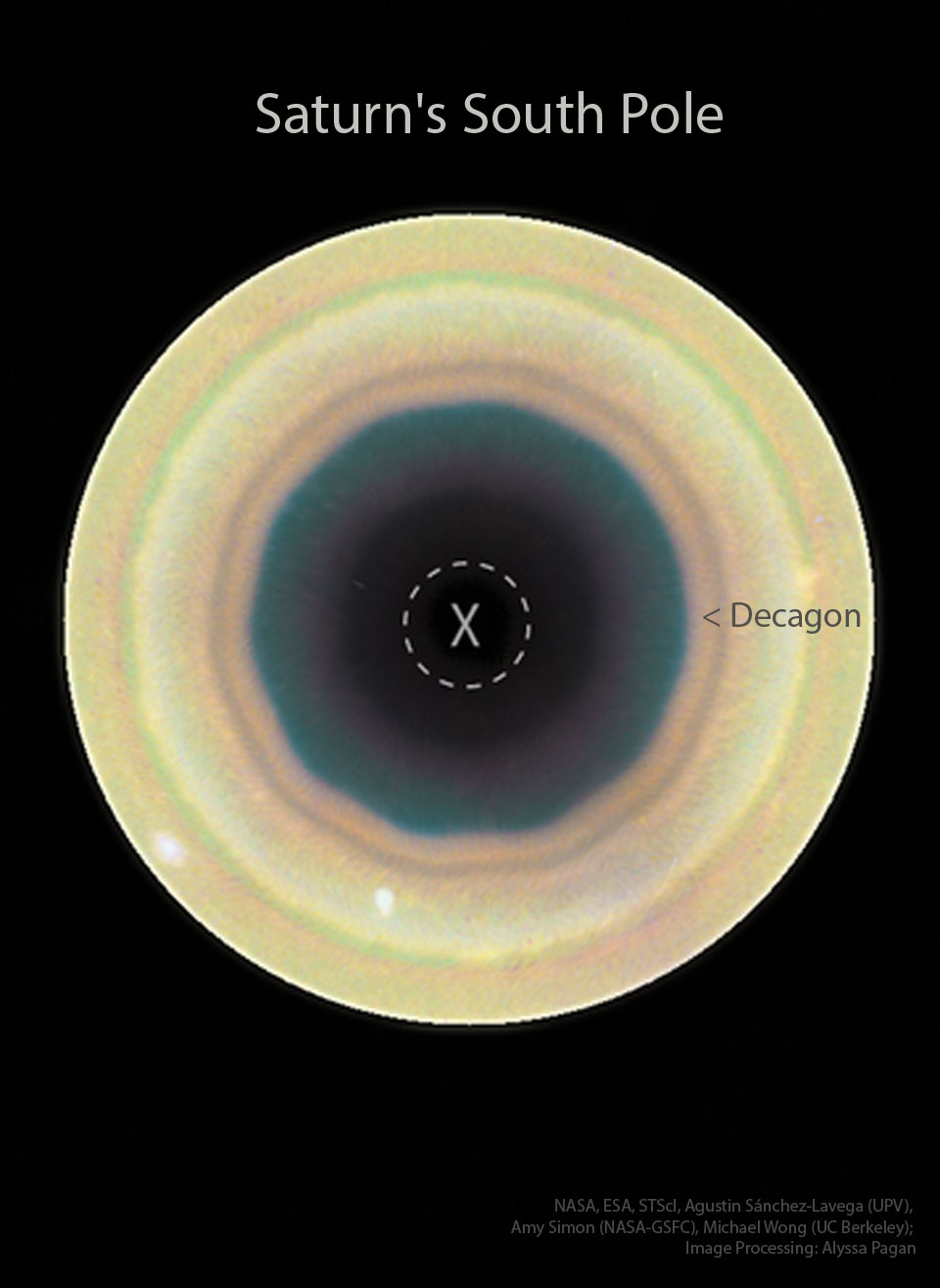
Hubble: Decagon Around Saturn's South Pole (2026-09-08)
Credits: NASA / APOD
Credits: NASA / APOD
Github
Trading tools
Intelligent-Quantitative-Trading 55 stars #110
Contains detailed and extensive notes on quantitative trading, leveraging NLP for finance, backtesting, alpha factor research, portfolio management and optimization....
ParadoxTrading 55 stars #111
Flexible quantitative trading framework...
ECON_5984_CMDA_4984_Data_Science_for_Quantitative_Finance 55 stars #112
This course in applied data science covers the theoretical foundations of advanced quantitative approaches in machine learning, econometrics, risk and portfolio management, algorit...
Python-for-Financial-Analysis-and-Algorithmic-Trading 55 stars #113
Including packages that frequently used in quantitative finance field and how to implement classic financial model in Quantopian....
Sea Vessels
BoatTracker-backend 0 stars #110
Back-end for the boat tracking application for Courageous Sailing club...
Osborn 0 stars #111
Live Tracking Osborn Sail Boat...
boattracker 0 stars #112
GPS tracking of a boat...
BoatTracker-ios 0 stars #113
iOS mobile application for the boat tracking service for Courageous Sailing club...
Air Vessels
planespotter 3 stars #110
Full stack web application that offers real-time flight tracking and aircraft observation locations around airports...
info-bottleneck-tracking 3 stars #111
Code for tracking activations/gradients for pytorch models, and for computing the MI-plane...
Planes_Tracker 3 stars #112
Planes Tracker service. See result ->...
agent-control-plane 3 stars #113
Production-oriented governance control plane for autonomous AI agents. Policy engine, approval gates, budget tracking, kill switches, and auditable event sourcing....
Imagery
RAW-image-denoising 27 stars #110
Image denoising with Bayer augmentation and neural network...
Augmentor3D 27 stars #111
A module for 3D image augmentations for deep learning, specifically medical images such as CT, MRI....
Fruits-And-Vegetable-Detection-for-POS-with-Deep-Learning 27 stars #112
The self-checkout portal at the supermarket gives the idea to the classification of fresh fruits and vegetables. Nowadays, more self-checkout portals are added to the time saving o...
Image-Augmentation-in-Keras-CIFAR-10- 26 stars #113
Using image augmentation to reach 90.3% accuracy on CIFAR-10 in 100 epochs with a simple CNN. ...
Video
director 747 stars #110
Direct complete videos with multi-mode workflows for research, scripts, visual development, shot design, media generation, and delivery....
awesome-text-to-video 744 stars #111
A Survey on Text-to-Video Generation/Synthesis....
Hunyuan-GameCraft-1.0 741 stars #112
Hunyuan-GameCraft: High-dynamic Interactive Game Video Generation with Hybrid History Condition...
MagicDrive-V2 729 stars #113
[ICCV 2025] Official implementation of the paper “MagicDrive-V2: High-Resolution Long Video Generation for Autonomous Driving with Adaptive Control”...