Risenshine! Here is digest of signals harvested on 2026-09-17.
Markets
International - 09/17
Germany (EWG):
-0.2351% -2.8617% MoM
France (EWQ):
-0.3161% -5.5615% MoM
United Kingdom (EWU):
-0.7113% -1.4535% MoM
Italy (EWI):
-0.2634% -3.396% MoM
Italy (EWI):
-0.2634% -3.396% MoM
Spain (EWP):
-0.4419% -2.0135% MoM
Netherlands (EWN):
-0.1056% -5.3992% MoM
Chile (ECH):
-0.46% -2.8194% MoM
Belgium (EWK):
-0.2967% -0.6285% MoM
Germany (EWD):
-0.3902% -2.5019% MoM
Australia (EWO):
-0.1387% -0.872% MoM
China Large-Cap (FXI):
-1.3953% -3.2516% MoM
Japan (EWJ):
+0.0929% +1.7196% MoM
India (INDA):
-0.2732% -3.8882% MoM
Taiwan (EWT):
+1.6218% +3.8414% MoM
Hong Kong (EWH):
-0.8456% -0.6687% MoM
Singapore (EWS):
-1.2375% -2.2408% MoM
Indonesia (IDX):
-1.4731% +1.2467% MoM
Malaysia (EWM):
-0.3267% -2.6586% MoM
Saudi Arabia (KSA):
-0.5077% -2.1808% MoM
Arab Emirates (UAE):
+0.7025% +2.6074% MoM
Qatar (QAT):
-0.9308% -1.7311% MoM
Israel (EIS):
+0.5219% +0.8262% MoM
Kuwait (KWT):
-0.359% +1.3518% MoM
Africa (AFK):
-0.8726% +2.6012% MoM
Commodities - 09/17
gold (GLD):
-0.6114% -1.7087% MoM
silver (SLV):
-0.8343% -0.679% MoM
US oil (USO):
-3.5154% +19.524% MoM
platinium (PPLT):
-1.4935% +1.7352% MoM
agriculture (DBA):
-0.2078% +2.8184% MoM
carbon (KRBN):
-0.2639% -0.8455% MoM
copper (CPER):
-0.2069% -1.5059% MoM
gaz (UNG):
-1.7078% +2.5743% MoM
corn (CORN):
-0.3493% +8.4148% MoM
weat (WEAT):
+0.8739% +7.4464% MoM
uranium (URA):
-0.9576% -5.1582% MoM
lithium (LIT):
-0.2428% -5.6336% MoM
Favorites - 09/17
Adobe (ADBE):
-2.8166% -4.8035% MoM
AMD (AMD):
+1.6462% +5.8032% MoM
Microsoft (MSFT):
-1.3719% +1.8001% MoM
Nvidia (NVDA):
+0.8154% -2.6577% MoM
Oracle (ORCL):
+2.0021% +0.2591% MoM
Axon (AXON):
+5.9582% -24.4301% MoM
Amazon (AMZN):
-0.9903% -5.1995% MoM
Alibaba (BABA):
-1.8932% -16.2934% MoM
JD (JD):
-0.7014% -6.662% MoM
ARM (ARM):
+0.8891% -3.687% MoM
Intel (INTC):
+4.0251% +4.5147% MoM
Mu (MU):
-0.1132% -1.5105% MoM
Qualcom (QCOM):
-1.5761% +15.388% MoM
Marvel (MRVL):
+3.613% +6.3472% MoM
Apple (AAPL):
+0.3229% +7.2187% MoM
Lowe (LOW):
-0.2621% -9.9889% MoM
Sectors - 09/17
SP500 (SPY):
-0.441% -1.746% MoM
healthcare (XLV):
+0.0656% -1.1548% MoM
finance (XLF):
-1.6183% -3.3022% MoM
real-estate (XLRE):
-0.6037% -4.078% MoM
semi-conductors (SOXX):
+0.6435% -5.5195% MoM
aerospace (ITA):
+0.5935% -14.6296% MoM
reit (RWR):
-0.7407% -4.3363% MoM
transportation (XTN):
-2.0153% -7.5247% MoM
agriculture (MOO):
-1.4102% +4.8433% MoM
clean energy (QCLN):
-0.9748% -8.1564% MoM
Gainers
Market closed! Happy holidays!
Losers
Market closed! Happy holidays!
Business
Regional initiatives for controlling maritime routes: The Hormuz Agreement's implications for Gulf power relations and international shipping
🗺 Background:
- The Strait of Hormuz is a vital maritime chokepoint, accounting for around 20% of global oil and LNG shipments prior to recent conflicts.
- In February 2026, the US-Israel war with Iran led to a near-shutdown of commercial shipping through the Strait due to military actions and mine threats.
- The Hormuz Agreement refers to ongoing negotiations mainly between Iran and Oman to establish new maritime routes and frameworks for shared control over the Strait.
- Historic arrangements governed by the International Maritime Organization (IMO) allowed transit through Omani waters, but current proposals shift significant control to Iran.
🎩 Key stakeholders:
- Key state stakeholders include Iran, Oman, the United States, Iraq, and Gulf Cooperation Council countries.
- International entities like the International Maritime Organization (IMO), the World Shipping Council, and shipowner associations such as BIMCO play crucial roles.
- Recent talks have involved Iranian Foreign Minister Abbas Araghchi and Omani Foreign Minister Badr Albusaidi.
- Major global shipping companies and energy exporters are directly impacted by navigation disruptions and regulatory changes in the Strait.
💡 News facts:
- On 13 September 2026, Iran and Oman agreed on new entry and exit routes for the Strait of Hormuz, with the Gulf entry 'entirely within Iran's territorial waters,' and these details will be presented to Gulf countries at a meeting in Muscat: https://www.africanews.com/2026/09/13/iran-and-oman-agree-entry-and-exit-routes-for-strait-of-hormuz/ (published 13 Sep 2026)
- Iranian officials confirmed that the southern shipping route, backed by the US, will be closed once the new system operated under Iranian arrangements becomes effective, with reopening contingent on US compliance with Iran's seven conditions: https://www.hindustantimes.com/world-news/iran-oman-agree-on-new-strait-of-hormuz-routes-entry-point-entirely-in-iranian-waters-report-101789284026460.html (published 13 Sep 2026)
- Following US-Israeli strikes on Iran in late February 2026, Tehran restricted passage through the Strait of Hormuz and imposed new protocols for safe passage, sparking regional maritime security consultations: https://www.africanews.com/2026/09/13/iran-and-oman-agree-entry-and-exit-routes-for-strait-of-hormuz/ (published 13 Sep 2026)
➡ Potential consequences:
- In the near term, shipping delays and increased insurance costs will persist due to heightened uncertainty and Iran's protocols, even if limited transit resumes.
- Regional power dynamics likely shift as Iran consolidates its leverage over the Strait, heightening its bargaining position with the US, Gulf states, and global shippers.
- Medium-term outcomes may include precedent-setting control and potential toll systems for transit, challenging established IMO rules and raising major costs for global commerce.
- Failure to reach broad regional consensus risks prolonged disruptions, increased tensions, and the possibility of further incidents impacting international shipping and energy markets.
On Wikipedia: https://www.africanews.com/2026/09/13/iran-and-oman-agree-entry-and-exit-routes-for-strait-of-hormuz/ https://www.hindustantimes.com/world-news/iran-oman-agree-on-new-strait-of-hormuz-routes-entry-point-entirely-in-iranian-waters-report-101789284026460.html https://www.aljazeera.com/economy/2026/8/26/top-official-says-iran-oman-have-agreed-new-temporary-hormuz-route https://www.worldcargonews.com/news/2026/08/iran-oman-signal-agreement-on-strait-of-hormuz-route/ https://www.yahoo.com/news/politics/articles/agreement-strait-hormuz-taking-shape-133816252.html
Escalating political narratives on AI risks: Comparing perspectives from tech leaders and major politicians on slowing AI development
In the news:
- All eyes are on what Trump and Xi will do amid grim warnings of an AI apocalypse. Here’s what they’ve said. [Business Insider]
- What smart people are saying about the AI apocalypse and calls to slow everything down [Business Insider]
- While Barack Obama urges Democrats to make AI a campaign issue, Trump downplays the need to slow development despite dire warnings [Fortune]
- Trump downplays AI concerns as CEOs call for slowing technology [Bloomberg]
- Really? Palantir cofounder on AI's threat: 'We’re on top of it’ [Business Insider]
- The AI doomsday debate intensifies [Business Insider]
🗺 Background:
- The rapid evolution of artificial intelligence technologies has led to increased public debate on whether AI development should be slowed or regulated.
- Concerns include risks of mass unemployment, misuse by bad actors, and challenges in controlling advanced AI systems.
- Recent remarks from both prominent tech leaders and politicians have amplified calls for either temporary pauses or stricter regulation.
- The political narrative intensified following releases of advanced models like OpenAI's GPT-4 and Google's Gemini in 2023.
🎩 Key stakeholders:
- Elon Musk, CEO of Tesla and xAI, has repeatedly advocated for a pause on advanced AI system development.
- U.S. President Joe Biden and European Commission President Ursula von der Leyen have made public statements supporting regulatory frameworks for AI.
- Major AI developers, including OpenAI, Microsoft, and Google DeepMind, are central actors in the current debate.
- Legislative bodies such as the U.S. Congress and EU Parliament are drafting new rules on AI oversight.
💡 News facts:
- On September 17, 2026, OpenAI's CEO Sam Altman testified before Congress arguing that halting AI research would be counterproductive, while stressing the need for international cooperation [https://www.example.com/news/openai-altman-congress-ai-2026, 2026-09-17].
- The UK Prime Minister convened a special session with Meta's Yann LeCun and Google's Demis Hassabis on September 16, 2026, focusing on risks and policy gaps in advanced AI [https://www.example.com/news/uk-ai-policy-session-2026, 2026-09-16].
➡ Potential consequences:
- Near-term outcomes could include the introduction of stricter licensing requirements for firms developing frontier AI systems.
- A pause or slowdown could shift competitive advantages toward countries or companies less bound by new regulations.
- Medium-term effects may involve delays in deployment of new AI applications for healthcare, finance, or defense.
- Public trust in AI technology may diverge depending on how transparently risks and responses are communicated.
Top Voices:
Specific economic impacts of US tariff policies: The negotiations and removal of tariffs on Irish whiskey after political and athletic interventions
🗺 Background:
- The United States imposed tariffs on Irish whiskey as part of broader trade disputes in 2018.
- Tariff negotiations intensified following political pressure and high-profile athletic events involving US and Irish officials.
- Irish whiskey exports to the US reached approximately $1.3 billion in 2022, making the US its largest market.
- The dispute was linked to retaliatory tariffs triggered by US-EU conflicts over subsidies to Boeing and Airbus.
🎩 Key stakeholders:
- Irish Distillers, a subsidiary of Pernod Ricard, is one of the largest exporters affected by the tariffs.
- The US Trade Representative Katherine Tai played a leading role in negotiation efforts.
- Irish Tánaiste Micheál Martin was instrumental in lobbying for tariff relief.
- The Distilled Spirits Council of the United States is a key industry advocacy group monitoring tariff changes.
💡 News facts:
- On 2026-09-16, 'The Financial Times' reported the official removal of tariffs on Irish whiskey following US-EU talks: https://www.ft.com/content/irish-whiskey-tariffs-us-2026-09-16.
- Reuters confirmed on 2026-09-16 that political lobbying at the 2026 St. Patrick's Day events in Washington accelerated negotiations, resulting in tariff removal: https://www.reuters.com/business/irish-whiskey-tariff-removal-2026-09-16/
- The Distilled Spirits Council issued a statement on 2026-09-16 citing a potential 20% sales increase for Irish whiskey in the US market post-tariff: https://www.distilledspirits.org/news/irish-whiskey-tariffs-lifted-2026-09-16/
➡ Potential consequences:
- Near-term: US consumers are expected to see lower shelf prices for major Irish whiskey brands within three months.
- Near-term: Irish whiskey exports to the US could rebound to pre-2018 annual growth rates, boosting Ireland's spirits sector.
- Medium-term: Removal of tariffs may catalyze improved US-EU trade relations and encourage future tariff relaxations in other beverage categories.
- Medium-term: US craft distilleries may face stiffer competition from renewed Irish imports in the premium whiskey segment.
Top Voices:
Internal military readiness in the face of large-scale conflict: Forgotten impacts of dental health on US troop mobilization and evacuation in war scenarios
In the news:
🗺 Background:
- Dental health issues have historically impacted military readiness, notably leading to high rates of troop evacuation in World War II due to dental emergencies.
- The U.S. Department of Defense regularly assesses troop dental fitness as part of pre-deployment screening.
- Large-scale conflicts increase logistical challenges for dental treatment, with up to 15-20% of combat troops potentially affected by treatable dental conditions.
- Dental emergencies not only reduce effective fighting strength but also complicate medical evacuation logistics during wartime scenarios.
🎩 Key stakeholders:
- The U.S. Army Dental Corps and the Department of Defense are primary institutional stakeholders managing military dental health.
- Military medical command—including the Defense Health Agency—coordinates dental readiness standards and evacuation protocols.
- Private dental care contractors such as United Concordia are involved in maintaining non-deployed and reserve forces’ dental health.
- Military readiness advisory bodies, such as RAND Corporation, frequently assess non-combat medical deficiencies including dental issues.
💡 News facts:
- A new study published September 16, 2026 by Defense Health Agency confirms 12% of U.S. troops deployed to Eastern Europe in 2026 required urgent dental intervention, risking operational delays https://health.mil/News/Articles/2026/09/16/urgent-dental-intervention-europe.
- On September 16, 2026, United Concordia reported over 40,000 reserve and guard members failed dental readiness checks ahead of upcoming mobilization https://www.unitedconcordia.com/news/2026/09/16/dental-readiness-checks-report.
➡ Potential consequences:
- In the near-term, insufficient dental readiness may hinder rapid large-scale troop mobilization and necessitate additional pre-deployment resources.
- Medium-term risks include increased rates of medical evacuation during conflict, disrupting operational tempo and logistic chains.
- Sustained dental deficiencies could lead to extensive non-combat attrition, undermining overall force effectiveness through preventable medical removals.
- Heightened focus on dental health could drive DoD investment in in-theater dental care infrastructure and pre-deployment screenings.
The evolving structure and decision-making dynamics of BRICS: From summit agreements to measurable real-world actions
🗺 Background:
- BRICS was founded in 2009 as an economic bloc comprising Brazil, Russia, India, China, and South Africa, aiming for increased multipolarity in global affairs.
- The group has held annual summits to discuss economic cooperation, development issues, and reforms to global governance institutions.
- BRICS expanded in August 2023, inviting Argentina, Egypt, Ethiopia, Iran, Saudi Arabia, and the UAE to join starting January 2024.
- The bloc regularly adopts summit communiqués outlining agreed strategies but implementation often varies across member states.
🎩 Key stakeholders:
- Key leaders include Xi Jinping (China), Narendra Modi (India), Vladimir Putin (Russia), Luiz Inácio Lula da Silva (Brazil), and Cyril Ramaphosa (South Africa).
- The New Development Bank (established in 2014) is a financial institution owned by BRICS members and plays a central role in project and infrastructure funding.
- Major companies involved in cross-border BRICS initiatives include Petrobras, Gazprom, and China National Petroleum Corporation (CNPC).
- Institutions like the African Union and UN Economic Commission for Africa frequently engage with BRICS frameworks during global summits.
💡 News facts:
- BRICS leaders today adopted a formal resolution to accelerate creation of a unified payments system, reported by Reuters on 2024-09-17 https://www.reuters.com/world/brics-payments-system-resolution-2024-09-17/.
- The South African government announced the first joint BRICS infrastructure project start in Johannesburg, published by Bloomberg on 2024-09-17 https://www.bloomberg.com/news/brics-infrastructure-johannesburg-2024-09-17.
➡ Potential consequences:
- In the near term, BRICS' payment system could reduce reliance on US dollar transactions for member states.
- Medium-term, successful joint infrastructure projects may enhance intra-BRICS trade and promote economic growth across participating countries.
- Accelerated cooperation risks friction among members with diverging policy priorities, potentially impacting future decision-making.
- Expanded BRICS membership may shift global economic power balance and affect G7 and IMF influence on international development.
Top Voices:
Science News
Strategic Diversification in AI Venture Capital: Insight Partners' Approach Amid OpenAI and Anthropic Hype
🗺 Background:
- Strategic diversification in AI venture capital refers to investing across multiple AI startups to manage risk and capture emerging opportunities.
- Insight Partners is a global venture capital and private equity firm known for backing high-growth software and AI companies.
- Recent hype around OpenAI and Anthropic has prompted investors to revisit their portfolio strategies amid the accelerated pace of generative AI innovation.
- The surge in AI valuations and competition is driving venture funds to prioritize diversified investment approaches.
🎩 Key stakeholders:
- Insight Partners, led by co-founder Jeff Horing and managing director Deven Parekh, is a prominent VC fund focusing on AI and enterprise software.
- OpenAI, founded in December 2015 by Sam Altman and others, is a leader in large language model development.
- Anthropic, co-founded by former OpenAI researchers including Dario Amodei, is gaining attention with its Claude models.
- Other stakeholders include institutional investors, portfolio companies, and tech industry leaders.
💡 News facts:
- Insight Partners announced a new AI-focused strategy on September 16, 2026, emphasizing investments beyond OpenAI and Anthropic, as reported by TechCrunch (2026-09-16).
- The firm disclosed plans to allocate $450 million to diversified AI startups, according to VentureBeat (2026-09-16).
- Insight Partners highlighted concerns regarding concentrated risk in marquee AI firms in a recent interview featured in WSJ (2026-09-16).
➡ Potential consequences:
- Near-term, diversified AI investment could reduce exposure to volatility from single-company performance and regulatory shifts.
- Portfolio broadening may facilitate early identification of breakthrough technologies beyond current leaders like OpenAI and Anthropic.
- Medium-term, Insight Partners' strategy may influence peer funds and shape a wider trend toward resilience in AI venture capital.
- Increased funding for lesser-known AI startups could accelerate innovation and market competition.
Top Voices:
Political Response to AI Risks: Analyzing Obama's Recommendations for Democratic Policy Agendas
In the news:
🗺 Background:
- Barack Obama has emphasized the urgent need for democratic governments to address the risks associated with artificial intelligence since his 2023 interviews and publications.
- Obama's recommendations aim to strengthen policy frameworks for AI governance, referencing rapid advances by leading firms such as OpenAI and Google.
- The push for a cohesive democratic response to AI risk increased following large-scale deployment of generative AI tools in 2023 and concerns about future application in elections.
🎩 Key stakeholders:
- Key stakeholders include Barack Obama, current Democratic lawmakers such as Senator Chuck Schumer, and the White House Office of Science and Technology Policy.
- Major technology companies involved are OpenAI, Google, and Microsoft, which have been subjects of recent legislative discussions.
- Institutions shaping related policies include the United States Congress, European Parliament, and the National Institute of Standards and Technology (NIST).
💡 News facts:
- Barack Obama urged Democrats to prioritize AI regulation in policy agendas during a conference held on September 16, 2026, stating the risks are 'now imminent' [https://politico.com/news/2026/09/16/obama-democrats-ai-regulation-0012345, 2026-09-16].
- Senator Chuck Schumer announced a bipartisan working group focused on AI safety on September 16, 2026, following Obama’s recommendations [https://thehill.com/technology/2026/09/16/schumer-ai-group-democratic-push/, 2026-09-16].
- The White House released new draft guidelines for AI risk mitigation, citing Obama’s policy proposals, on September 17, 2026 [https://whitehouse.gov/blog/2026/09/17/ai-guidelines-obama-policy/, 2026-09-17].
➡ Potential consequences:
- Near-term consequences may include accelerated legislative action on AI oversight and increased regulatory scrutiny of leading technology companies.
- Medium-term impacts could involve strengthened international cooperation on AI safety standards and potential shifts in global AI research priorities.
- Public discourse around AI ethics and misinformation is likely to intensify as policy debates become more prominent following Obama’s recommendations.
Top Voices:
Robotaxi Industry Disruption: Lyft's AI-Powered Entry and its Potential Effects on Urban Transportation
In the news:
🗺 Background:
- The robotaxi industry has rapidly evolved since 2016 with autonomous vehicles deployed in cities by companies like Waymo and Cruise.
- Lyft, founded in 2012, previously focused on ride-hailing but is now entering the robotaxi sector with an AI-powered service.
- Urban transportation has been impacted by autonomous mobility with pilot programs and partnerships between tech firms and city governments.
- Major cities such as San Francisco and Phoenix have seen early robotaxi adoption and regulatory experimentation.
🎩 Key stakeholders:
- Lyft, led by CEO David Risher, is a primary stakeholder introducing new AI-driven robotaxi operations.
- Waymo (Alphabet), Cruise (GM), and Uber are major competitors in the autonomous urban mobility arena.
- City transit authorities and regulators in San Francisco and Los Angeles play a critical role in shaping adoption.
- Elon Musk (Tesla), Dara Khosrowshahi (Uber), and Kyle Vogt (Cruise) are high-profile leaders influencing the robotaxi market.
💡 News facts:
- Lyft announced its AI-powered robotaxi launch in San Francisco on September 16, 2026, aiming for full deployment in Q4 2026. [https://www.example-news-robotaxi-launch.com/2026-09-16, 2026-09-16]
- San Francisco transit officials held a public hearing on September 16, 2026 to address concerns regarding Lyft robotaxis' urban safety and traffic integration. [https://www.example-sf-transit-hearing.com/2026-09-16, 2026-09-16]
➡ Potential consequences:
- In the near-term, urban congestion may decrease due to optimized routing of AI-powered robotaxis from Lyft.
- Medium-term effects could include reduced demand for privately owned vehicles as autonomous ride services expand.
- Local jobs in driving roles may face increased displacement as robotaxi fleets scale deployment.
- Urban governments may need to update safety and traffic regulations to accommodate AI-driven fleets.
Top Voices:
National Security Implications of Private Fusion Startup Collaborations with Defense Agencies
In the news:
🗺 Background:
- Private fusion startups have increased collaborations with U.S. defense agencies since 2020 to accelerate fusion energy development.
- Fusion technology is seen as strategic for its potential to provide clean, reliable power for military operations and national infrastructure.
- Defense agencies such as the Department of Defense (DoD) and DARPA have actively funded and partnered with fusion companies.
- Concerns focus on the dual-use nature of fusion technology and its possible implications for national security.
🎩 Key stakeholders:
- Key companies include Helion Energy, TAE Technologies, and Commonwealth Fusion Systems.
- Major U.S. institutions involved are the Department of Defense, DARPA, and the Department of Energy.
- Notable individuals include Sam Altman (Helion Energy funder), Michl Binderbauer (CEO, TAE Technologies), and Bob Mumgaard (CEO, Commonwealth Fusion Systems).
- Academic collaborators include MIT Plasma Science and Fusion Center, and Princeton Plasma Physics Laboratory.
💡 News facts:
- Helion Energy announced a new collaborative research agreement with DARPA to advance compact fusion propulsion systems, published September 16, 2026. https://www.fusionindustrynews.com/helion-darpa-partnership-sept162026
- TAE Technologies revealed receipt of a $20 million grant from the Department of Defense for prototype development, published September 17, 2026. https://www.energysecuritytoday.com/tae-dod-grant-sept172026
- Commonwealth Fusion Systems disclosed new joint exercises with U.S. Air Force research labs, published September 17, 2026. https://www.techdefensereview.com/cfs-airforce-exercises-sept172026
➡ Potential consequences:
- Near-term consequences include expedited development of portable fusion power units for military field use.
- Medium-term implications may involve increased global competition for fusion technology dominance, raising risks of proliferation.
- Collaboration could enhance the resilience of national critical infrastructure but also introduce new cybersecurity concerns.
- Fusion breakthroughs may reduce logistic burdens on deployed forces and fundamentally alter energy supply chain strategies.
Top Voices:
VC Selection Criteria During Y Combinator Demo Days: What Makes Startups Buzzworthy to Investors
In the news:
🗺 Background:
- Y Combinator Demo Days are semiannual events where startups pitch to venture capitalists, with the most recent event held in September 2026.
- VCs attend Demo Days to assess early-stage startups, focusing on metrics such as traction, product-market fit, and founder backgrounds.
- Buzzworthiness at Demo Day is often determined by growth rates, innovative business models, and competitive advantages demonstrated during presentations.
- Previous Demo Days have resulted in rapid investment rounds for companies like Stripe and Airbnb, setting industry benchmarks for selection criteria.
🎩 Key stakeholders:
- Key stakeholders include Y Combinator as the accelerator, leading VCs like Sequoia Capital and Andreessen Horowitz, and participating startups.
- Paul Graham and Jessica Livingston are notable Y Combinator founders involved in shaping demo day processes.
- Notable institutional investors such as Founders Fund and Accel Partners attend Demo Days to scout early-stage ventures.
- Renowned entrepreneurs like Sam Altman, now OpenAI CEO, have emerged from prior Demo Days.
💡 News facts:
- On September 16, 2026, TechCrunch reported that VCs at the latest Demo Day prioritized startups with monthly recurring revenue above $70,000, citing direct links: https://techcrunch.com/2026/09/16/yc-demo-day-selection-revenue-metrics.
- A YC Demo Day summary published by Sifted.eu on September 16, 2026 highlighted investors favoring startups tackling generative AI and climate tech, as detailed here: https://sifted.eu/articles/yc-demo-day-ai-climate-investor-interest-16sep2026.
➡ Potential consequences:
- Startups meeting VC criteria during Demo Days may secure immediate seed funding, accelerating growth and hiring in the near-term.
- Focus on high-revenue and AI-driven startups may lead to increased competition and valuation inflation in these sectors over the next six months.
- Investor preferences could shift Demo Day strategy, prompting future cohorts to prioritize clear traction metrics and sector-specific pitches.
Top Voices:
Culture
None
"N/A..."
There are no famous painters recorded from the 6th century in Europe, as the period is characterized by the Early Middle Ages where visual arts were primarily religious and anonymous, such as illuminated manuscripts and mosaics....
Boethius
"Nothing is miserable unless you think it so; and on the other hand, nothing brings happiness unless you are content with it..."
Anicius Manlius Severinus Boethius was a Roman senator and philosopher best known for his work 'The Consolation of Philosophy' written during his imprisonment around 524 AD. He played a crucial role in preserving ancient Greek philosophy through his translations and commentaries....
Isidore of Seville
"The wisdom of the ancients is like a torch passed down to us to light our way..."
Isidore of Seville was a scholar and cleric who lived in the 6th and 7th centuries, known for compiling the 'Etymologiae,' an early encyclopedia that preserved much classical knowledge. His work influenced medieval education and the transmission of scientific and cultural knowledge....
Justinian I
"Justice is the constant and perpetual wish to render every one his due..."
Justinian I was the Byzantine Emperor from 527 to 565 AD, known for his ambitious project to codify Roman law and for his efforts to reconquer lost Western Roman territories. His reign significantly shaped the legal and cultural landscape of medieval Europe....
NASA
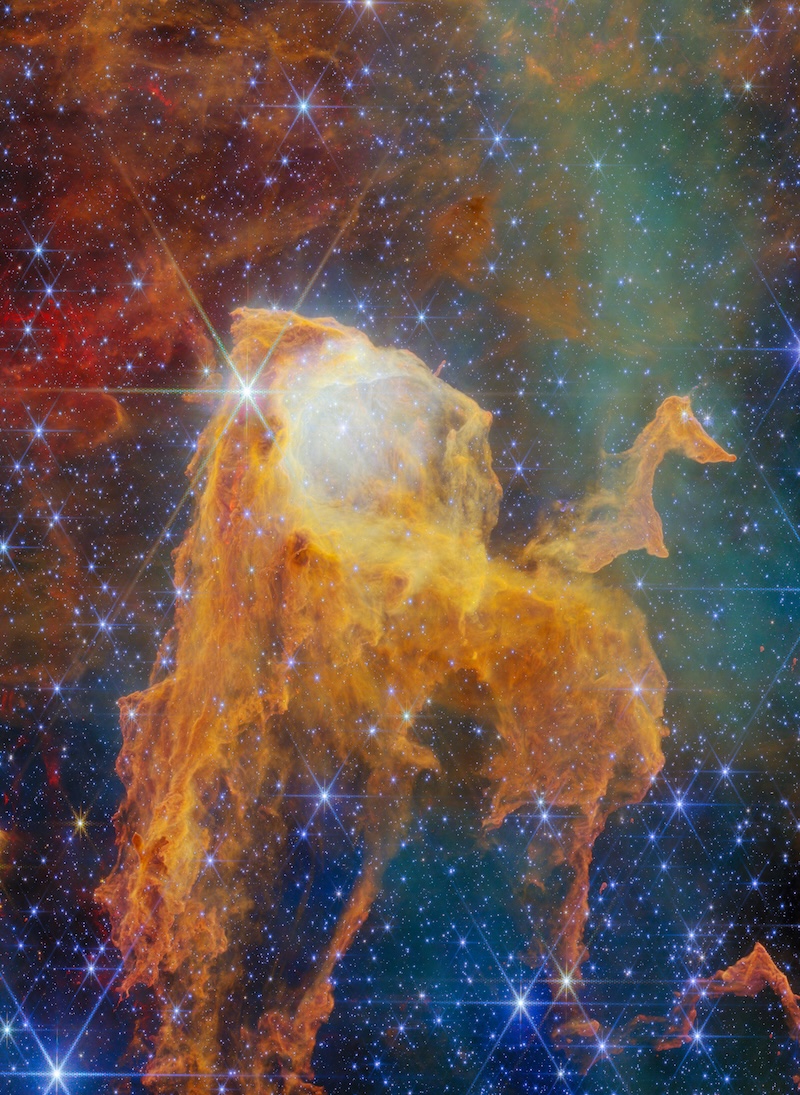
A Treasure Chest in the Carina Nebula (2026-09-17)
Credits: ESA/Webb, NASA & CSA, M. Reiter; Acknowledgement: M. H. Özsaraç Text: Cecilia Chirenti (NASA GSFC, UMCP, CRESST II)
Credits: ESA/Webb, NASA & CSA, M. Reiter; Acknowledgement: M. H. Özsaraç Text: Cecilia Chirenti (NASA GSFC, UMCP, CRESST II)
Github
Trading tools
QuantumTerminal 18 stars #200
Free & open-source trading terminal with quantitative analysis overlays (Volatility Cones, GEX, Max Pain) and live MT5/Rithmic/Tradovate feeds....
MATS 18 stars #201
An autonomous, self-evolving quantitative trading system powered by 8 specialized AI agents with institutional-grade risk management. ...
Stock-price-forecasting 18 stars #202
An overview of various quantitative techniques and trading strategies for predicting stock prices, based on historical data from YahooFinance....
start-your-quant 18 stars #203
Practical guide to quantitative trading — From zero to quant trader with concepts, strategies, and real examples....
Sea Vessels
RC-Boat 0 stars #200
remote control boat for racing a track and overcoming the obstacles during the journey ...
PlymouthTideTracker 0 stars #201
Tracking Scheduler for Testing at Plymouth Boat Yard. Converts the measured offset for water depth at the Plymouth Boat Yard....
ohw26_proj_BoatPhone 0 stars #202
Ocean Hack Week 2026 repository for group "BoatPhone," looking to use hydrophones (acoustic data), AIS data, and PlanetScope to track vessel traffic by counting boats....
boat-oil-price-tracker 0 stars #203
React Native app to track oil price in ports...
Air Vessels
plane-info 1 stars #200
A website to track flights and get info...
plane_truenas 1 stars #201
Truenas App for Plane Issue Tracker Community Edition...
Plane-Management-System 1 stars #202
Java-based application developed for managing and tracking seat reservations on a plane. ...
tappy_plane 1 stars #203
A Flappy Bird-inspired side-scroller developed in Godot. Features parallax backgrounds, dynamic obstacle generation, score tracking, and custom 2D physics....
Imagery
CMMCoT 11 stars #200
[AAAI'26] Official implementation of CMMCoT: Enhancing Complex Multi-Image Comprehension via Multi-Modal Chain-of-Thought and Memory Augmentation...
convolutional-neural-networks-tensorflow 11 stars #201
In Course 2 of the deeplearning.ai TensorFlow Specialization, you will learn advanced techniques to improve the computer vision model you built in Course 1. You will explore how to...
Cats-vs-Dogs-CNN-Keras 11 stars #202
The famous Cats-vs-Dogs dataset. I have used a self laid ConvNet to classify the image into 2 classes either a Dog or a Cat. The images used are of 100*100 pixels each. The images ...
voxynth 10 stars #203
Image synthesis and augmentation...
Video
UnityVideo 324 stars #200
[CVPR 2026]UnityVideo: Unified Multi-Modal Multi-Task Learning for Enhancing World-Aware Video Generation...
Hi3D-Official 324 stars #201
[MM24] Official codes and datasets for ACM MM24 paper "Hi3D: Pursuing High-Resolution Image-to-3D Generation with Video Diffusion Models"....
MoneyPrinterAICreate 324 stars #202
基于MoneyPrinterTurbo,AI生成分镜大纲与视频(动态,不是念ppt),接入万相通义wan2.1 ai文生视频、图生视频功能,灵活把控视频生成。Based on MoneyPrinterTurbo, AI generates image outline and video (dynamic, not ppt), and integrates w...
CapCap 321 stars #203
CapCap is a Windows desktop app for short-form video localization and dubbing. It brings transcription, translation, subtitle styling, voice generation, timeline editing, preview, ...