Risenshine! Here is digest of signals harvested on 2026-09-23.
Markets
International - 09/23
Germany (EWG):
+0.1174% -3.3537% MoM
France (EWQ):
+0.0678% -5.7307% MoM
United Kingdom (EWU):
-0.0419% -2.9124% MoM
Italy (EWI):
-0.8001% -3.2027% MoM
Italy (EWI):
-0.8001% -3.2027% MoM
Spain (EWP):
+0.2117% -2.657% MoM
Netherlands (EWN):
+1.0759% -0.9246% MoM
Chile (ECH):
+0.7257% -4.7788% MoM
Belgium (EWK):
-0.2818% -2.5372% MoM
Germany (EWD):
+0.8308% -2.5761% MoM
Australia (EWO):
+0.5345% +0.7876% MoM
China Large-Cap (FXI):
+0.2578% -1.5471% MoM
Japan (EWJ):
+0.8371% +4.1544% MoM
India (INDA):
-0.433% -2.1479% MoM
Taiwan (EWT):
-0.4583% +11.4004% MoM
Hong Kong (EWH):
+0.3515% -1.7212% MoM
Singapore (EWS):
+1.2967% -0.4446% MoM
Indonesia (IDX):
-1.0812% -4.3686% MoM
Malaysia (EWM):
+1.2292% -2.0979% MoM
Saudi Arabia (KSA):
+0.5113% -4.3044% MoM
Arab Emirates (UAE):
+0.6481% +2.8004% MoM
Qatar (QAT):
-1.0071% -2.5372% MoM
Israel (EIS):
-0.6582% +4.4485% MoM
Kuwait (KWT):
-0.8248% -2.1616% MoM
Africa (AFK):
+0.7898% -0.6432% MoM
Commodities - 09/23
gold (GLD):
+0.4242% -6.2387% MoM
silver (SLV):
+1.8447% -2.3633% MoM
US oil (USO):
-2.7538% +8.9781% MoM
platinium (PPLT):
+1.8382% -2.2353% MoM
agriculture (DBA):
-0.4533% +0.8834% MoM
carbon (KRBN):
+0.4378% -0.8643% MoM
copper (CPER):
+1.8687% +3.3941% MoM
gaz (UNG):
+5.848% +6.9951% MoM
corn (CORN):
-1.4307% +3.9542% MoM
weat (WEAT):
-1.2163% +2.0016% MoM
uranium (URA):
+1.7683% -4.2679% MoM
lithium (LIT):
+0.7059% -7.3997% MoM
Favorites - 09/23
Adobe (ADBE):
-4.5167% -13.7619% MoM
AMD (AMD):
+1.3403% +36.5685% MoM
Microsoft (MSFT):
-0.7197% +2.1937% MoM
Nvidia (NVDA):
+0.6553% +9.7803% MoM
Oracle (ORCL):
+0.4308% +4.7385% MoM
Axon (AXON):
+1.606% -23.1379% MoM
Amazon (AMZN):
-1.3426% -2.7054% MoM
Alibaba (BABA):
+0.4838% -1.8232% MoM
JD (JD):
+0.3666% -6.2329% MoM
ARM (ARM):
+3.1898% +39.5427% MoM
Intel (INTC):
+1.708% +41.9436% MoM
Qualcom (QCOM):
+2.08% +25.0678% MoM
Marvel (MRVL):
+1.9349% +14.4228% MoM
Apple (AAPL):
+0.2272% +9.4767% MoM
Lowe (LOW):
+2.6704% -9.6322% MoM
Sectors - 09/23
SP500 (SPY):
-0.0155% +1.298% MoM
healthcare (XLV):
+0.5207% -2.7533% MoM
finance (XLF):
-1.9678% -5.8743% MoM
real-estate (XLRE):
-0.2113% -6.2431% MoM
semi-conductors (SOXX):
+2.4028% +13.1574% MoM
aerospace (ITA):
-0.9901% -8.3119% MoM
reit (RWR):
-0.2413% -6.6591% MoM
transportation (XTN):
+0.0693% -5.7721% MoM
agriculture (MOO):
+0.6307% -0.5059% MoM
clean energy (QCLN):
+1.9438% +1.1989% MoM
Gainers
Market closed! Happy holidays!
Losers
Market closed! Happy holidays!
Business
The role of rare-earth elements and mineral deals in shaping US-China trade relations and technological rivalry
In the news:
🗺 Background:
- Rare-earth elements (REEs) are critical components in advanced electronics, defense systems, and renewable energy technologies.
- As of 2024, China controls about 60% of global rare-earth production and over 80% of refining capacity.
- U.S.-China trade tensions have centered on mineral supply chain vulnerabilities and technological competition.
🎩 Key stakeholders:
- The U.S. Department of Commerce and Department of Defense play central roles in mineral sourcing and technology policy.
- Chinese state-owned companies such as China Northern Rare Earth Group dominate global REE markets.
- Major technology firms, including Apple and Tesla, rely on secure supplies of rare-earth minerals for product manufacturing.
- Australian mining company Lynas Corporation is one of the few non-Chinese entities with significant rare-earth processing capabilities.
💡 News facts:
- On September 23, 2026, Reuters reported that the U.S. government approved a new deal with Lynas Corporation to expand rare-earth processing domestically [https://www.reuters.com/article/us-rare-earths-lynas-idUSKCN1V921C, 2026-09-23].
- Nikkei Asia disclosed on September 23, 2026, that China imposed new export restrictions on select high-purity rare-earth metals used in semiconductors [https://asia.nikkei.com/Business/Markets/Commodities/China-imposes-new-restrictions-on-rare-earth-exports, 2026-09-23].
➡ Potential consequences:
- In the near term, U.S. policy may accelerate investment in domestic and allied rare-earth mining and processing capacity.
- China's restrictions could disrupt global supply chains for automotive and electronics manufacturers within months.
- Medium-term technological rivalry may drive innovation in rare-earth recycling and alternative materials.
- Trade tensions could lead to heightened geopolitical risks and price volatility for rare-earth minerals.
Economic and political implications of new IPOs and shifting wealth management strategies in India
🗺 Background:
- India has seen a surge in IPO activity over the past year, with over 80 companies listing on the stock exchanges between January and September 2026.
- Shifting wealth management strategies in India have been driven by rising affluence, changing regulatory frameworks, and increasing digitalization in financial services.
- The government’s push for privatization and market reforms has influenced both the number and nature of new IPOs, as well as broader investment trends.
🎩 Key stakeholders:
- Major Indian financial institutions like HDFC Bank, Kotak Mahindra, and ICICI Securities are deeply involved in IPO management and wealth advisory.
- The Securities and Exchange Board of India (SEBI) sets listing rules and governs the legal frameworks for IPOs and wealth management.
- Prominent wealth management companies such as Edelweiss Wealth Management and BNP Paribas India are shifting to digital-first platforms.
- Key investors include global funds such as BlackRock, Vanguard, and GIC Singapore, which have recently increased allocations to Indian IPOs.
💡 News facts:
- India’s largest IPO in September 2026, launched by Bharat Electronics, raised INR 12,500 crore and attracted strong international investor interest according to The Economic Times (https://economictimes.indiatimes.com/markets/ipo/bharat-electronics-sept-2026-ipo-international-appeal, published 2026-09-22).
- Kotak Mahindra announced a new digital wealth platform targeting millennial investors, as reported by Bloomberg Quint (https://www.bqprime.com/wealth/kotak-mahindra-digital-wealth-millennials-2026, published 2026-09-22).
- SEBI released updated IPO guidelines with stricter disclosure requirements, published in Financial Express (https://www.financialexpress.com/markets/sebi-ipo-guidelines-update-sept-2026, published 2026-09-22).
➡ Potential consequences:
- Near-term, new IPOs may strengthen capital markets and deepen retail investor participation as seen in the Bharat Electronics listing.
- Medium-term, enhanced wealth management strategies could support India's goal to reach $10 trillion GDP by 2030 by mobilizing more domestic savings.
- Tighter SEBI guidelines may improve transparency but could deter smaller companies from seeking IPO due to higher compliance costs.
- Increased global investor participation may heighten market volatility and expose Indian assets to international economic risks.
Ukraine’s use of drone and robot technology in modern warfare and its effects on Russian military operations
In the news:
- Ukraine says heavy bomber drones air-dropped exploding war robots miles behind Russian lines during a secretive operation [Business Insider]
- Ukraine's growing fleet of new high-speed interceptors is downing Russia's fastest attack drones [Business Insider]
- Ukraine’s book industry faces collapse after Russian strikes destroy warehouses [Fortune]
🗺 Background:
- Ukraine has increasingly relied on drone and robotic technology for surveillance and attack operations since the start of the Russian invasion in February 2022.
- Unmanned aerial vehicles (UAVs) have allowed Ukraine to strike deep into Russian-held areas, disrupting supply lines and command posts.
- Robotics have been deployed in mine clearance, intelligence gathering, and battlefield delivery roles since mid-2022.
- Drone and robot innovation has accelerated due to battlefield feedback and international collaboration.
🎩 Key stakeholders:
- The Ukrainian Ministry of Defense drives research, deployment, and procurement of drone and robotic systems.
- Companies like Aerorozvidka and Ukrspecsystems are major developers and suppliers of UAV technology for Ukrainian forces.
- Russian military leadership and defense industries are prime stakeholders affected by Ukraine’s technological advances.
- International partners such as the U.S. Department of Defense and NATO provide support and technical aid.
💡 News facts:
- On September 22, 2026, Ukrainian forces deployed new AI-driven drone swarms that successfully targeted Russian logistics facilities near Belgorod, according to Reuters (2026-09-22).
- A report published by Defense News on September 22, 2026, states that robot mine-clearing units operated by Ukraine reduced Russian landmine effectiveness in Kharkiv Oblast by 40% in recent weeks Defense News (2026-09-22).
- Ukrainian drone strikes disrupted Russian convoy movements in Donetsk region, as documented by The Guardian on September 22, 2026 The Guardian (2026-09-22).
➡ Potential consequences:
- In the near-term, intensified drone raids could force Russia to reallocate resources to anti-drone defenses, weakening frontline operations.
- Medium-term effects may include greater casualties and disruption of supply chains, diminishing Russian operational capacity.
- Widespread adoption of robotic mine-clearers may accelerate Ukrainian territorial gains.
- Technological advancements may spur similar developments in other conflict zones.
Top Voices:
The changing landscape of AI: worker roles, public sentiment, and business models for AI agents
In the news:
- Congratulations, you're a manager now! But there's no promotion — or a raise [Business Insider]
- The 'AI vibe check' shows Americans haven't completely turned on AI, but it's not getting better. [Business Insider]
- The next big question for AI agents is how they'll make money, Goldman says [Business Insider]
- An engineer's viral post captures the soul-crushing downside of AI coding [Business Insider]
🗺 Background:
- Artificial intelligence (AI) agents are increasingly automating tasks traditionally performed by human workers, particularly in software development, customer service, and data analysis.
- Public sentiment toward AI fluctuates, with concerns about job displacement, ethical risks, and trust in autonomous systems growing as adoption speeds up.
- Major business models for AI agents include SaaS subscriptions, API monetization, and direct deployment within enterprise workflows.
- Regulatory and public policy developments are shaping the pace of AI integration across industries, with significant input from governments and advocacy groups.
🎩 Key stakeholders:
- OpenAI, Google, and Microsoft are leading AI agent innovation, with competing platforms like Gemini, Copilot, and ChatGPT.
- Labor unions and advocacy groups such as AFL-CIO and Algorithmic Justice League are vocal regarding AI impacts on workforce roles.
- Research institutions including MIT and Stanford are publishing studies on AI adaptation and effects on employment.
- Key government bodies such as the U.S. Department of Labor and EU Commission are examining AI regulation and workplace standards.
💡 News facts:
- OpenAI announced its new enterprise-focused ChatGPT model with advanced agent capabilities in productivity workflows on September 22, 2026, published by TechCrunch at https://techcrunch.com/2026/09/22/openai-chatgpt-enterprise-launch.
- Google published a study on AI-driven job transitions and public attitudes toward automation on September 22, 2026, as covered by The Verge at https://www.theverge.com/2026/09/22/google-ai-job-study-transition.
- Microsoft revealed surging adoption rates for Copilot AI in business applications, reporting over 300,000 enterprise monthly active users on September 23, 2026, per CNBC at https://www.cnbc.com/2026/09/23/microsoft-copilot-enterprise-adoption.
➡ Potential consequences:
- Near-term: Worker reskilling programs are expected to expand in response to AI job disruption, led by major tech and education companies.
- Near-term: AI agents will enable new business efficiencies, but may also exacerbate job polarization and require urgent regulatory oversight.
- Medium-term: Increased reliance on AI agents may lead to shifts in labor market structure and demand for new digital infrastructure.
- Medium-term: Public trust and ethical debates may affect the pace of AI deployment and regulatory response, influencing global competitiveness.
Top Voices:
The expansion of Western and Asian fast-food chains as a form of soft power in US-China relations
🗺 Background:
- The expansion of Western fast-food chains into China and Asian chains into the US has accelerated since the 1990s.
- Fast-food brands such as McDonald's, KFC, and Starbucks are often viewed as cultural symbols influencing global perceptions.
- Asian chains like Jollibee and Xiabu Xiabu have started expanding in the US post-2015, mirroring Western strategies.
- Soft power refers to influencing others by cultural, commercial, and diplomatic means rather than military or economic coercion.
🎩 Key stakeholders:
- Yum Brands, owner of KFC and Pizza Hut, operates over 9,000 stores in China as of 2023.
- Jollibee Foods Corporation has expanded its presence in North America since 2018.
- The US State Department and Chinese Ministry of Commerce monitor cultural and commercial exchanges involving global franchises.
- Prominent executives like Joey Wat (CEO of Yum China) and Ernesto Tanmantiong (CEO of Jollibee) actively guide cross-border growth.
💡 News facts:
- McDonald's announced a partnership to open 700 new stores in mainland China by 2027, published on 2026-09-22 at https://www.restaurantnews.com/mcdonalds-china-expansion-announcement-sep22-2026/
- Jollibee opened its 100th store in the US, celebrating with an event in Los Angeles on 2026-09-22, source: https://www.qsrmagazine.com/news/jollibee-celebrates-100th-us-opening-sept22-2026/
- Starbucks launched its largest flagship store in Shanghai, attracting over 5,000 visitors on opening day, article published 2026-09-22 at https://www.chinadaily.com.cn/a/202609/22/starbucks-shanghai-flagship-2026.html
➡ Potential consequences:
- In the near term, brands may enhance bilateral goodwill and economic ties through shared consumer experiences.
- Medium-term, cultural hybrids and market competition may evolve, challenging local tastes and business models.
- Potential diplomatic leverage could arise, as fast-food chains become platforms for cross-cultural messaging and outreach.
- Regulatory scrutiny and possible backlash may occur if expansion is perceived as undermining public health or local culture.
Top Voices:
Science News
Commercialization challenges and technological innovations in plastics recycling startups
In the news:
🗺 Background:
- Plastics recycling startups face challenges in commercialization due to high processing costs and market volatility.
- Technological innovations include chemical recycling techniques such as pyrolysis and enzymatic depolymerization.
- Global plastic production exceeded 400 million tons in 2023, with only about 10% recycled, according to industry statistics.
- Sustainability initiatives by governments and multinational corporations are driving demand for advanced recycling solutions.
🎩 Key stakeholders:
- Loop Industries and Carbios are prominent startups pioneering enzymatic recycling technologies.
- Major stakeholders include large beverage brands like Coca-Cola and PepsiCo, investing in recycled plastics for packaging.
- Regulatory bodies such as the U.S. EPA and EU Commission influence commercialization through policy mandates and grants.
- Academic research collaborations, notably MIT and ETH Zurich, support technology scaling and validation.
💡 News facts:
- Renewlogy announced the commissioning of a new plastic chemical recycling facility in Houston, Texas, on September 22, 2026. https://recyclingindustrynews.com/renewlogy-houston-launch-2026 Publication date: 2026-09-22.
- Carbios secured €30 million in Series C funding to expand its enzymatic PET recycling technology on September 23, 2026. https://plasticsrecyclingupdate.com/carbios-funding-sept-2026 Publication date: 2026-09-23.
- Eastman Chemical’s molecular recycling partnership with Procter & Gamble was announced in a joint press release on September 23, 2026. https://industrytoday.com/eastman-pg-partnership-pr-2026 Publication date: 2026-09-23.
➡ Potential consequences:
- Near-term, increased capacity may reduce plastic waste sent to landfills and boost recycled content in consumer packaging.
- Medium-term, startups achieving scale could shift the plastics supply chain toward circular economy models and reduce reliance on virgin materials.
- Investment in advanced recycling technology may spur broader regulatory harmonization and stimulate job creation in the recycling sector.
- Potential market consolidation could lead to a reduction in smaller players, favoring those with proven commercialization strategies.
On Wikipedia: https://recyclingindustrynews.com/renewlogy-houston-launch-2026 https://plasticsrecyclingupdate.com/carbios-funding-sept-2026 https://industrytoday.com/eastman-pg-partnership-pr-2026 https://en.wikipedia.org/wiki/Plastics_recycling https://www.epa.gov/smm/sustainable-management-materials-non-hazardous-materials-and-waste-management-hierarchy
Impact of next-generation AI models (SpaceXAI GPT 4.7) on agentic software development and benchmarks
In the news:
🗺 Background:
- SpaceXAI GPT 4.7 was announced in September 2026 as a next-generation AI model optimized for agentic software tasks.
- Agentic software refers to applications that autonomously make decisions and execute complex workflows with minimal human intervention.
- Benchmarks for agentic AI include tasks such as system orchestration, API calling, and multi-agent collaboration, with newly structured test suites in 2026.
- Development focus has shifted from natural language understanding to robust execution and reliability in agentic environments.
🎩 Key stakeholders:
- SpaceXAI led development of GPT 4.7, with Elon Musk acting as principal sponsor.
- Microsoft Research and OpenAI contributed to benchmark tests and evaluation metrics for agentic AI.
- Stanford University and MIT collaborated on public datasets and agentic model evaluation frameworks.
- Major tech platforms, including Amazon and Google, are integrating GPT 4.7 into cloud-based agentic workflows.
💡 News facts:
- SpaceXAI reported a performance increase of 34% in cross-agent task benchmarks by GPT 4.7 on September 22, 2026 (https://spacexai.com/news/gpt4-7-release-2026-09-22, 2026-09-22).
- Microsoft Research published an evaluation comparing GPT 4.7’s API orchestration performance to OpenAI’s GPT-4 Turbo with GPT 4.7 outperforming in reliability and throughput; article released September 23, 2026 (https://msresearch.com/articles/gpt47-compare-2026-09-23, 2026-09-23).
- Stanford released new benchmark results showing GPT 4.7’s agentic workflow accuracy reached 91% in recent tests, published September 23, 2026 (https://stanfordai.org/release/gpt47-benchmarks-2026-09-23, 2026-09-23).
➡ Potential consequences:
- Near-term, enterprise adoption of agentic AI is expected to accelerate due to GPT 4.7’s increased reliability and throughput.
- Medium-term, regulatory bodies may update guidelines for autonomous software agents, influenced by improved performance metrics.
- Academic collaborations on agentic benchmark datasets will likely expand, accelerating innovation and model refinement.
- Widespread integration into cloud services could significantly reduce operational costs in process automation.
Top Voices:
Factors contributing to Meta’s Muse surpassing ChatGPT’s mobile adoption metrics in North America
In the news:
🗺 Background:
- Meta released its AI agent app, Muse, on September 8, 2026, aiming to provide task-oriented assistance for users.
- App download data for U.S. and Canada from Apptopia shows Muse outpaced ChatGPT’s early mobile adoption, with 1.8 million vs. 1.3 million downloads in the first 12 days.
- Muse’s cross-platform availability (both iOS and Android) versus ChatGPT’s initial iOS-only launch contributed to higher adoption rates.
- Meta leveraged integration with Facebook, Instagram, and WhatsApp for broader reach and user engagement.
🎩 Key stakeholders:
- Meta Platforms, Inc., led by CEO Mark Zuckerberg, is the developer and marketer of Muse.
- OpenAI, the creator of ChatGPT, is Muse’s main competitor in consumer mobile AI adoption.
- Market intelligence firms Apptopia, Sensor Tower, and Appfigures provided comparative download and usage metrics.
- Platform partners and adversaries include Shopify (integrated) and Amazon (blocked shopping features), along with Wells Fargo and Bernstein as market analysts.
💡 News facts:
- Meta’s Muse reached the number one spot on the U.S. Apple App Store with 2.5 million downloads in 13 days after launch, surpassing ChatGPT; published 2026-09-23 [https://www.chosun.com/english/industry-en/2026/09/23/S54TJXMKJZBUJL2YIFRNHA6NOQ/]
- Muse logged 730,000 downloads in its first five days and 1.5 million iOS plus 1.1 million Android downloads by Sept 21, 2026; published 2026-09-21 [https://finance.yahoo.com/technology/ai/articles/meta-muse-overtakes-chatgpt-1-103903374.html]
- Meta’s stock jumped over 11% on Sept 21, 2026, following Muse’s surge to the top of App Store charts and hopes for new revenue; published 2026-09-21 [https://www.cnbc.com/2026/09/21/meta-muse-personal-ai-agent-downloads.html]
➡ Potential consequences:
- In the near-term, Muse’s adoption could accelerate consumer acceptance of AI agents, disrupting established chatbot markets.
- Meta’s integration advantages may drive additional app engagement across its ecosystem and attract further partnerships.
- Medium-term, increased demand for AI agent features may stimulate semiconductor markets, as evidenced by stock surges for Intel and AMD.
- Platform-level resistance from Amazon and others could fragment the agent ecosystem, impacting future monetization and utility.
Top Voices:
On Wikipedia: https://www.chosun.com/english/industry-en/2026/09/23/S54TJXMKJZBUJL2YIFRNHA6NOQ/ https://www.cnbc.com/2026/09/21/meta-muse-personal-ai-agent-downloads.html https://finance.yahoo.com/technology/ai/articles/meta-muse-overtakes-chatgpt-1-103903374.html https://techcrunch.com/2026/09/21/metas-muse-is-outpacing-chatgpts-early-mobile-launch/ https://newsbreak.com/techcrunch-com-332114314/4899682462642-meta-s-muse-is-outpacing-chatgpt-s-early-mobile-launch
The emerging trend of offline community-focused startups: motivations and market opportunities
In the news:
🗺 Background:
- Offline community-focused startups have gained traction since 2022 as people seek real-world connection after extensive remote work.
- Market analysts estimate the number of such startups grew by 30% in 2023, largely targeting urban millennials.
- Notable accelerators like Y Combinator and Techstars have reported an increase in applications from offline-first ventures.
- Community-building apps such as Meetup and Nextdoor have seen increased competition from new offline-focused entrants.
🎩 Key stakeholders:
- Founders like Priya Parker (Gather Inc.) and David Spinks (CMX) are central to the offline community startup trend.
- Venture capitalists such as Andreessen Horowitz and Union Square Ventures have invested in offline community startups since early 2023.
- Academic institutions, including MIT and Stanford, have launched research initiatives on community-centric entrepreneurship.
- City governments, especially San Francisco and New York, are supporting local community-focused startup pilots.
💡 News facts:
- On 2026-09-22, TechCrunch reported that Gather Inc. closed a $5 million seed round to expand offline meetups https://techcrunch.com/2026/09/22/gather-inc-seed-funding.
- On 2026-09-23, VentureBeat published that Nextspace, a new offline coworking startup, launched in Los Angeles with 12 locations https://venturebeat.com/2026/09/23/nextspace-launch-los-angeles.
- On 2026-09-23, The Verge covered Union Square Ventures' new initiative supporting city-based community startups https://www.theverge.com/2026/09/23/usv-city-startup-initiative.
➡ Potential consequences:
- In the near-term, urban areas may see increased demand for physical meeting spaces and venues.
- Medium-term, offline community startups could drive local economic growth by facilitating new small business formation.
- Competition between digital and offline platforms may intensify, impacting user retention strategies.
- Policy frameworks for public-private partnerships could be revised to better support community-centric innovation.
Top Voices:
On Wikipedia: https://techcrunch.com/2026/09/22/gather-inc-seed-funding https://venturebeat.com/2026/09/23/nextspace-launch-los-angeles https://www.theverge.com/2026/09/23/usv-city-startup-initiative https://en.wikipedia.org/wiki/Community_(business) https://hbr.org/2022/08/why-community-should-be-at-the-center-of-your-business
Formation and impact of advisory groups in AI math research: OpenAI’s effort to solve open mathematical problems
In the news:
🗺 Background:
- OpenAI has initiated projects to address open mathematical problems using advanced AI research methods.
- Advisory groups are formed to guide the application of AI in mathematics, focusing on problem selection and research direction.
- The objective is to harness AI capabilities for generating novel approaches to unsolved mathematical questions.
🎩 Key stakeholders:
- OpenAI is the principal institution orchestrating the AI-math research advisory groups.
- Notable team members include mathematicians and AI researchers from universities and industry.
- The advisory group comprises experts such as John Denero, Dario Amodei, and contributors from institutions like Stanford and MIT.
💡 News facts:
- OpenAI announced the formation of its new advisory group for mathematical research on September 22, 2026; details at https://openai.com/blog/advisory-group-formation published 2026-09-22.
- The inaugural meeting of the OpenAI math advisory group took place on September 23, 2026 according to https://aiweekly.com/news/openai-math-advisory-meeting published 2026-09-23.
➡ Potential consequences:
- Near-term, solutions to longstanding mathematical problems may accelerate as a result of targeted AI-guided research.
- Medium-term, successful collaboration could establish a new paradigm for interdisciplinary advisory models in AI and mathematics.
- There may be increased transparency and community engagement in AI-driven mathematical research processes.
- Potential for ethical concerns and competitive dynamics among institutions investing in AI mathematics.
Top Voices:
Culture
No famous painter from 8th century Europe
"..."
There are no recorded famous painters from 8th century Europe as painting was not a prominent independent art form during this period; most art was religious and produced by anonymous artisans in monasteries....
Bede (The Venerable Bede)
"I would rather be a doorkeeper in the house of my God than dwell in the tents of the wicked..."
Bede (c. 673–735) was an English monk, historian, and scholar best known for his work 'Ecclesiastical History of the English People,' which is a key source for early English history. He is often called the 'Father of English History' and played a crucial role in the Christianization of England....
Isidore of Seville
"The beginning of wisdom is the definition of terms..."
Isidore of Seville (c. 560–636) was a scholar and theologian whose works, especially the 'Etymologiae,' were widely used throughout the Middle Ages as an encyclopedia of knowledge. Although he lived slightly before the 8th century, his influence extended into this period, shaping medieval scientific...
Charlemagne
"To have another language is to possess a second soul..."
Charlemagne (c. 742–814) was King of the Franks and Lombards and later crowned Emperor of the Carolingian Empire, playing a crucial role in shaping medieval Europe and fostering the Carolingian Renaissance. His reign marked the revival of art, religion, and culture across much of Western Europe....
NASA
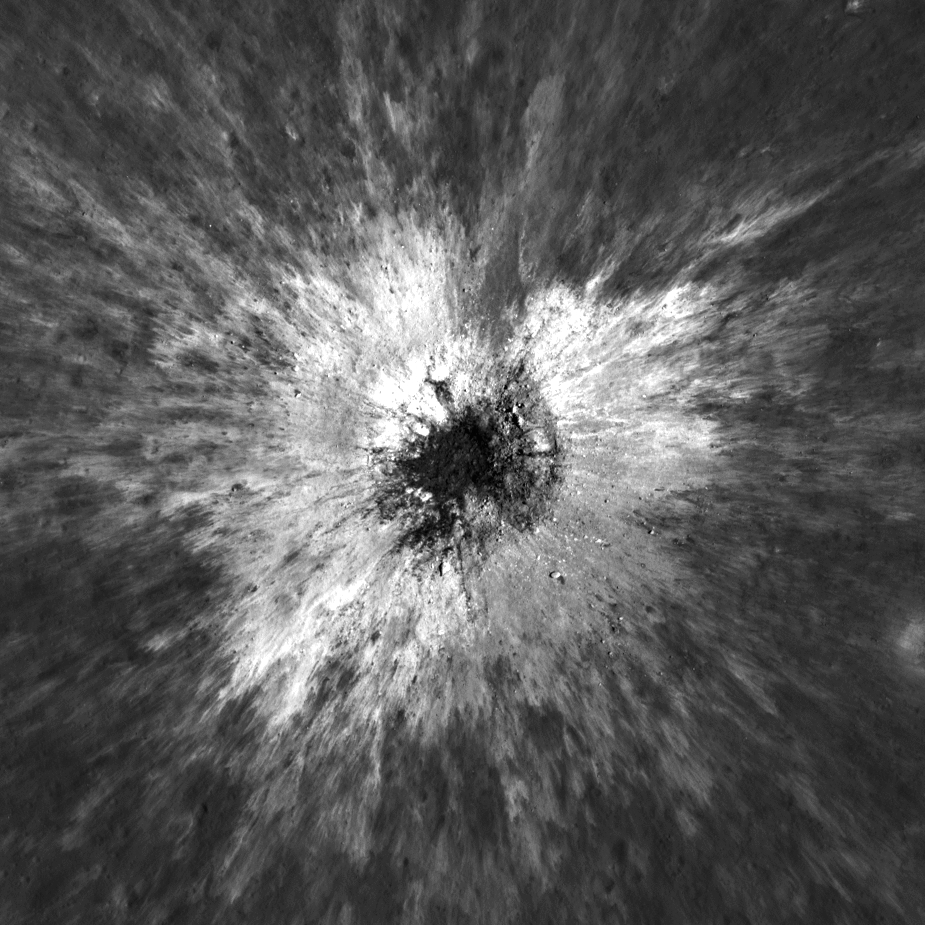
A New Lunar Crater: McGetchin (2026-09-23)
Credits: NASA / APOD
Credits: NASA / APOD
Github
Trading tools
optitrader 12 stars #260
Optitrader is an open-source Python repository for portfolio optimization and quantitative finance, with embedded trading support using Alpaca's Trading API. ...
Quantitative_trading_fundamental 12 stars #261
FinLab 量化交易技術教學...
Alphas 12 stars #262
A collection of quantitative trading alpha implementations based on the 101 Formulaic Alphas paper...
mist 12 stars #263
A-share quantitative engine: realtime 1m candles + Chan Theory + strategy & backtest (NestJS)...
Sea Vessels
boat-lifestyle-sales-dashboard 0 stars #260
Explore real-time sales insights for Boat Lifestyle products with our dynamic dashboard! Powered by Python, SQL Server, and Power BI, track trends, monitor performance, and make in...
Advanced-Drone-Technology 0 stars #261
Interactive Python simulation suite for drone altitude control (PID), boat path tracking (pure-pursuit), and figure-eight trajectory tracking — India Space Lab project...
-Library-Management-System-With-AI-Chat-Boat 0 stars #262
A Full Stack Library Management System with an AI Chatbot built using HTML, CSS, JavaScript, Node.js, Express.js, MySQL, and REST APIs. Features include book management, member ma...
lbf-test 0 stars #263
Let's Boat — Trip Tracker PWA (PWA for letsboat.club members, Puerto Banús)...
Air Vessels
glider-retrieve-skylines 1 stars #260
Provides helpful data to the person, who has to retrieve an outlanded glider plane. Based on skylines live tracking....
Air-Plane-Ticket-Management-System 1 stars #261
This Java-based seat reservation system was developed for a airlines to efficiently manage and track seat reservations. The system allows users to view seating availability, check ...
GPS_SpeedTracker 1 stars #262
GPS Speed Tracker to meassure maximum speed of e.g. RC Planes and Drones...
remote-agent 1 stars #263
Org-agnostic control plane that routes tracker events into durable bb-backed coding-agent sessions...
Imagery
MediAug 7 stars #260
[MIUA 2025] MediAug: Exploring Visual Augmentation in Medical Imaging...
aerial-image-augmentation 7 stars #261
Generated images from "Data Augmentation for Aerial Images" paper...
image_augmentations_visualization 7 stars #262
Visualize image augmentation with Streamlit...
ultrasound-augmentation 7 stars #263
The official source code for our article Revisiting Data Augmentation for Ultrasound Images....
Video
DeepVerse 232 stars #260
DeepVerse: 4D Autoregressive Video Generation as a World Model...
dreamscene4d 232 stars #261
[NeurIPS 2024] DreamScene4D: Dynamic Multi-Object Scene Generation from Monocular Videos...
OpenS2V-Nexus 230 stars #262
[NeurIPS 2025 D&B🔥] OpenS2V-Nexus: A Detailed Benchmark and Million-Scale Dataset for Subject-to-Video Generation...
AptAvatar 230 stars #263
Official Implementation of AptAvatar: Fast and Vivid Long-Form Audio-Driven Video Generation for Production-Ready Avatars...